
Iran Tries to Intimidate Shipping With Attacks in the Strait of Hormuz
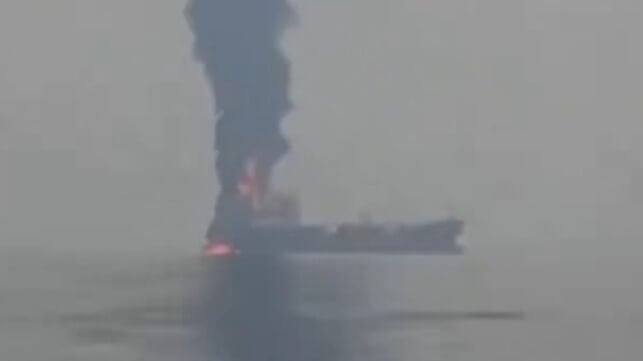
Iranian authorities are attempting to close the Straits of Hormuz by warning traffic over Channel 16 that the Straits are closed. When these attempts failed, the Iranians resorted to mounting attacks, and as many as five vessels have been struck so far as of March 1.
The UK Maritime Trade Operations (UKMTO) Centre in Dubai issued a warning at 0700UTC on February 28 that the Iranian authorities were contacting ships on Channel 16 and warning them that the Straits were closed. The UKMTO however said that such calls were not an authorized means of closing the Straits.
The UKMTO recommended merchant traffic proceed through the TSS, but exercising caution and keeping a distance from naval vessels providing a protective presence in the Straits. It acknowledged the situation was fast-changing.
The Combined Maritime Forces (CMF) naval coalition based in Bahrain has declared the situation in the Strait of Hormuz "critical," and warns that while the strait is not formally closed, "active kinetic hazard conditions" exist in the area. The CMF warned of high levels of GPS signal disruption, adding to navigational risk, and cautioned watchstanders to cross-check GPS rather than relying upon it for positioning - an everyday safety standard not always followed in practice.
Bi-directional Strait of Hormuz traffic is still in motion. 2026-02-28 (16:07 UTC). #OOTT #Tankers #Iran pic.twitter.com/zCXYckS4xS
— TankerTrackers.com, Inc. (@TankerTrackers) February 28, 2026
A Kpler marine traffic playback of traffic late on February 28 showed however that there was still heavy eastbound traffic using the Straits throughout the day, although not too many ships were trying to use the northern, in-bound channel of the Traffic Separation Scheme (TSS).
But on March 1, AIS data showed the area of the TSS largely devoid of traffic, with heavy concentrations of vessels at anchor off Dubai and Khor Fakkan, on the approaches to the west and east sides of the TSS (respectively).
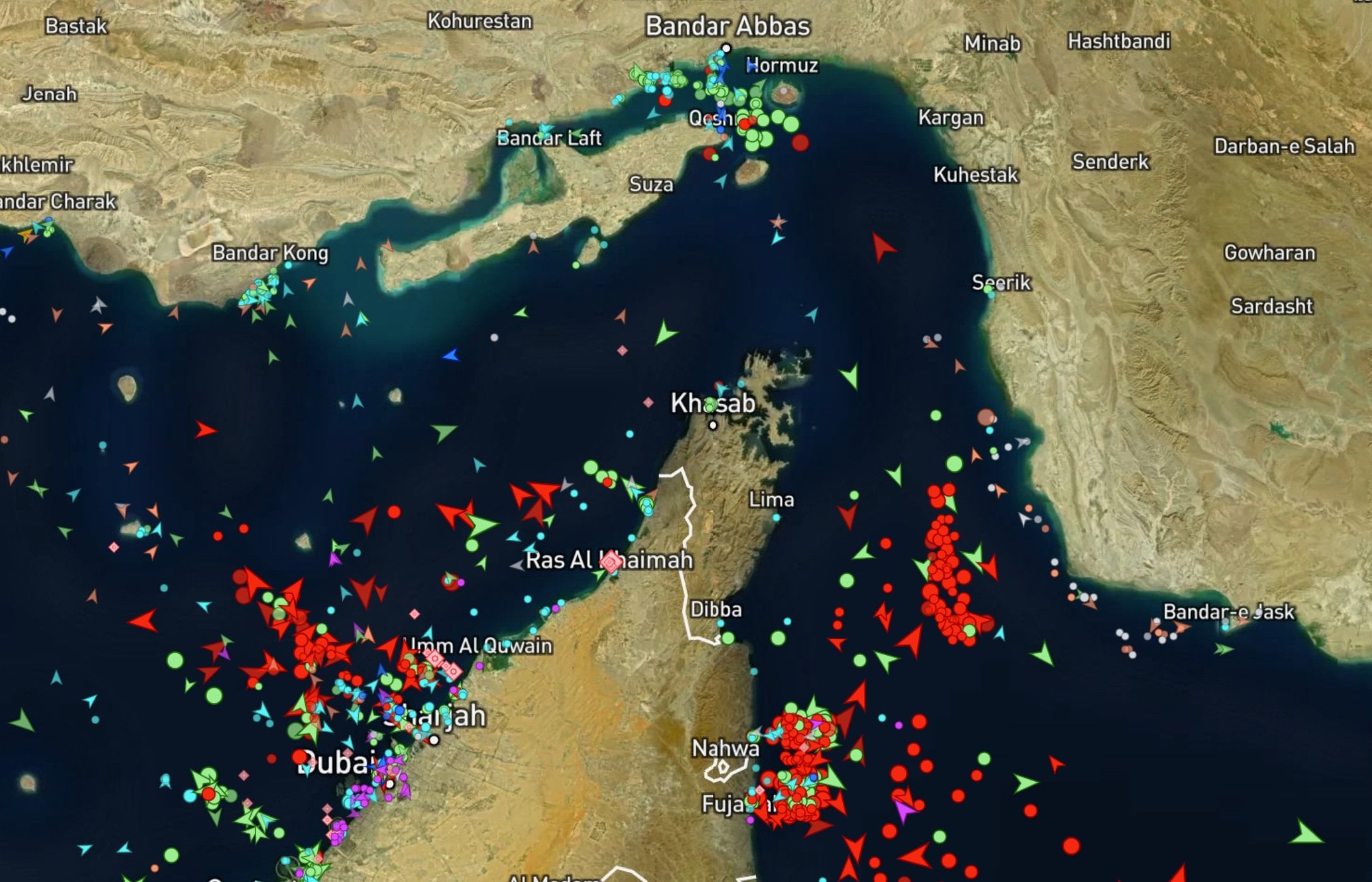
AIS data for the Strait at 1730 hours GMT, March 1: light traffic in the TSS, unusual concentrations of vessels awaiting orders off Dubai, Fujairah, Khor Fakkan and Limah (Chart courtesy MarineTraffic)
The Omani Maritime Security Centre reported that the Palau-flagged oil tanker Skylight (IMO 9396737) had been hit five nautical miles off the Musandam peninsula, well within Omani territorial waters, injuring four crew and prompting the evacuation by the Royal Navy of Oman of 20 others. The Skylight was an odd target for the Iranians to choose as it has been previously sanctioned for providing bunkering support to dark fleet tankers.
UKMTO and other sources have reported four further incidents. The crude oil tanker MKD Vyom was struck on the eastern approaches, 50 nm north of Muscat, reportedly killing one crewmember in the engine room. UKMTO reports that the product tanker Hercules Star has been hit at a position off Mina Saqr. The CMF's Joint Maritime Information Center (JMIC) suggest that the product tanker Sea La Donna was also struck somewhere near Abu Dhabi. Lastly, Greek media report a strike on the Greek-owned MR tanker Ocean Electra.
Heavy GPS disruption makes vessel position identification difficult for these casualties: many of the affected vessels' AIS signals show obvious signs of spoofing, such as irrational speeds, positions on land, or perfect circular movements.
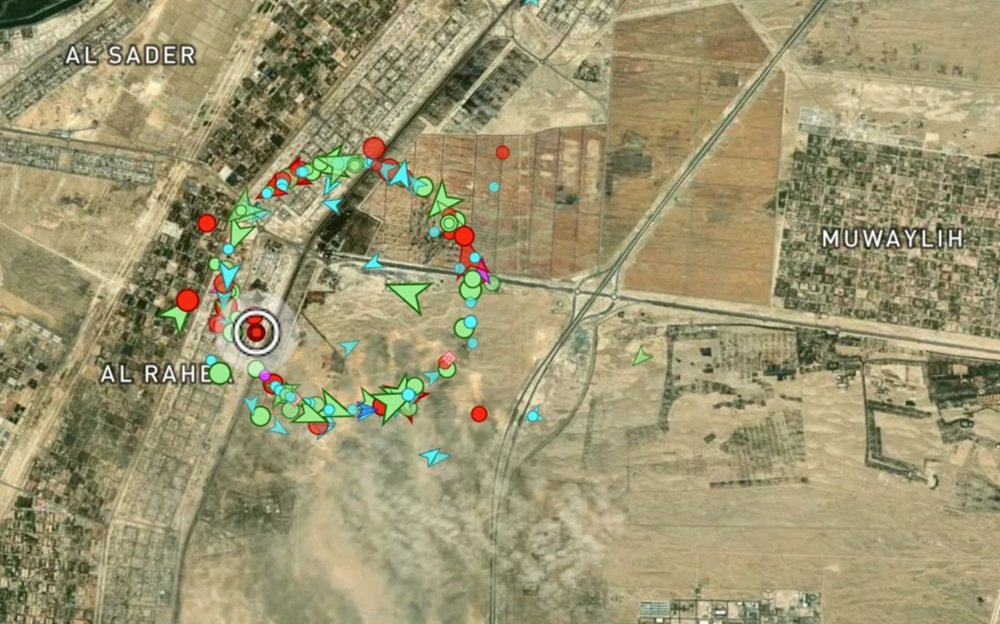
Typical GPS spoofing pattern: AIS signals located on land in an Abu Dhabi neighborhood. Sea La Donna's false position is ringed in white. (MarineTraffic)

that matters most
Get the latest maritime news delivered to your inbox daily.
It was also reported that the commercial port of Duqm had earlier been attacked with two drones, a huge upset for Oman which has spent decades trying to dampen regional tensions through its mediation efforts with Iran. One drone damaged an accommodation Portacabin, injuring an expatriate worker, while the other fell on waste ground causing no damage or injuries.
An Iranian drone hit Duqm, Oman, this morning, plunging the 10th country into the Middle East war.
— Julian Röpcke???????? (@JulianRoepcke) March 1, 2026
Geolocation: (19.6033012, 57.6786709) pic.twitter.com/UKCdJoXU3R