
Iran Secures Cessation of US Attacks – But the War Goes On
As the first day of the ceasefire comes towards an end, the only substantive change on the ground in the region appears to be that the United States and Israel have ceased their attacks on Iran.
Multiple reports, summarized towards the end of the first day of the ‘ceasefire’ by Qatar’s Al Jazeera network, indicate that Iran has continued to attack oil and infrastructure targets in Bahrain, Kuwait, Saudi Arabia, the UAE and Qatar. Targets attacked include a pumping station on Saudi Arabia’s East-West pipeline, which is being used to divert crude oil from loading terminals in the Gulf to the terminal at Yanbu on the Red Sea. It is not clear however whether targets attacked in those countries also include installations associated with the United States military.
A live map posted by the website Marine Traffic recording ship movements through the Strait of Hormuz showed a small number of tankers using the Larak toll booth through April 8 to exit the Gulf, but none using the internationally-recognized inward and outward channels of the Traffic Separation Scheme. This confirms other reports indicating that Iran is maintaining its previous restrictions on traffic to those given permission, which normally entails a toll of about $2m for a VLCC tanker.
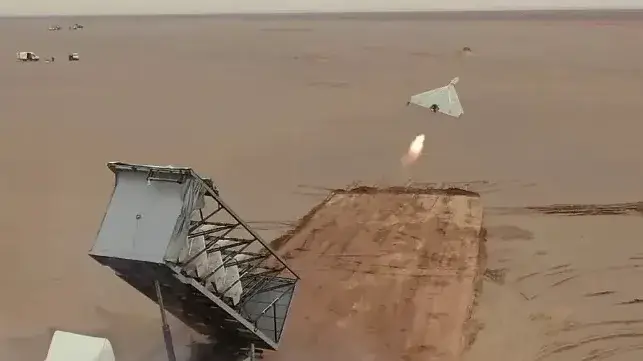
Further indications that the ceasefire has either not settled, or indeed is already breaking down, are reports from Mehr News Agency and Iranian State television that UAE Air Force Mirage 2000-9 and armed Wing Loong II drones attacked both Larak and Sirri Islands during the day. Last week a Wing Loong II drone, a type used by both the UAE and Saudi Arabia, was shot down over Shiraz, collateral for the reports that the UAE is now further engaged.
It should be noted that the GCC countries were neither officially consulted nor party to the Pakistani-sponsored US-Iranian ceasefire agreement, and under no circumstances would have signed up to any agreement that restricted their use of the Strait of Hormuz – which for these countries is a matter of national survival.
It had been suggested in a number of quarters that Oman was in discussions with Iran about a joint protocol that would restrict Hormuz transits and impose fees. These reports however were based solely on Iranian reporting, and Oman has made clear that it stands by its current arrangements, whereby it seeks to protect and facilitate international freedom of movement through the Strait. A social media post by the Omani Ministry of Transport suggesting that a written deal had been done with the Iranians quickly disappeared, and was replaced by assurances to the contrary.
Pertinent in these serious circumstances is the Iranian religious adherence to the concept of taqiyya: a theological permission, in extremis, to deceive an adversary in order to achieve a key religious goals - which has increasingly been interpreted to cover the survival of IRGC/religious rule in Iran. The practice of taqiyya, it is acknowledged, is particularly effective when your adversary is desperately keen to ‘buy’ in a negotiation whatever the deception he is being offered. This matches the circumstances surrounding the negotiations which led up to the ceasefire.

that matters most
Get the latest maritime news delivered to your inbox daily.
Having exercised commendable restraint by not (up until now) retaliating, despite Iranian attacks, the GCC countries cannot compromise on securing freedom of access through the Strait of Hormuz. They know that if Iran is allowed to operate any form of scheme in the short term, then at any moment thereafter fees, restrictions and permissions could be altered or revoked. As President Trump has said, the United States doesn’t get much oil through the Strait. But the GCC gets everything through the Strait, and they cannot survive without this access.
For Iran, surviving the war is critical for the survival of the IRGC leadership, for the GCC (less Oman) it is a matter of national survival. All the GCC countries have powerful air forces. Now that Iran’s air defenses have largely been cleared away, they will have the freedom to strike at will to protect their vital interests. Fired up by what the GCC countries see as Iran’s treachery, they are unlikely to be as restrictive on targeting as the United States has been. Nor are they likely to be sending out warning messages advising civilian populations to evacuate areas about to be targeted, as the Israelis have done.