
Ice Slows the Start of Shipping on the Upper Great Lakes
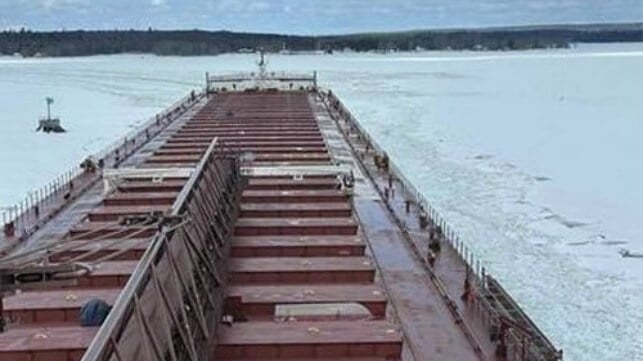
The shipping industry is sounding a cautionary tale as the 2026 season for operations on the Great Lakes is getting underway. They are saying a shortage of icebreakers is compounding a difficult situation, leaving ships stranded after a heavy winter across much of the region.
The Soo Locks reopened on Wednesday, March 25, and it is a big day for the region and the economy. Located at Sault Ste. Marie, Michigan, the locks close each winter for maintenance when the weather is at its harshest. When it reopens, it normally means shipping can resume on Lake Superior, providing access to ports such as Duluth and Thunder Bay.
This year, however, is different, because while the locks started handling ships, areas of the lake are still choked with ice and snow. In particular, Whitefish Bay, to the west of the locks, is still buried, and ships are finding it basically impossible to make progress in the area. A dozen or more ships have been stuck, reports the Lake Carriers Association.
In places, the reports indicate the ice is still two feet thick on Lake Superior. A late blizzard in early March left massive amounts of snow, which in some places is three feet on top of the two feet of ice. A spokesperson for NOAA, Brian Howell, told NBC Northern News Now that ice coverage was above normal, peaking at 60 percent this winter on the lake, and now the problem is compounded by refreezing at night. Overall ice coverage on the Great Lakes was still at 24 percent, above average, at the end of March.
The Lake Carriers Association notes the situation is critical as the steel mills are waiting for their first deliveries of iron ore and other materials after more than two months since the locks closed. While areas such as Duluth are clear and ready for shipping, Whitefish Bay is the challenge.
The Association notes that the U.S. Coast Guard only has one heavy icebreaker for the lakes, the Mackinaw, but it has been unable to make the lock transit this year. The other USCG vessels for the region lack the power to address the current ice situation. In addition, two of the older vessels, an icebreaker and a tug, are sidelined awaiting parts for repairs.
The other option is the Canadian icebreakers, but they have been busy in Canadian waters this season. At the end of the week, USCG Spar was reported on its way to help in Thunder Bay, which created the hope that the Canadian heavy icebreaker could transit south to break up Whitefish Bay.

that matters most
Get the latest maritime news delivered to your inbox daily.
The Lake Carriers Association asserts that representatives for the region were able to initially get funding in Congress for another heavy icebreaker, but they assert the money was diverted to the Polar and Arctic icebreaker projects favored by Donald Trump, leaving the lakes to depend solely on soley the Mackinaw for at least three more years.
The USCG Coast Guard last week released a request for information for the replacement of its smallest icebreakers, the ones used along the Atlantic Coast. In its fleet assessment, it notes a strong need to also replace its aging medium icebreakers, comprised of the 140-foot Bay-class icebreaking tugs, which were commissioned into service between 1978 and 1988. It anticipates building 11 of these vessels, which are used primarily on the Great Lakes and along the Atlantic seaboard.