
Houthis Attack on Israel Threatens Red Sea Ceasefire
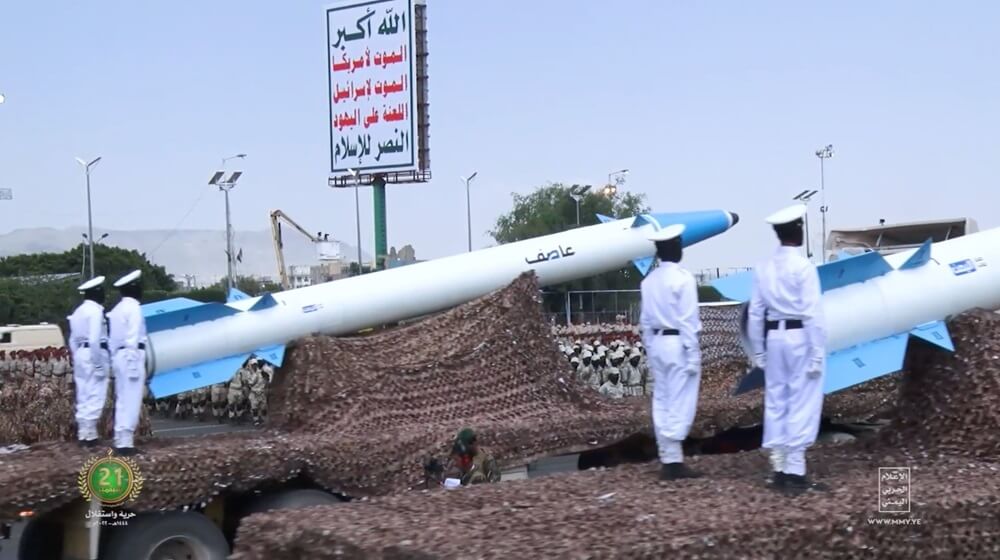
The Houthi leader Abdul-Malik Al Houthi spoke on television at the commemoration this week of the anniversary of the start of the 2015 Saudi-led military campaign against the Houthis in Yemen. During the speech, Abdul-Malik Al Houthi emphasized that his movement was on the side of Iran and the Palestinians, but that he was reserving the right to intervene.
The reservation did not last long. On Saturday, March 28, the Houthis launched a ballistic missile towards southern Israel. Later the same morning, a Houthi drone was intercepted over the Red Sea, possibly by a Barak-8 surface-to-air missile fired from an Israeli Navy Sa'ar Class corvette, before it got anywhere close to Israel. But later a second drone made it as far as Eilat before being intercepted by the Israeli Iron Dome system.
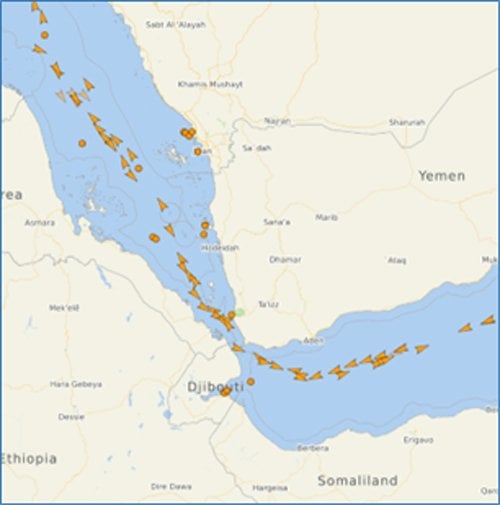
Tanker traffic in the southern Red Sea and Gulf of Aden, March 29 (VesselFinder)
So far, a lack of any incidents reported by the UKMTO in the southern Red Sea and Gulf of Aden tends to confirm that the Houthis have not yet changed their posture regarding the transit of commercial shipping. Tanker traffic through the Bab el Mandeb looks healthy. The Houthi military spokesman, Brigadier Yahya Saree, followed up the incidents by focusing on his movement's support for Hezbollah, the Palestinians, and Iran, without mentioning either Saudi Arabia or interdiction of shipping. But the Houthis have a paused but long-standing declared hostility to “Israeli-connected” shipping transiting the Bab el Mandeb, and have indicated that they will escalate their actions if the anti-Iranian coalition is broadened or expands the scope of its operations, and if operations against Iran are launched from the Red Sea.
The Houthis may be calculating that a limited strike on Israel will serve as a signal of its solidarity with the Resistance of Axis, without affecting what appears to be their principal objective at the moment - which is to draw in Saudi Arabia to negotiations to bring about a final agreement to end the war, following the largely successful ceasefire the two sides agreed upon in March 2022. Abdul-Malik Al Houthi's speech last week, in which he suggested he was going to resist pressure to resume attacks in the Red Sea, also set out the financial quantum of what he hoped he might extract from the Saudis during such negotiations.
Israel, however, is not likely to rest content with Abdul-Malik Al Houthi sending signals by launching drones and missiles at Israel. Israel will almost certainly retaliate, probably by once again targeting senior Houthi political leaders, but will do so in its own time.
In the meantime, tankers loading at Yanbu are successfully sailing south to Asia through the southern Red Sea without issues, thereby enabling Saudi Arabia to maintain exports at about 50 percent of the volumes that it would otherwise be shipping through the Strait of Hormuz. This residual balance of exports is critical both for Saudi Arabia's domestic fiscal needs - the Kingdom relies on current revenues to finance its in-year expenditure - but also to supply Asian consumers, principally in Japan and Korea, with at least a basic minimum of supply.

that matters most
Get the latest maritime news delivered to your inbox daily.
Based on the Houthi declared intent, a resumption of attacks on shipping in the Red Sea and Gulf of Aden now looks more probable than merely possible. But when this will occur is uncertain. Two triggers could be the movement of the USS Gerald R. Ford carrier strike group back into the Red Sea after its port visit to Split in Croatia, and particularly so if the Ford then moves into the Arabian Sea. Or if Saudi Arabia moves from its current defensive posture to take a more active role in Alliance offensive operations.
When the Houthis do resume their attacks on shipping, however, the impact on critical global supply chains will make the disruption caused by the current closure of the Strait of Hormuz far worse.