
House Passes Resolution to Roll Back California Harbor Craft Emissions Rule
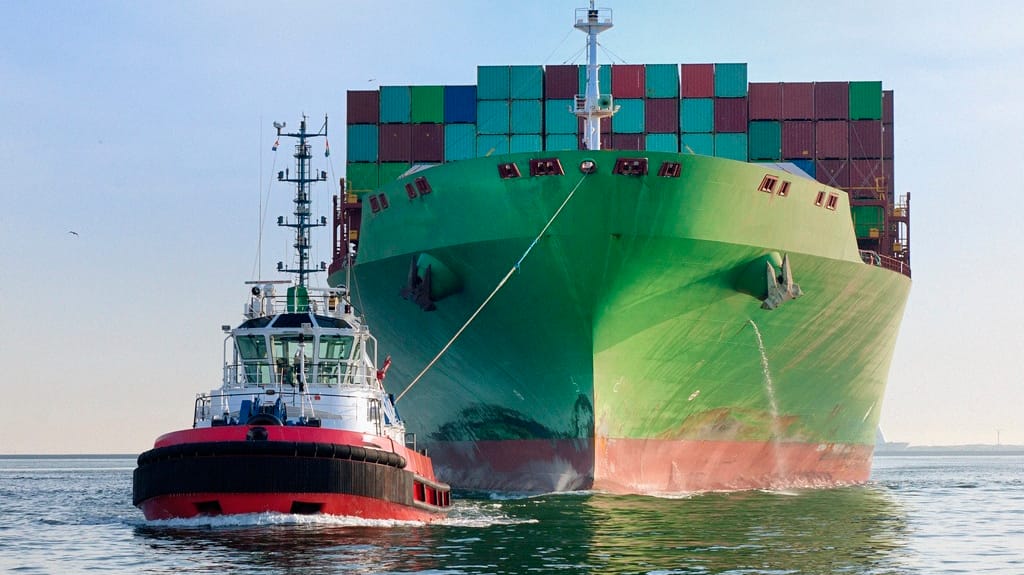
On Wednesday, the House of Representatives passed a measure to overturn California's Commercial Harbor Craft emissions rule. If also passed by the Senate, it would roll back a unique state-level requirement: installation of diesel particulate filters for tugs and workboats in certain big harbors.
Since the 1970s, the state of California has had a carve-out in federal law that allows it to create its own motor-vehicle emissions regulations. This unique permission-slip has enabled the California Air Resources Board (CARB) to clean up the infamous smog conditions of the Los Angeles basin. Today, CARB still writes statewide exhaust limits that are more stringent than federal standards, both on-road and off-road - like its recently-revised Commercial Harbor Craft Rule.
The 2022 revised rule (in proponents' view, a "waiver" from federal Clean Air Act standards) is intended to cut back on health-hazardous emissions from tugs, workboats and other harbor craft. CARB believes that the rule would reduce early mortality among California residents by about 530 people over the next few decades.
In practice, the rule requires tug and harbor craft operators to use an EPA Tier IV engine, the cleanest on the market. In addition, unlike any other regulator, CARB would require local harbor tugs to have a "level 3 Verified Diesel Emission Control Strategy (VDECS)" - a system that reduces particulate emissions by at least 85 percent. Options include switching to a low-emissions newbuild (battery-electric, hydrogen or methanol); or, for existing tugs, to retrofit a diesel particulate filter (DPF) - an emissions control system that has not previously been seen in commercial maritime applications in North America.
A marine DPF product exists in the yacht market, where it is used for aesthetic purposes. Commercial DPF technology is common in the market for European inland workboats, providing compliance with stringent EU Stage V particulate matter requirements (the filter is often found as part of a complete OEM-integrated propulsion package). At present, no such system exists in a class-approved form in the United States.
But the additional cost, complexity and fire-safety questions that attend the equipment have made California tug operators and the U.S. Coast Guard skeptical. The filters accumulate soot, so they need a cleaning cycle to periodically burn it off. When activated, the cycle runs the filter's internal temperature up to more than 900 degrees F. Because of this heating cycle, DPF exhaust designs get much hotter than non-DPF designs. In the tight confines of a tugboat's engine room, that would add new fire risks, operators say.
The marine towing community is generally opposed to the DPF requirement, and has warned that it could impose new safety risks (as above) or create prohibitive compliance costs, driving tugs out of the market.
Legislators have listened. In 2024, California's House and Assembly passed a bill to modify the DPF rule with a provision for an emergency bypass, plus an extended compliance timeline. California's governor vetoed the legislation.

that matters most
Get the latest maritime news delivered to your inbox daily.
At the federal level, EPA approved the rule in the final days of the Biden administration in January 2025. 18 months later, the Trump administration EPA claimed to reclassify CARB waivers as reviewable "rules" and referred them to Congress for legislative review, a break with 50 years of precedent in which EPA would defer to California for California-specific emissions regulation. The California attorney general sought and obtained an injunction to reverse EPA's action, and litigation continues.
Separately, a Congressional Review Act resolution to overturn the Commercial Harbor Craft Rule passed the House of Representatives on Wednesday, with 210 Republicans and three Democrats voting to nullify CARB's "waiver" for this specific regulation. The House resolution now heads to the Senate - along with a similar House-approved resolution to overturn the CARB At-Berth shore power rule, which passed on Tuesday. If approved by the Senate, the two resolutions would roll back California's most ambitious regulatory programs for maritime emissions, with implications for future clean-air regulation attempts at the state level as well.
