
After Greenland Dispute, EU Wants to Reduce Dependence on American LNG
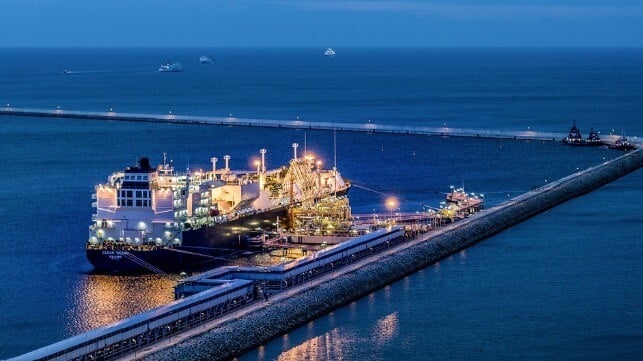
The European Union's top energy official is actively looking to source LNG from outside of the United States, the EU's biggest supplier, because of recent announcements from the White House that have deep implications for Europe's security.
Europe's energy ties with the U.S. have strengthened since the Russian invasion of Ukraine began in February 2022. Several months after Russian troops marched on Kyiv, Russian national gas company Gazprom broke its long-term supply agreements with European utilities, cutting off Europe from inexpensive pipeline gas. In the four years since, the EU has phased out most remaining sources of Russian gas, and it plans to complete that ramp-down by the end of 2027.
To fill the gap, Europe increased its pipeline gas imports from Norway and invested significantly in expanding LNG import capacity. The largest share of the extra LNG has come from one longtime trade and security partner - the United States, which has a booming LNG export industry on the Gulf Coast. Today, nearly 60 percent of European LNG imports come from American suppliers.
That urgently-needed energy supply has allowed European industry to keep running without dependence on Gazprom, an essential factor given the current and predicted levels of conflict with Russia. But the imports have also made EU energy markets dependent on America, and on American decisionmakers, to a degree that now makes some European leaders unsettled.
In a press conference Wednesday, EU energy chief Dan Jørgensen told reporters that after recent interactions with U.S. leadership, Europe is actively looking to source gas from other high-potential exporters, including Canada, Qatar and Algeria. Europe doesn't want to cut off American LNG, he said, but it has decided that it now needs to find additional strategic options. In particular, it is motivated by "the strained relationship to the U.S. and the fact that we have an American president that does not exclude using force against Greenland."
The White House's recent statements about an American need to "own" Greenland - "the hard way" if necessary, with "utilizing the U.S. military" a possible option - have pushed the EU to rethink the assumption that its U.S. gas supply will be secure, Jørgensen said. (U.S. leadership has since disavowed the idea of using force to acquire Greenland.)
The White House told Bloomberg this week that the U.S. remains Europe's most secure energy source. "Thanks to President Trump, U.S. suppliers are the best, most reliable partners, and we will continue to work with European nations to meet their energy demands with U.S. LNG," White House spokeswoman Taylor Rogers said.
Analysts see further signs of European unease in the flurry of diplomatic activity with other partners, like the EU-India "mother of all deals" trade agreement revealed on Tuesday. While the agreement was in the works for months, the timing and the terms have been widely seen as a strategic move to diversify and reduce EU reliance on the U.S. market. China may also stand to benefit from an increased European interest in alternative partners.

that matters most
Get the latest maritime news delivered to your inbox daily.
"While there are exceptions, there appears to be a trend of America's traditional allies derisking from [the] United States," commented Ryan Hass, a senior fellow in foreign policy at Brookings, in a recent post. "The flow of leaders to China is striking. French, Canadian, Irish, British, Korean, Finnish, and soon German leaders visiting Beijing in recent weeks. Beijing isn't making its offering more attractive or growing less aggressive. It is presenting a predictable alternative."
Top image: An LNG carrier delivers a cargo from the United States at a terminal in Poland, 2020 (PGNiG / Maciej Margas / CC BY SA 4.0)
