
Cruise Ships Are Improving Environmental Management Says SGS
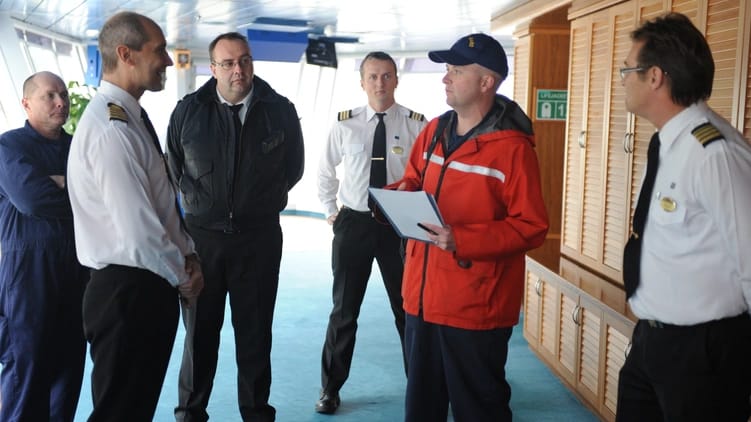
The growth of the cruise industry in the post-pandemic era has created increased awareness of maintaining a healthy environment for travelers. The trade group Cruise Lines International Association (CLIA) predicts that close to 40 million people will take a cruise in 2027. Keeping those folks safe from environmental health issues while onboard has emerged as a major business opportunity for SGS Marine Services.
SGS (General Society of Surveillance), founded in 1878 by Henri Goldstuck, is a global company based in Geneva, Switzerland. It offers a multitude of testing, inspection, and certification services for industries such as agriculture, forestry, building infrastructure, consumer products and retail, cosmetics, cybersecurity, and technology. Marine services for the rapidly growing cruise industry are one of its newest additions.
Robert Goldring, SGS’s Manager of Global Sales, said he started the company’s move into the cruise sector in 2000 when more industry regulations started coming into effect. SGS now works with approximately 85 percent of the world’s cruise lines.
“It is a huge program,” said Goldring. “It started with one cruise line, Norwegian Cruise Line (NCL) in 2000. They had an inkling that regulations were coming, and they did, so we started with one company, and I brought it into the SGS world, and we call it SGS Marine Services.
“The things we focus on are regulations from the general vessel permit, which is a set of regulations that came from the Environmental Protection Agency (EPA) specifically for large ships to control their discharges, and that includes ballast water testing and water treatment plants on board the ship. We also do public health testing, such as Legionella testing. Actually, legionnaires’ disease (a serious lung infection) propelled it (testing), and a lot of the cruise lines are doing it now.”
Goldring said SGS has expanded its program for Legionella testing “because we now have our labs on a global scale. They are certified by the CDC (Centers for Disease Control),” for an elite testing program.
"The regulations for the safety of ships’ passengers and crew are constantly improving," highlights Goldring.
“It is growing like crazy, so I would say that between the U.S. Coast Guard, which is now in the process of taking over these regulations from the EPA under what is called VIDA (Vessel Incident Discharge Act), the EPA, and the IMO (International Maritime Organization), they are doing a pretty good job keeping up with environmental protections for the oceans from large vessels. We do trade vessels as well,” he adds.
Overall, Goldring feels the public is safe from various environmental aspects SGS has to deal with, but there are always things some cruise lines need to address better, and some cruise lines are better than others.
“I would say in general, the environmental protection of the passengers is very good. Sometimes they run into situations, for example, where they may be painting a section of the ship with varnish, which is very toxic, and fumes get inside the “skin” of the ship, as we call it. People get sick from this, so that is a problem,” but he believes a lot of the cruise lines and trade vessels as well are addressing this issue.
SGS Marine Services also has a program called “crew wellbeing," where we actually go on the ship and take a survey on how well the crew and passengers are being protected. We have done it for two clients now, and that is what we are involved with. A good example was when I went up to the Lido deck of a ship where they have their buffet and everything. They had just recently painted in the eating area, and it was not dry. They had signs that said, ‘Do Not Touch. Wet Paint.’ The fumes from the paint, however, would go into the food, and we call that cross-contamination, and that is a very big thing. People probably shrug it off and say, ‘How can that hurt me?’ but you have volatile fumes in the air that land on the food and then go into your body. This is one example of how these companies and cruise lines have to be aware,” said Goldring.
When SGS technicians do their work on a ship, they look at approximately 20 things. “We are doing temperatures, crew wellbeing, and actually talking to crew, noise evaluations, and how many decibels the crew and passengers are exposed to. We will go into crew and passenger cabins and test to see how much mold is in the air. We test the showers and showerheads and water faucets for Legionella,” he said.
With the size of cruise ships constantly growing, SGS Marine often sends two or even three field technicians to do the testing.
In general, the SGS spokesman feels cruise lines are “doing a very good job, some do more than others,” adding that SGS Marine Services also carries out “ballast water testing, which is important for the oceans. If their (ballast) system is not working well, they are discharging things that are killing fish.”
In addition to the larger ships, some cruise lines have their own private islands, and SGS sends technicians to test the water around these locations. “You have people swimming in water close to shore, and it has to be free of bacteria, fecal coliform, etc., plus they also have sewage treatment systems on the islands, and they have to discharge somewhere. So the water they are discharging is tested as well,” said Goldring.
The opinions expressed herein are the author's and not necessarily those of The Maritime Executive.
