
Building a Pathway for Maritime Education
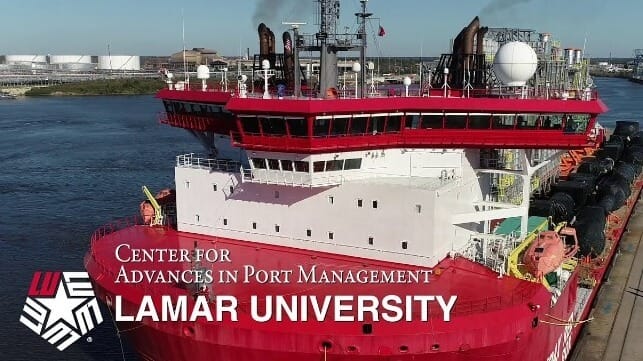
The critical role ports play in our nation’s transportation systems and economic health has been amply demonstrated over the past two years with the highly publicized supply chain "snarls." It is claimed a crisis should not be wasted, and AAPA is working hard to make sure the value of our nation’s ports is even better appreciated now. That recognition is also needed at the local level to facilitate recruitment into both the blue collar and managerial workforce, where the rolls have been diminished by COVID-19 and by retirements.
Two questions seem timely. How can we attract workers into entry-level positions in ports, marine terminals, and the broader maritime sector? How can we better prepare working professionals to grow into roles of future port and marine terminal industry leaders?
In Southeast Texas, the Waterways Advisory Council (SETWAC), which represents business, industry and public agencies with a stake in the safe and efficient operations of the Sabine-Neches waterway, has been focusing on building awareness of the good, well-paying job opportunities in the port, terminal and marine transportation sectors. Educational "pathways" have been identified connecting K-12 school districts and community colleges with port authorities, terminal operators, other maritime interests in a collaborative effort.
Among other outcomes, this partnership has helped create a regional maritime pathway through the Texas Education Agency. As a result, the Beaumont Independent School District has created a maritime program offered to high school juniors and seniors, which bestows several maritime-relevant certifications.
The educational pathway to port industry workforce development peaks with advanced education. The knowledge and skills our industry’s future leaders will need exceeds that required of previous generations. Practical knowledge augmented by a theoretical foundation and analytical acumen are required. Moreover, educational systems must be tailored to the ways that our future leaders learn - that is, increasingly through digital platforms.
The masters of science in port and terminal management degree offered by Lamar University's Center for Port Management seeks to help fill the need for advanced education in our industry. Our educational platform is fully online, allowing access not only to students - working professionals - throughout the US and beyond, but also industry experts who teach fully half the curriculum.
The MOU between Lamar and AAPA, originally entered in 2017, was renewed in March, demonstrating the continued interest of the public port industry in port-centric advanced education. Dr. Noel Hacegaba, deputy executive director, Port of Long Beach, and chair of AAPA’s Professional Development Board, stated, “Lamar University’s Center for Port Management fulfills our industry’s long-standing dream of having an academic venue to gain both the theoretical and practical knowledge necessary to successfully prepare the next generation of port leaders.”
AAPA President & CEO Chris Connor added, “Lamar University’s Center and its singular advanced degree in port and terminal management is what port professionals of the future need today.”
Lamar’s masters degree in port and terminal management reveals the special skills and knowledge that our profession requires. On-the-job training and continuing education programs offered by AAPA and other trade associations now have a pathway to higher education dedicated to port and terminal management. And the pathway that begins in early education - ultimately leading to a good job in the ports and maritime industries - can also open the door to positions of industry leadership in both public and private sectors.
Erik Stromberg is the Director of the Center for Port Management, Lamar University and Chair of the SETWAC Education, Research and Workforce Development Committee.
Sade Chick is the Director of Corporate Affairs at the Port of Beaumont and Chair of the SETWAC Workforce Development Subcommittee.
This article is sponsored by Lamar University's Center for Port Management.
The opinions expressed herein are the author's and not necessarily those of The Maritime Executive.
