

White House Pushes Congress to Build Warships and Non-Combatants Overseas
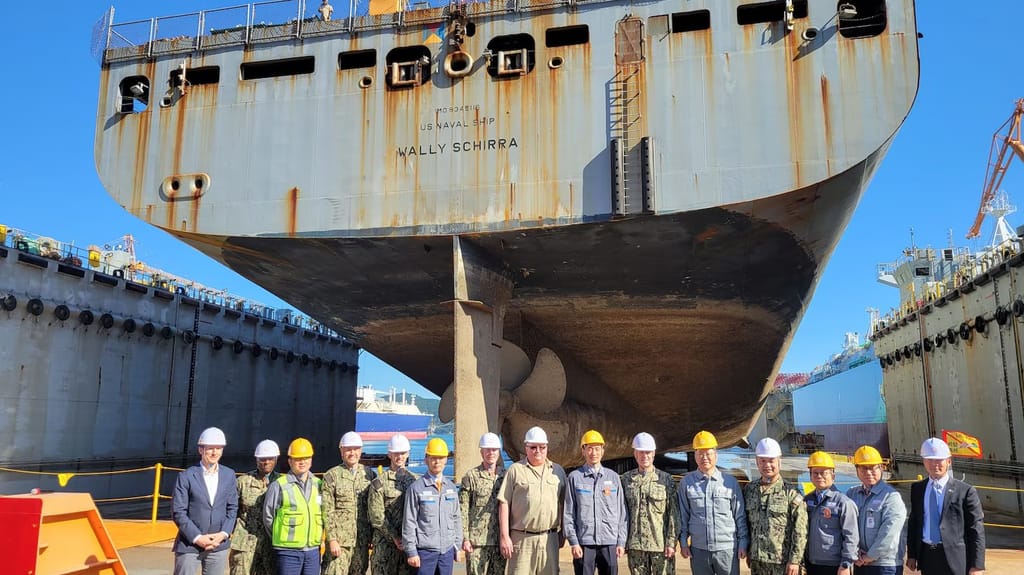
Reports coming from Korea are that the Trump administration is pushing back on the U.S. Congress while calling for building two warships and two non-combatant support ships for the U.S. Navy overseas. While it does not specifically specify South Korean years for the projects, the reports are being linked to earlier statements by Donald Trump in favor of South Korea’s shipbuilders.
The White House and U.S. Navy have repeatedly expressed frustration about the problems in the domestic shipbuilding industry and the delays in building ships for the U.S. Navy. Donald Trump has outlined a plan for a large build-up for the Navy led by his vision of a new generation of battleships.
The Korean news agency Yonhap reported in June that Donald Trump had a conversation with South Korea’s President Lee Jae Myung on the sidelines of the G7 summit in France. He reportedly asked, “Can you quickly build 10 U.S. warships?”
Yonhap is reporting today, August 5, that the White House’s Office of Management and Budget (OMB) sent documents to the U.S. Congress that, for the first time, spelled out the desire to place orders for two warships and two non-combatant support ships with foreign yards. According to the report, OMB highlights the “challenges posed by current shipbuilding backlogs in the U.S.”
The position was contained in a policy statement that OMB submitted in response to the U.S. House of Representatives’ draft of the National Defense Authorization Act for FY 2027. Passed on July 22, the House inserted language reiterating the current ban on employing foreign shipyards to build vessels for the U.S. Navy.
Congress codified the limitations in the 1960s, first with the Byrnes-Tollefson Amendment, which was in the 1965 Appropriations Act for the Navy, and said funds could not be used to build warship components in foreign shipyards. Three years later, the 1968 Appropriations Act contained the Byrnes Amendment, which extended the prohibition to building naval vessels in foreign shipyards. Congress asserts this is for national security and to support the U.S. shipbuilding industry.
OMB reportedly took the position that the prohibition is inconsistent with the administration’s priority legislative proposal to build up the Navy and drive significant and direct foreign investment into U.S. shipbuilding capabilities. The administration has already extracted the Make American Shipbuilding Great Again commitment from South Korea, which promised to invest $150 billion into the U.S. industry.
The policy document reportedly cites the “Finland Model” as an example of how the U.S. can leverage foreign shipyards to rapidly expand its naval capabilities and drive investment in U.S. shipyards. The U.S. Coast Guard used this model to order a total of 11 new Arctic icebreakers, with the first of the vessels being built in Finnish yards and then leveraging the expertise to build the second phase of the vessels at the Bollinger shipyard in Louisiana and a new yard in Texas being developed by Davie at the location of the former Gulf Cooper yard.
OMB reportedly says the House’s prohibition “limits the flexibility” for the U.S. to leverage the specific advancements, strengths, and technology of foreign shipyards. It says accessing these capabilities by following the Finland Model will expedite the growth of the U.S. shipbuilding industrial base and meet national security objectives.

that matters most
Get the latest maritime news delivered to your inbox daily.
Last month, Yonhap reported that the United States Navy had already formally requested information from South Korea’s leading shipbuilders regarding their capabilities to quickly build destroyers and oilers. The U.S. government was gathering pricing information as well as delivery terms and other market information ahead of what was widely anticipated to be a proposal to place the first orders for the expanded Navy.
The Korean shipbuilders have highlighted the ambitious goals set by the Trump administration and the number of vessels that would be required. They view this as a strong opportunity to expand their relationships and have already made investments and formed partnerships in the United States.