


U.S. is Negotiating to Cancel More Offshore Wind Leases
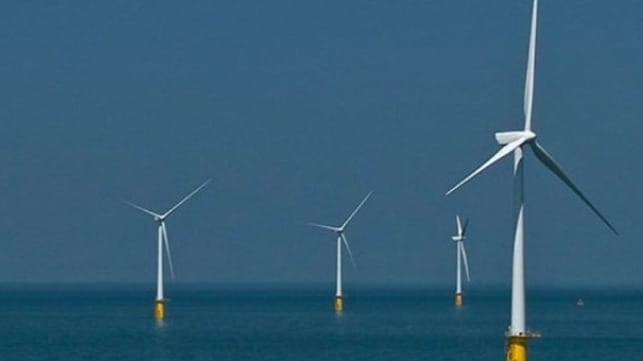
Executives at the French company Engie confirmed today that they are in discussions with U.S. officials about possibly canceling their offshore wind farm leases. Last month, the administration agreed to reimburse TotalEnergies for its offshore wind leases and hinted it might use the same technique with others, although advocates and lawmakers are questioning the legal authority.
The Trump administration said in March that it had agreed to reimburse TotalEnergies nearly $1 billion it had paid to acquire a large lease in the New York Bight, which was to host two large wind farms, as well as a small property off North Carolina. The administration called it a win, saying the company had agreed to reinvest the money in the U.S. LNG sector, where it has a project underway.
The CEO of Engie said today, April 21, that “discussions are ongoing” to see if an agreement is possible. No details were offered, but Catherine MacGregor, CEO of Engie, said they were exploring terms to cancel their three offshore leases.
Engie is a 50-50 joint venture partner with Portugal’s EDP Renewables in a company named Ocean Winds, a global developer of offshore wind projects. The company received approval in the last days of the Biden administration for the Construction and Operations Plan for Southcoast Wind. It calls for a capacity of 2.4 GW and would be located off the coast of Massachusetts. It had also reached power agreements to split its output between Massachusetts and Rhode Island. The project, however, has been deferred under the Trump administration. It paid a reported $135 million for the lease in 2018.
Ocean Winds also purchased in 2022 a lease in the New York Bight, which it called Bluepoint. It paid $765 million and was proposing another 2.4 GW of capacity. The project was in early-stage development when Trump took office and immediately sought to stop offshore wind development. Ocean Winds also has a lease off California called Golden State Wind, which it said could accommodate about 2 GW of capacity. It paid approximately $150 million for the California lease.
The company confirms it has taken impairment charges against the three assets. All work has been suspended.
The CEO of TotalEnergies has defended the agreement, telling Axios that the company was at risk of losing $928 million, and called that “unacceptable.” He cited political volatility with the changes of administrations every four years, as well as low U.S. power prices, saying TotalEnergies would not develop U.S. offshore wind projects.
He asserted to Axios, “It is our money,” which was a response to critics who say the Trump administration is using taxpayer money to pay off TotalEnergies. For TotalEnergies, the alternative was litigation against the Trump administration to get the projects moving. It also wrote off the assets and suspended all work after the election.

that matters most
Get the latest maritime news delivered to your inbox daily.
Critics are questioning the statutory authority for the reimbursements and the source of the funding. They assert the government contracts did not provide for canceling the leases at this stage. They claim the administration is using a fund controlled by Congress to pay court settlements to make the planned reimbursements. Further, they assert the contract does not include terms to require TotalEnergies to reinvest in the U.S. LNG sector.
While asserting the administration does not have the authority to voluntarily reimburse TotalEnergies, it is unclear how the agreement could be challenged and by which entity. Interior Secretary Doug Burgham defended the deal in an interview by again asserting that offshore wind farms are “detrimental to national security.” The administration used that claim to impose, in December 2025, stop-work orders on five under-construction offshore wind farms. Five courts issued temporary injunctions preventing the Bureau of Ocean Energy Management (BOEM) from enforcing the stop-work orders. However, beyond those five projects, no other offshore wind farms are progressing under the Trump administration.
