

Tension Between Iran and Oman as IMO Gulf Exit Plan Mobilizes
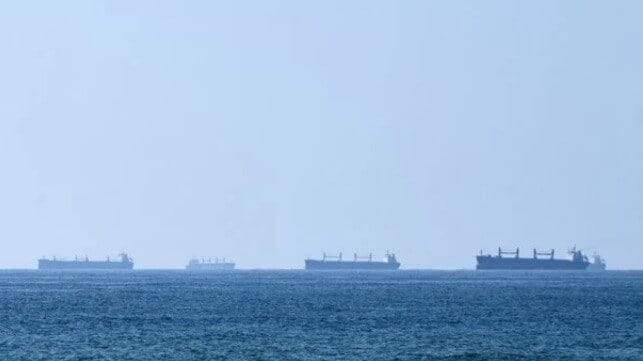
Tensions have arisen between Iran and Oman as the International Maritime Organisation (IMO) - coordinated plan to manage the exit of ships trapped in the Gulf begins to be activated.
The first two crude tankers, operating with their AIS systems switched on, have now successfully passed through the Omani-designated coastal channel, and are now making their way south into the Gulf of Oman towards Fujairah, the riskiest part of their passage now complete, but the danger not necessarily over yet.
The two vessels were the Liberian-flagged, the 274m Suezmax Stoic Warrior (IMO 1028762) and the 160m Panama-flagged chemical tanker Ginga Puma (IMO 9343780).
AIS tracking services at midday on June 25 showed a number of nameless tankers both exiting the Gulf on the Omani coastal route, but also a number of vessels making their way into the Gulf on the same channel, contrary to the Navigation Warning issued by the Royal Navy of Oman (RNO), which had warned of potential dangers of collision should vessels not follow Omani Hormuz Control instructions.
Interestingly, a number of vessels were seen at midday to be using the channels of the formal Traffic Separation Scheme, such as the Korean-flagged VLCC Grand Bonanza (IMO 9915569), and the Korean-flagged chemical tanker Mandala (IMO 9200598). Some of these plots may be spurious, given the common spoofing of the AIS system, and a number of tankers are using this route with their AIS systems switched on but without disclosing their names. The activity nonetheless reflects that shipping is now on the move. Evident also is an uptick in shipping using Iran’s designated northern channel around Larak Island.
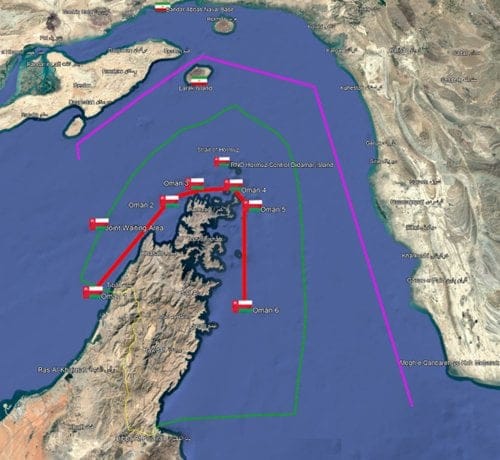
The Omani channel for exiting the Gulf (red), the Iranian PGRA northern route (purple), and the extent of Omani territorial waters (green) (Google Earth, ©CJRC)
In response, notwithstanding what was thought to have been a joint position coordinated with the Omanis, and perhaps reflecting splits within the Iranian command and control system, the IRGC has warned vessels to only use the Persian Gulf Strait Authority (PGSA)-defined transit system. On June 16, the PGSA issued instructions on how the “free passage for 60 days” arrangements was only to be utilized through the PGSA scheme.
In a statement carried by IRNA, the IRGC Navy made a statement early on June 25 disavowing the Omani-IMO scheme, saying it had not been coordinated with Iran, and warning vessels to only use the PGSA scheme. Vessels were instructed to coordinate their movements with the IRGC Navy on Channel 16. Before the recent conflict, the Omani navy would jam any attempts by the IRGC Navy to contact ships on Channel 16 if the vessels concerned was in Omani waters.
It appears, therefore, that there is now a split between Iran and Oman, despite the Omani attempts to come to a negotiated arrangement, and that a test of wills is now taking place. If the Iranians fire on vessels now currently making their way through the Strait, they will risk bringing to an immediate end the talks in Switzerland, which otherwise seem to be making progress.
?? ????? ?? ????? ????????? ????????? ? ????? ????? ?????? ?????? ?? ????? ???????? ???? ?? ???? ???? ??????? ?? ???? ????? ????? ???? ???? ???????? ?? ??????? ???? ??? ?? ?? ????? ???? ???? ????? ??????? ????? ????? ??.
— PGSA | ???? ?????? ????? ???? ???? (@PGSA_IRAN) June 19, 2026
????? ? ????? ??????? ?? https://t.co/7SPYB6INvI pic.twitter.com/uWNej4Ovkz
The PGSA post instructing mariners to only use the PGSA scheme during the 60-day announced period (PGRA)
The Bahraini Foreign Minister Abdullatif Al Zayani has posted his approval of the Omani-IMO announced scheme, indicating that concerns among the GCC about Oman’s position may have dissipated.

that matters most
Get the latest maritime news delivered to your inbox daily.
The UAE presidential adviser Anwar Gargash, a reliable guide to the UAE’s policy positions, also said on June 25 that Iran could not “impose a fait accompli in the Strait of Hormuz born out of treacherous aggression” against the countries of the GCC.
It appears, therefore, that attempts by GCC countries in recent days to reconcile with Iran, despite the attacks both have carried out against each other, may have not achieved a meaningful dialogue and have reached the end of the road, with the GCC countries now taking a more robust position in order to safeguard their vital national security interests. This is a message, which is likely to have been transmitted to Secretary of State Rubio as he tours the GCC states seeking support for the US position at the Bürgenstock negotiations. In a press opportunity in the White House alongside the NATO Secretary General, Donald Trump stated unambiguously that the charging of Strait of Hormuz passage fees could not form part of a final settlement with Iran.