


Opening Hormuz to Be Key Issue of Negotiations as Transits Remain Low
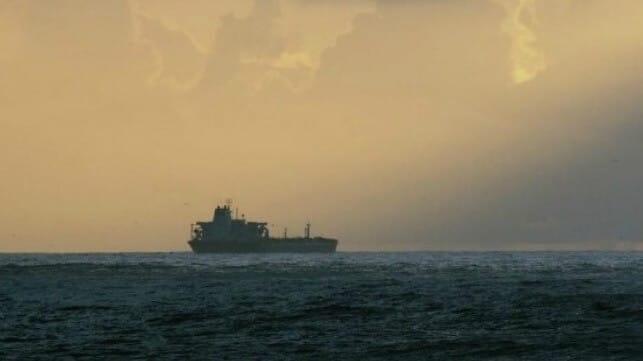
Three days into the announced ceasefire, the military portion appears to largely be holding, but Donald Trump’s demand that the Strait of Hormuz be open for “complete, immediate, and safe” operations remains elusive. The expectation is that it will be front and center as the U.S. and Iranians start talks in Pakistan this weekend.
Donald Trump again lashed out on social media Thursday evening, calling Iran’s efforts “dishonorable” and saying it was doing “a very poor job” of allowing oil to go through the Strait of Hormuz. He said it was not the agreement, and responding to reports of fees being charged to tankers, Trump wrote, “If they are, they better stop now.” This was after he earlier said maybe the U.S. and Iran might jointly control the Strait and split the fees.
Despite the demands on social media, the reality remains that only a handful of ships have transited for a third day. First reports said it was six ships on Thursday, but Kpler later revised it, saying the total was nine, up from five on April 8. Early expectations and indications of a slight uptick after the announcement of the ceasefire largely did not pan out.
All the sources agreed it was fewer than 10 ships in the last 24 hours based on AIS transmissions, with NBC reporting it was 19 ships in total since the start of the ceasefire. However, some vessels are still believed to be going dark for the transit, meaning the actual number might be higher, but nowhere near the 100 to 120 vessels a day before the hostilities began.
Less than 10 vessels have transited the Strait of Hormuz in the last 24 hours, according to automatic identification system (AIS) information on https://t.co/bYX0jXrfTw, more than 48 hours after President Donald J. Trump announced a 2-week ceasefire if Iran opened the Strait. pic.twitter.com/O01I3EWWk1
— OSINTdefender (@sentdefender) April 10, 2026
(Animation from MarineTraffic showing th continued lack of traffic through the Strait of Hormuz)
One notable transit late on Thursday tracked by Bloomberg was the Russian-flagged VLCC Arhimeda. Built in 2000, the 309,497-dwt tanker took on this latest identity and the Russian flag at the start of 2026. It was previously sanctioned by the United States in July 2025 for its involvement with the Iranian oil trade and linked to a sanctioned manager. Bloomberg reports the tanker appears to be heading to Iran’s Kharg to load a cargo.

that matters most
Get the latest maritime news delivered to your inbox daily.
While U.S. negotiators are expected to demand Iran immediately open the Strait, a top economic advisor to the White House said in interviews on Thursday, there were backup plans. Kevin Hassett, director of the White House’s National Economic Council, admitted that traffic on the route remained “tightly throttled.”
Hassett said they hoped for clarity from the negotiations, but said it could take two months for the oil flow to return to normal levels through the Strait. He also said the Trump administration had a backup plan, while Reuters reported that UK Prime Minister Keir Starmer discussed plans to reopen the Strait with Donald Trump and in meetings with Bahrain and the United Arab Emirates.
