


Iran Fails to Pressure the Houthis into Resuming Red Sea Attacks
While most of the world's attention has been focused on the blocking of the Strait of Hormuz, lurking in the background has been a move which would make the damage to the global economy even worse: a complementary closure of the Bab el Mandeb, which would leave access to the Arabian Peninsula from Asia restricted to the Emirati ports of Fujairah and Khor Fakkan, and the Omani ports of Sohar, Muscat, Duqm, and Salalah. From a global economic perspective, it is critical for Saudi oil diverted from east coast terminals to Yanbu on the west coast to be able to head south to Asia through the Bab el Mandeb.
Whether the Houthis will resume their attacks on shipping and restrict movements through the Bab el Mandeb once again has been the subject of a great deal of uninformed comment, plus some designed to influence the political battle accompanying the war.
The debate hinges on whether the Houthis are Iranian subordinates, or are merely allies. This is a somewhat academic argument, because anyone who knows Yemeni political leaders as a cadre knows that they are strictly loyal to their own interests and those of their tribe. The Houthis have had generous technical, munitions, and financial support from Iran. But Houthi representatives in Muscat have always claimed that despite this support and the integration of senior IRGC staff within senior decision-making bodies such as the Jihad Council, the Houthis remain autonomous. Moreover, since independence and before, tribal Yemenis have always displayed a particular propensity for switching allegiances as circumstances (or the tide of battle) change.
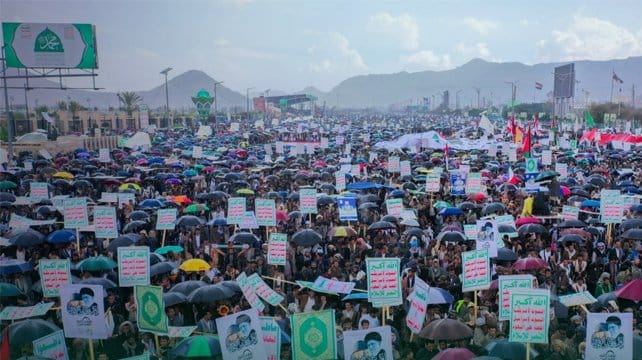
It was evident on March 4 when Houthi leader Abdul-Malik Al Houthi spoke on television that he was reserving the right to intervene in the war, notwithstanding the huge and bellicose demonstration held in Sana'a the next day, and mirrored elsewhere by smaller demonstrations in other Houthi-controlled areas. Abdul-Malik Al Houthi's message was subtly and diametrically different, non-committal about joining the war but reserving the right to do so.
Since then, the Iranian political machine has been urging the Houthis to join, which will probably be considered slightly insulting pressure, which is only likely to harden Abdul-Malik Al Houthi's resolve to stay out of the fight until a different course seems in the best interest of the Houthi cause domestically. It is of some significance that at probably their greatest moment of crisis, Iran’s IRGC-dominated leadership has not been able to generate practical support from the Houthis, when apparently they have been able to mobilize action from both Hezbollah in Lebanon and pro-Iranian militias in Iraq.

that matters most
Get the latest maritime news delivered to your inbox daily.
This posture has, in effect, been confirmed by a further speech this week made by Abdul-Malik Al Houthi commemorating the 11th anniversary of the start of the Saudi-led military campaign against the Houthis in Yemen. The first hour of his cogent and careful speech in formal Arabic - in stark contrast with the hysterical style of his military spokesman Yahya Saree - was devoted to totting up the cost of the war against the Houthis, which started in 2015. The damage in terms of infrastructure, lives destroyed, and lost revenues was primarily attributed to the Saudis, even though extensive damage was caused during the U.S. (and UK) Operation Rough Rider in March and April 2025. But in effect, this was the resumption of a negotiation with the Saudis for a compensation package, to form part of a final peace deal, negotiations over which have stuttered on since a ceasefire was agreed in March 2022. The speech was not a declaration of an imminent outbreak of war, although Al Houthi made it clear he was on the side of the Iranians.
The most consistently reliable and best-informed analyst covering Yemen affairs, Mohammed Al Basha, believes that Abdul-Malik Al Houthi is reserving his position and is ready to intervene in changing circumstances. But Abdul-Malik Al Houthi will not allow the Houthi movement to go down with the sinking ship. Instead, he appears to be attempting to take advantage of Saudi Arabia's precarious position by securing a favorable and final end to the war between them. This, in turn, would strengthen the Houthis' hand in any subsequent negotiations with the Internationally Recognized Government, opening up the prospect of an internal settlement between the warring factions in Yemen, without external interference - a prospect which has always been assessed by Oman as the solution most likely to lead to a stable future for Yemen.
