


IMO: 400 Ships and 6,000 Seafarers Are Still Unable to Depart Persian Gulf
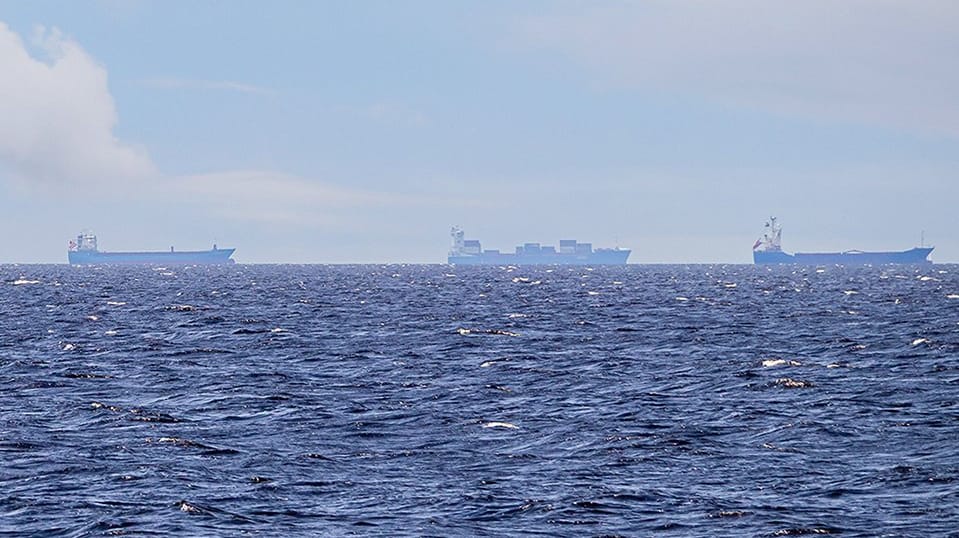
As the U.S. war with Iran reaches the six-month mark, the International Maritime Organization issued a new warning calling for the safety of seafarers. Further, while Donald Trump and U.S. Central Command are asserting the mines have been removed and the Strait of Hormuz is “building momentum,” the international shipping community remains hesitant, seeking further reassurances before it resumes normal operations.
“While some ships and their crews have been able to leave the Persian Gulf, up to 400 ships carrying around 6,000 seafarers have been unable to depart safely since the conflict began,” said IMO Secretary-General Arsenio Dominguez in a new statement issued on August 28. Discussing the “Strait of Hormuz crisis,” Dominguez called for renewed political will and cooperation, referring to the situation as “unresolved.”
The IMO launched its evacuation effort in late June, and it ran for four days between the 23rd and the 26th, getting approximately 136 ships and 2,900 seafarers out of the Gulf before reports of renewed attacks caused a suspension. By the IMO’s calculation, there have been 70 confirmed incidents as of August 26, with 19 confirmed seafarer fatalities. It does not estimate how many of the approximately 20,000 seafarers that were trapped at the start of the conflict have been injured, but it disputes reports of free movement, saying seafarers are still unable to move safely.
“I call on all member states and the shipping industry to work together with the IMO and the wider United Nations system to advance practical solutions to restore the freedom of navigation through the Strait,” said Dominguez. “The deterioration of maritime security around the globe – from the Black Sea to the Red Sea and Gulf of Aden – is detrimental to us all. But it is particularly distressing for the thousands of innocent seafarers affected.”
U.S. Central Command chief, Admiral Brad Cooper, also confirmed in his video statement posted on social media that vessels are still seeking direct U.S. military protection to transit the Strait of Hormuz. He said over the past several months U.S. forces assisted nearly 1,500 commercial vessels.
Cooper, however, asserted U.S. forces have now “meticulously and quietly” cleared the mines from the Strait of Hormuz. U.S. officials dismissed reports that there had been 80 to 150 mines laid by Iran, saying those figures were “outdated.” Further, Cooper has said that U.S. strikes destroyed more than 90 percent of Iran’s estimated stored inventory of around 8,000 mines.
The U.S. position is that the “internationally recognized transit routes” are free of mines. However, at the same time, the Joint Maritime Information Center warned of a continuing risk of “drifting or uncharted mines” near the traffic separation scheme.
Cooper, in his statement, asserted that the U.S. had aided tankers to move 750 million barrels of crude oil out of the Persian Gulf, a figure some experts think might be inflated or a broader total over the six months since the start of the war. Donald Trump claimed on Thursday that the U.S. helped 24 tankers transit the Strait, but if it was accurate, the vessels were “dark” because tracking cannot identify that volume of shipping.
Tracking data continues to indicate a slow trickle of vessels, and critically, very few ships are returning to the Gulf for additional cargoes. More of the volume has come through the shuttle operations, with many operators unwilling to send their big ships back through the Strait once they got them out. Iran attacked tankers in the Omani (southern) channel and claimed on Thursday to have turned back at least one LPG carrier attempting to enter the Gulf. U.S. Central Command also said on Thursday it had redirected 75 commercial vessels, disabled three, and boarded two to ensure compliance since the resumption of the blockade.
Ending the blockade continues to be one of Iran’s top conditions before reopening the Strait of Hormuz. Officials said on Thursday that Iran is “preparing a list of conditions” in response to meetings with mediators and senior officials from Qatar. It claims to have an agreement with Oman for a new temporary operation, including a splitting of fees and responsibilities for the Strait of Hormuz.

that matters most
Get the latest maritime news delivered to your inbox daily.
Trump repeated his assertion that Iran is “begging for a deal,” but for now his focus appears to be on increasing the economic pressure.
Six months into the war, the IMO’s Domingues says thousands of seafarers continue to live and work under conditions of heightened risk and uncertainty.
