
Shadow Fleet: A Way to Get Supplies Past an Indo-Pacific Enemy
[By Andrew Rolander]
The solution to maritime logistics challenges may not be a purely military one but, rather, one pulled from the playbook used by ghost fleet [better known as "shadow fleet" or "dark fleet" - eds.] smugglers and other illicit networks.
Mobility, sustainment and logistics are the heartbeat of warfare because they are among the most important core functions that enable and empower operations, combat or otherwise. In other words, these functions help convert a nation’s resources into kinetic combat power. A military cannot fight effectively without the ability to move forces and maintain continuous resupply in an operational theater. But in any war the unexpected and the overlooked can be relied on to assert themselves in ways that challenge commanders to think creatively about complex problems. In a future Indo-Pacific war, how can the United States military and its partners execute effective logistics in an environment which will almost certainly be contested from garrison to combat?
It doesn’t matter how excellent one’s weapon systems are if they are unavailable for operations where they are needed most critically. At 165 million square kilometers, the Pacific Ocean is larger than all the planet’s land mass. Logistics challenges in the Pacific theater are already daunting even before the shooting starts.
Ghost fleet tactics offer solutions to these challenges. These fleets, deployed by countries such as China and Russia, employ deceptive practices to operate covertly, making it challenging to track their activities and ensure accountability.? These vessels often disable or falsify signals from their automatic identification systems, avoiding detection and obscuring their locations and movements.
Ghost fleets are frequently registered under flags of convenience from nations with lax regulations, such as Panama and Liberia, allowing them to evade proper oversight. The ships and their operators often take advantage of complex ownership structures involving shell companies and complicated histories, obfuscating the actual owners and operators of the vessels. This intricate web of deception makes it remarkably difficult for authorities to identify and hold responsible those behind these illicit shipping activities.
US doctrine emphasizes forward defense and flexible response, relying on strategic mobility to deploy and sustain forces globally. ?Ghost fleet tactics adapted for use by the US and partner navies could contribute to this, for example, by providing alternative means of sustainment in contested environments where traditional supply chains are at risk. Better yet, these tactics could be used to preposition critical equipment and stocks before a conflict starts without generating suspicion.
?One compelling idea for further exploration is the prepositioning of critical equipment and supplies using ghost fleet tactics.? The covert nature of these operations would enable the strategic placement of assets in key regions, significantly reducing response times and bolstering operational readiness. This approach is particularly advantageous in areas with escalating geopolitical tensions, as it allows for discreet preparation without signalling aggressive intent to potential adversaries. This tactic will also require identification of the specific types of equipment best suited for such clandestine storage, such as spare parts, fuel or specialized munitions. It is also important to understand the geopolitical ramifications of the strategy.
Integrating these alternative sustainment methods dramatically enhances the resilience and survivability of supply chains, especially within contested environments. When traditional logistical routes are compromised or interdicted, ghost fleet operations could provide an indispensable lifeline for critical resupply, ensuring that forces can maintain their operational tempo and effectiveness. This shift towards distributed logistics would reduce reliance on vulnerable, large-scale logistical hubs, thereby mitigating single points of failure and making the entire supply network more robust against adversary attacks or disruptions.
The successful integration of ghost fleet tactics into military logistics could have significant long-term implications and would require strategic investments. This would include the development of more sophisticated autonomous systems and secure communication protocols to ensure reliable and clandestine operations. Policy changes would also be essential to facilitate the full implementation of these strategies, alongside careful consideration of their effect on military doctrine and budget allocations. Moreover, adapting training programs and adjusting personnel requirements would be vital to effectively operate and manage such an advanced and unconventional logistical system.
Adapting selected tactics from ghost fleets is a novel and potentially crucial approach to mitigating the acute challenges of contested logistics that would arise in an Indo-Pacific conflict. While employing such unconventional methods calls for careful consideration and robust mitigation strategies, the potential benefits are significant. By embracing innovative solutions such as these, the US military and partners can ensure their ability to project power and sustain operations, even in the face of increasingly sophisticated and determined adversaries.
Andrew Rolander is an irregular warfare and strategic competition analyst supporting the US Department of Defense. The views expressed in this article are those of the author and do not reflect the official policy or position of the US Department of Defense or the US government.

that matters most
Get the latest maritime news delivered to your inbox daily.
This article appears courtesy of The Strategist and may be found in its original form here.
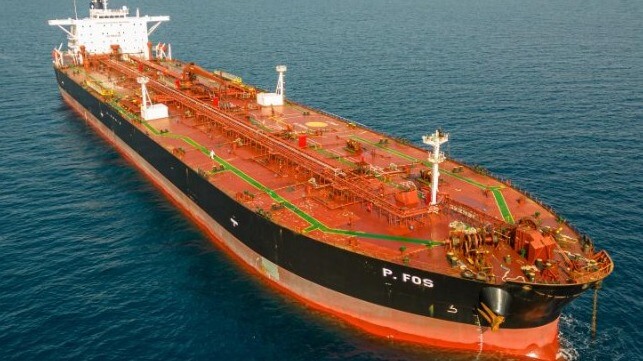
Top image: Shadow fleet tanker Boracay, seen here under her previous name, P. Fos (VesselFinder / Gianluca Balloni)
The opinions expressed herein are the author's and not necessarily those of The Maritime Executive.
