
U.S. and Iran Trade Retaliatory Strikes in Contest for Control of Hormuz
The U.S. and Iran have traded another round of retaliatory strikes in their ongoing contest over the control of the Strait of Hormuz, raising questions about the viability of their recently-signed ceasefire agreement, which has been in effect for just three weeks.
The cycle of counterattacks began with Iranian strikes on GCC-linked merchant shipping. Central Command's Joint Maritime Information Center confirmed a total of three attacks on Monday and Tuesday, including strikes on two tankers and one LNG carrier. It warned that “IRGC attacks, hailing, UAS activity, and targeted surveillance continued throughout the period, indicating sustained monitoring of commercial shipping and a continued intent to assert presence across key transit lanes.”
In response, the White House decided to impose retaliatory measures. The U.S. Department of the Treasury reimposed sanctions on Iran's oil exports, and President Donald Trump ordered a new round of airstrikes on targets in Iran. A U.S. official told CNN that this round of retaliatory strikes was intended to deliver "punishment," and that it would not be a proportional response.
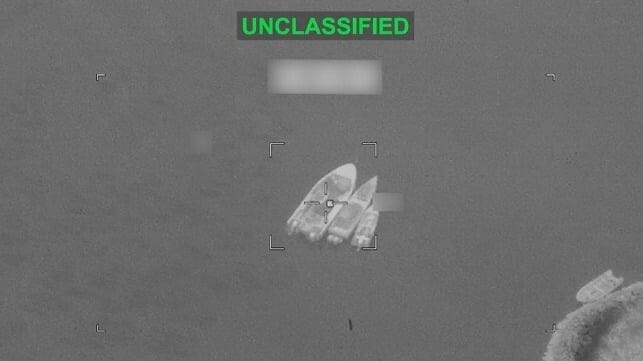
At the conclusion of the attacks, Central Command said that it had hit 80 Iranian targets, including air defense systems, coastal radar sites, anti-ship missile batteries, and about 60 IRGC attack boats in and around the strait.
Shortly after, Iran announced retaliatory attacks on 85 American military targets in the region, including U.S. Fifth Fleet's base in Bahrain and Ali Al-Salem Air Base in Kuwait, both of which have been repeatedly hit over the course of the conflict. The IRGC also claimed to have shot down another MQ-9 Reaper drone, a slow-moving U.S. Air Force model that is vulnerable to air defenses.
BREAKING: US announces it has hit over 80 targets with precision munitions in tonight's strikes on Iran, including more than 60 IRGC speed boats in and near the Strait of Hormuz, per CENTCOM.
— The Hormuz Letter (@HormuzLetter) July 8, 2026
US strikes also targeted Iranian air defense systems, command and control networks,… pic.twitter.com/bUEkJGo374
A compilation of strike footage from Tuesday's operations (U.S. Central Command)
The cycle of strikes raises questions about whether the two sides continue to escalate, or even abandon the ongoing negotiations for a permanent peace deal. The White House is reported to have maintained a discussion of military options in recent weeks. On Monday, Trump told reporters that if Iran did not sign a peace deal, the United States would have to finish what it started. He said it would be easy and quick to take out bridges and the Iranian power supply, but he did not want to impact the ordinary citizens.
Effects on energy markets and shipping
The revocation of the sanctions waiver for Iran's oil took effect on July 7, but it provides 10 days to wind down any transactions previously authorized - so long as the payments are made into a blocked account in the United States.
Oil markets had already been jittery after the reports earlier in the day of the new attacks. The benchmark Brent oil price jumped three percent, and in late trading, U.S. oil futures rose six percent. The major stock market indices all retreated.
It is unclear how today's revocation would impact the millions of barrels of oil Iran has already shipped. The NGO United Against Nuclear Iran (UANI) reports it has tracked 43 tankers departing with roughly $4.5 billion in cargo. Total estimates since the U.S. provided the General License in June are that as many as 55 million barrels had been shipped by Iran. TankerTrackers.com reported today that Iran is loading six million barrels of crude oil at Kharg Island.
The peace talks had been suspended after reports of progress. Iran has not yet commented on the latest developments, but had stopped the talks for the multi-day funeral of its supreme leader, who was killed in the first hours of the war. U.S. officials said that its negotiators were still working in good faith to complete the deal.
Iranian state TV repeated today the assertions of the IRGC that it had total authority over the strait. The reports said the ships that were attacked had not requested permission and had been warned.

that matters most
Get the latest maritime news delivered to your inbox daily.
Separately, in a letter to the International Maritime Organization, Iran again asserted its authority over the portions of the Strait of Hormuz that passed through its territorial seas. It rejected the United Nations Convention on the Law of the Seas (UNCLOS), saying Iran is not a party to the treaty. It said it was its sovereign right to oversee shipping in its territorial waters.
Iran recently established a new "Persian Gulf Strait Authority" to oversee the waterway. Under the terms of the Memorandum of Understanding with the United States, it was to maintain free transit through the Strait for the 60-day period. Its so-called authority, however, had already been speaking of a possible future requirement for insurance and suggested that shipping had to transit on its route.
