
Ukraine Attacks Iranian Arms Shipments on the Caspian Sea
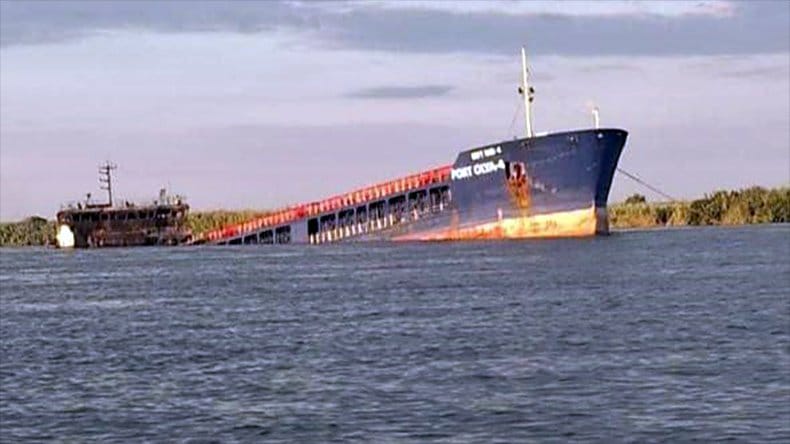
Details of Ukraine’s attack on shipping in the Caspian Sea over the weekend are still not clear. However, the Iranian reaction suggests that the attacks were both serious and effective, leading to the comic situation in which the Iranian Foreign Minister complained both to the European Union and the United Nations about Ukraine’s actions.
Media reports have not named the Iranian cargo ship which was struck by Ukraine. But reports describe how it was hit on the bridge, a sailor was killed, and the ship was sufficiently damaged to need rescue by the maritime authorities in Astrakhan, thereby positioning the attack.
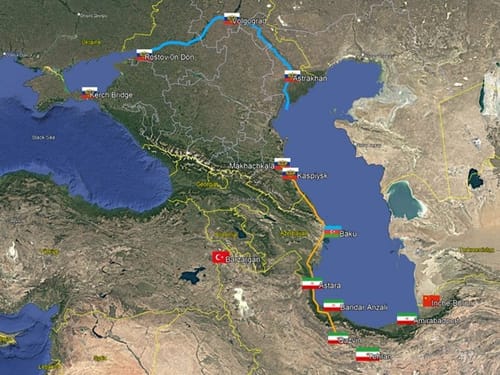
Caspian ports, the Volga-Don river-canal system (blue) and the disused railway through Azerbaijan (orange), connecting Iran with southern Russia (LandSat/Copernicus/CJRC)
President Zelensky, normally a reliable source of information, also announced that ‘vessels involved in shipping military cargo between Russia and Iran, as well as a military ship, were hit”. Other Ukrainian media suggests that the targets included the Russian cargo vessel Port Olya 2 (IMO 9481881) and the dry cargo ship Begey (IMO 8943210), sanctioned respectively by the US (OFAC) and the UK (OFSI).
The Maritime Executive has frequently described the vessels and arms cargos which are shipped from two Iranian ports, Bandar Anzali and Amirabadport, cargos that are landed either in Machachkala or Kaspiyisk, or further north in Olya or Astrakhan, at the head of Russia’s Volga-Don internal sea canal system.
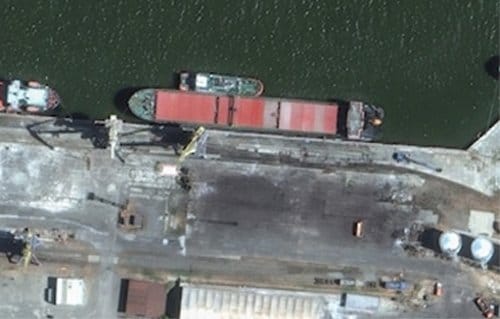
Sister-ship to the vessel attacked, Port Olya-3 unloads on the Volga, September 2024 (Maxar)
Before the current war in the Gulf, Iran’s principal military exports to Russia were 122mm and 152mm ammunition shells, and thousands of Shahed-136 drones. Iran cannot rely on rail routes through Azerbaijan into Chechnya, and uses shipping instead. In one of the best documented instances, in January 2025 Iranian social media images showed air defense systems and truck-mounted Fatah-360 tactical ballistic missile launchers (comparable in capability to the M142 HIMARS) at the dockside at Bandar Anzali, awaiting loading. The Fatah-360s were part of a Russian order for 220 such systems. Since the outbreak of war in the Gulf, Iranian arms shipments to Russia have continued, such is the Iranian needs for funds, but the nature of cargos will have changed.
Ukraine began attacking maritime targets on the Caspian in 2024. In November, Ukrainian drones attacked Russian naval vessels docked at Kaspiysk, damaging the Gepard Class frigates corvettes Tatarstan (F691) and Dagestan (F693), among others. In response, the Russians fired an RS-26 Rubezh ballistic missile from a launch site near Astrakhan, which was immediately counter-attacked by Ukrainian drones. Iranian abilities to defend against attacks on their shipping on the Caspian also disappeared that November, when most the Iranian Northern Fleet, notably its flagship Moudge Class frigate IRINS Deylaman (F78), along with most of the Fleet’s Sina Class fast attack craft, were sunk in the harbor at Bander Anzali.
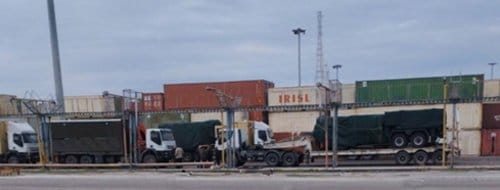
Fath-360 systems under tarpaulins at the Bandar Anzali IRISL dock facility (Iranian social media posts seen on MilitaryNewsUA)

that matters most
Get the latest maritime news delivered to your inbox daily.
Further Ukrainian attacks became inevitable this July, after Ukraine’s Long Range Command launched a concentrated campaign to close down Russian shipping movements on the Sea of Azov, from where the Volga-Don Canal provides a heavy transport route via Volgograd to the Caspian.
With the US blockade on Iranian shipping and ports in force along the whole of the southern Iranian coastline, and the railway link to China through the border crossing point with Turkmenistan at Inche-Buren damaged, the route across the Caspian has become the only cargo route for heavy traffic which remains under Iranian sovereign control. Otherwise, with relations with Azerbaijan irreparably worsened since Iran launched drone attacks in March 2026 on targets in the Azeri enclave of Nakhchivan, Iran has had to rely on trucking routes through Iraq and Turkey. The principal truck route into Iran from Turkey crosses the border at Barzargan. One might expect traffic on these truck routes to be subject to heavy surveillance and monitoring, nor to be immune from initiatives taken under the Ukrainian long range sanctions program.
