


Houthi Blockade Complicates Saudi Tanker Logistics
On July 19, Yemen’s Houthi rebel movement declared a “maritime embargo” against Saudi Arabia. The Houthis stated that the blockade was a direct retaliation for Saudi Arabia's long-running restrictions on Yemen and a recent alleged attack on the Sanaa International Airport.
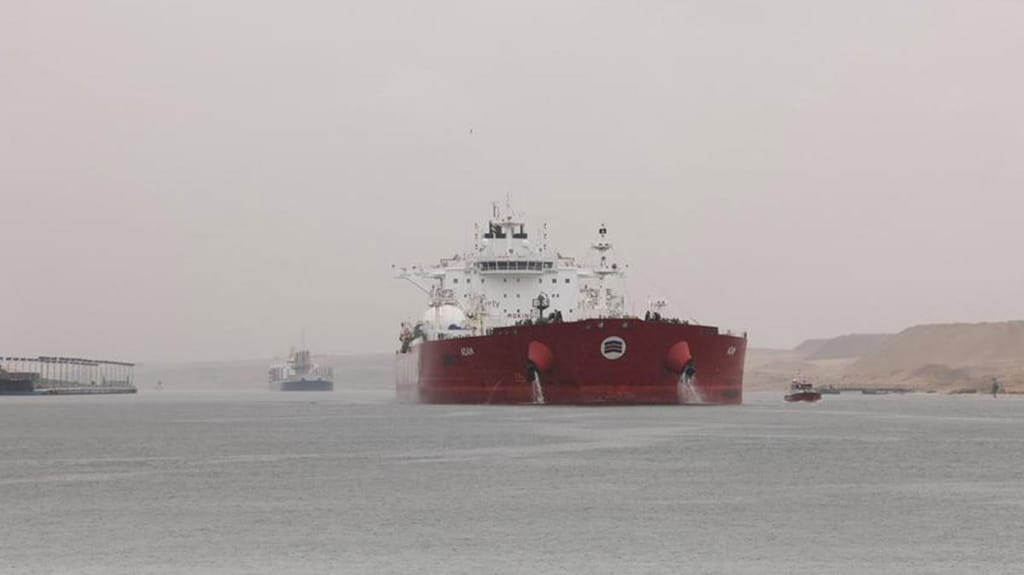
On July 22, the Houthis targeted two oil tankers, the Encelia, an Aframax controlled by Saudi’s Bihar International and the Layla, a Bahri VLCC. While the Encelia was hit and damaged, the attack on the Layla has not been independently confirmed.
Today, Saudi Arabia struck Yemen’s port of Hodeidah in retaliation. The attacks have increased an already high level of uncertainty in the oil and tanker business and market participants are all trying to figure out how to respond.
After the US/Israel war against Iran triggered the closure of the Strait of Hormuz, Saudi Arabia ramped up flows through their East-West Pipeline, moving crude from the kingdom’s eastern producing system to Yanbu on the Red Sea. Yanbu loadings reportedly averaged more than 4 million barrels per day (Mb/d) in June and early July, compared with less than 1.0 Mb/d barrels per day during the same period of 2025.
This represented an extraordinary reorientation of Saudi export geography. Instead of loading most export barrels at Ras Tanura and other Gulf terminals, Saudi Arabia was sending a large share of its crude across the peninsula and loading it on the Red Sea coast. As a result, roughly 2.5 million barrels per day of Yanbu exports were (until recently) moving south through the Bab el-Mandeb Strait, principally to South Korea, Japan, China and India.
However, the East-West Pipeline only partially solved the Hormuz problem and at the same time transferred Saudi Arabia’s maritime exposure to another chokepoint.
The situation around the Bab el-Mandeb Strait is not straightforward. The Houthi’s claim that the strait is open, except for vessels that called on Saudi Arabia. However, there are credible reports that at least two Chinese-controlled VLCCs carrying Saudi crude safely transited the Bab el-Mandeb strait. That seems to indicate that the situation is less black-and-white than initially thought. In the meantime, charterers and owners are considering alternative routing and there are rumors in the market that several Asian charterers already fixed Saudi cargoes ex-Sidi Kerir, routing their cargoes around Africa.
Re-routing Saudi crude destined for Asia via the Mediterranean is an option, but it comes with obvious complications. Fully laden VLCCs cannot pass through the Suez Canal because they are draft restricted. That leaves two alternative approaches.
The first is to use the Sumed pipeline, a 320-kilometer crude oil pipeline in Egypt that transports oil from Ain Sukhna in the Red Sea to Sidi Kerir on the Mediterranean coast. With a maximum capacity of 2.5 million barrels per day, it serves as a vital strategic bypass for the Suez Canal, allowing supertankers to offload cargo on one end and reload on the other. VLCCs can use this drop and pick process to circumvent the draft restrictions of the Suez Canal. Before they transit the Suez Canal, they discharge a portion of their cargo into the Sumed pipeline. They will reload the previously discharged crude when the tanker reaches the Sidi Kerir terminal.
A more direct export option for Saudi barrels is to use smaller Suezmax tankers that can sail through the Suez Canal unrestricted. It is not clear how much extra capacity is available on the Sumed pipeline, but in combination with direct Suezmax sailings (and some “exceptions” made for Chinese buyers of Saudi crude) it is likely that most of the oil can keep flowing.
However, it will require considerably more ships, longer voyages and more complicated logistics. For example, rerouting crude oil from Yanbu to South Korea via the Mediterranean increases the voyage length from 24 to 54 days. That is commercially possible, but highly inefficient, and it will significantly increase the delivered cost of Saudi crude oil in Asia.
If the Houthi-Saudi conflict escalates further and the avoidance of Bab el-Mandeb becomes widespread, the effect on the tanker market can be significant. Saudi crude flows will tilt toward Europe, Atlantic barrels will move east, Suezmax demand will rise and the effective supply of tanker capacity will contract sharply.

that matters most
Get the latest maritime news delivered to your inbox daily.
The unusual geography of moving Yanbu crude to Asia without using the Bab el-Mandeb means that even a modest diversion can generate an outsized increase in tonne-miles, boosting tanker rates.
This article appears courtesy of Poten & Partners.
The opinions expressed herein are the author's and not necessarily those of The Maritime Executive.
