
Chinese South Pacific Missile Test Unites Opposition
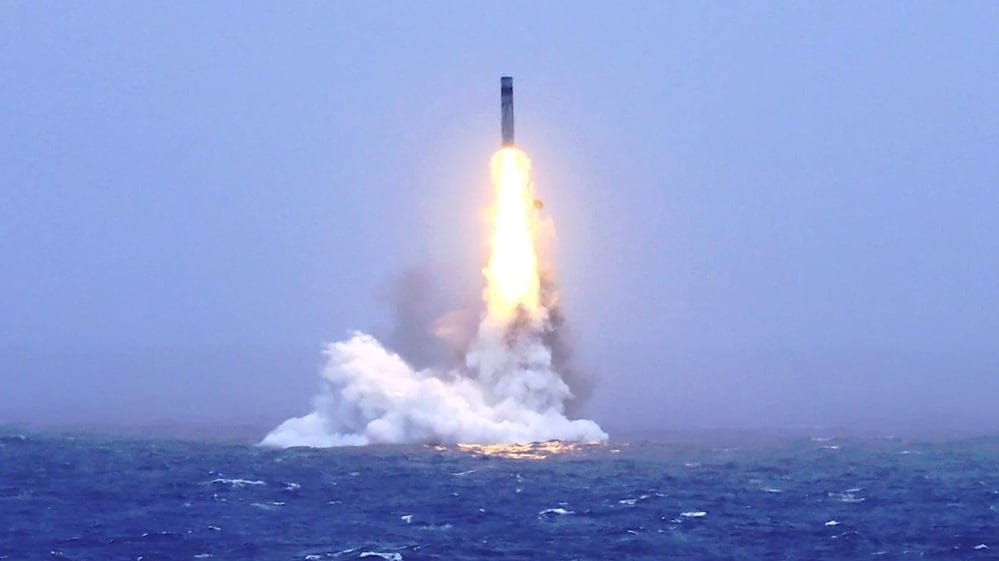
A Chinese Peoples’ Liberation Army (Navy) test of a submarine-launched nuclear-capable missile, fired from the South China Sea into the South Pacific, has generated a chorus of disapproval from the island nation under the flight path of the missile and in the impact area.
The PLAN is believed to have launched what Taiwan has identified as a JL-2 missile with a dummy warhead. This is the first time the PLAN has submarine-launched a ballistic missile into the deep Pacific, albeit a ground-launched ballistic missile was fired from Hainan into French Polynesian waters in September 2024.
The Chinese failed to issue notifications as specified by the Hague Code of Conduct (HOCC), which requires coordinates of impact areas and notification sent to all 140 HOCC signatories at least 24 hours beforehand. Indeed, some nations under the flight path were notified by telephone, without substantive details, hours before the firing.
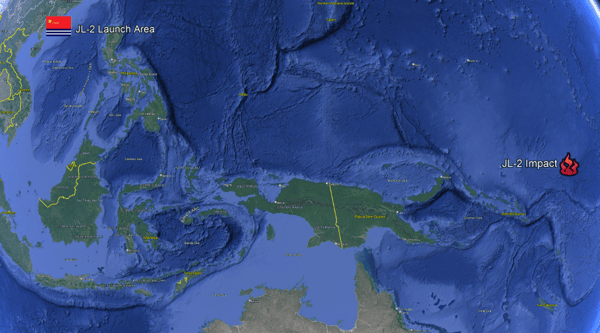
Launch and impact points of Chinese submarine JL-2 test, estimated from Notices to Mariner. The missile impacted in the sea area between the Solomon Islands, Vanuatu, Tonga and Nauru. (Google Earth/CJRC)
The test firing appears to have been timed to coincide with the signing of a defense treaty between Australia and Fiji on July 6, but also to coincide with the start of the Sino-Russian naval exercise Open Seas 2026, on which the Maritime Executive has previously reported. A second test firing planned for the same day, possibly to have been conducted by Open Seas 2026 participants exercising in the launch area off Qingdao, and plotted to overfly Japan, appears to have been cancelled or postponed at the last minute.
Despite often-voiced Chinese aspirations to recover the dominant position it enjoyed during the Ming Dynasty, Chinese foreign policy in reality is more measured – aggressive and assertive closer to home than further afield, where commercial benefit and non-involvement are uppermost in the Chinese diplomatic mind. With Taiwan the first priority, the South China Sea and Japan the second priority, the Pacific Islands forming the Second Island Chain are still an important Chinese Communist Party objective, where muscle is to be exercised. The Party has captured influence by offering defense, infrastructure and economic aid inducements in this area, on the non-negotiable condition that the recipients of this largesse, most recently the Solomon Islands, Kiribati and Nauru, give up diplomatic links with Taiwan. As a result only the Marshall Islands, Palau and Tuvalu remain Taipei-aligned.

that matters most
Get the latest maritime news delivered to your inbox daily.
In the last year, Australia has undertaken a major foreign policy counter-offensive to recapture the hearts and minds of these South Pacific island nations. Hitherto, Australia took a relaxed view of these Chinese encroachments. Four of the islands accepting Chinese blandishments and inducements managed to do so whilst retaining King Charles III as their monarch. Australia continued to enjoy good relations across the region, notwithstanding island nations signing up for aid packages offered by the Chinese. But having awoken to the danger somewhat late in the day, Australia has battled back, recently negotiating cooperation agreements with Papua New Guinea, Fiji, Vanuatu, the Solomon Islands and Tonga, many of them reversing previous Chinese agreements.
For the moment, the Australian diplomatic counter-offensive has halted the progress of the Chinese, with the missile test signaling their annoyance - but also betraying an arrogance which is now increasingly recognized by the Pacific Islands community. The Australian position also chimes with a substantial increase in its defense spending to counter the perceived threat.
