
Ukraine Agrees Under U.S. Pressure to Stop Attacks on Caspian Pipeline
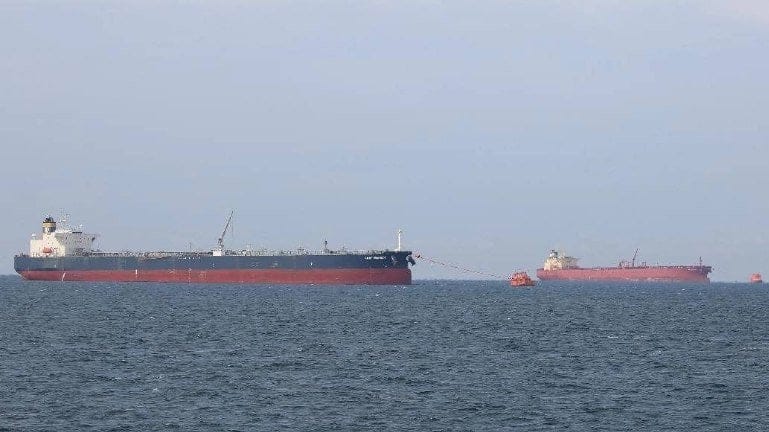
Under pressure from the United States, and possibly others, Ukraine has reportedly agreed to stop attacking foreign-flag tankers in the Black Sea heading for the Caspian Pipeline Consortium terminal near Novorossiysk, Russia. Bloomberg reported the U.S. brokered the agreement after a series of attacks last month by Ukraine interrupted operations.
Ukraine was striking foreign tankers at the offshore terminal or approaching the terminal, including at least one vessel under charter to the U.S. company Chevron. Most of the reports were of minor damage to the vessels, and CPC support ships had aided the tankers in quickly putting out fires. In at least one of the attacks, the tanker was moored to the offshore single-point connection, but CPC officials said they had been able to quickly stop the loading.
The company had said that the pipeline itself and the connectors had not been damaged, with the strikes limited to the vessels. However, as a precaution, operations were suspended for days after each attack. Operations had only been restored for two days when a second attack came in late July, prompting a second suspension.
Officials from the company and Kazakhstan’s Foreign Ministry complained about the attacks, citing it as a purely commercial operation and not involved in the conflict between Ukraine and Russia. The pipeline transports oil nearly 1,000 miles across Russia from the interior of Kazakhstan, which lacks its own ports for export. Estimates are that it accounts for 80 percent of the country’s oil exports and at least two percent of the world's supply.
The consortium that operates the oil field and pipeline has investments from Chevron as well as other majors, including ExxonMobil, Eni, and Shell, among others, with 75 percent of its volume exported by foreign shippers. In 2025, export volumes amounted to approximately 70.5 million tons of oil.
Kazakhstan and CPC said they had made appeals to the United States and others after the two attacks in late July. Bloomberg reports that Chevron CEO Mike Wirth personally called Donald Trump, asking for intervention.
Ukraine, according to the report, agreed not to attack foreign-flag tankers provided they were not sanctioned by Ukraine. At least several of the attacks last month were not against shadow fleet tankers, but vessels owned by Greek companies and under charter to major international companies.

that matters most
Get the latest maritime news delivered to your inbox daily.
Bloomberg reports that Ukraine agreed to establish a communications protocol and provide instructions for tankers. It, however, also said it would not exempt vessels transporting Russian oil from its current campaign. Attacks on the energy infrastructure have been one element of the intensified campaigns this summer as both sides have reinvigorated their attacks. Ukraine, however, needs to maintain the support of the United States in the war effort.
Media reports indicate that the Trump administration is again dispatching its representatives in a renewed effort to slow the intensity of this summer’s campaigns and push both sides back into peace negotiations.
