
UK Awards Europe’s Largest Offshore Wind Energy Allocation for 8.4 GW
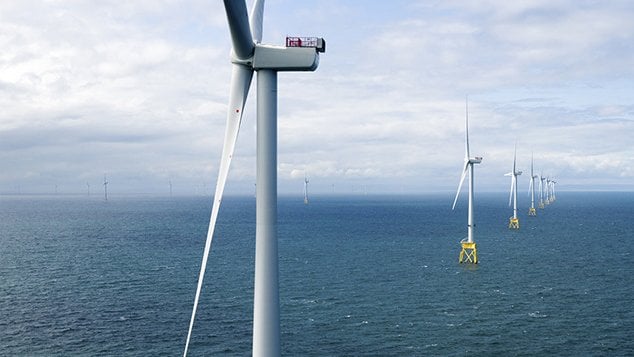
The UK government is hailing what it calls a “monumental step” in energy independence as it awarded 8.4 GW in a total of 12 offshore wind energy projects. The results are the biggest single procurement of offshore wind energy in British and European history, and are seen as a significant validation for the industry.
The government is highlighting the turnaround it was able to achieve with the seventh round of Contracts for Difference Allocation. Round 5 closed in September 2023 with no offshore wind energy projects secured. The government enhanced the subsidies and pricing for Round 6, which awarded nearly 5 GW off fixed bottom offshore wind, although some was a reworking of prior awards, and 400 MW of floating offshore wind. Today’s record awarding of 8.48 GW, they said, would power over 12 million homes and spur more than £22 billion in private investment.
The UK’s goal is for at least 43 GW of offshore wind power by 2030 as part of its overall renewable energy strategy. The country already has 16.6 GW installed and a further 11.7 GW under construction. Many people feared after the last two rounds that the UK would not be able to meet its goals. Today’s results are closing a major portion of the gap, with analysts saying the UK needs another 7 GW in the next round set late this year to ensure it meets its goal. The UK is second only to China in the amount of offshore wind energy developed.
“With these results, Britain is taking back control of our energy sovereignty,” said UK Energy Secretary Ed Miliband. “This is a historic win for those who want Britain to stand on our own two feet, controlling our own energy rather than depending on markets controlled by petrostates and dictators.”
The government is arguing that offshore wind power makes economic sense, highlighting that its development will cost 40 percent less than the cost of building and operating a new gas power plant. They also cited independent research that says renewables can drive down the price of electricity and have already done so by up to a quarter.
The government, however, is providing extensive financial support to the offshore wind energy sector. They noted that the original budget for fixed bottom projects was £900 million, but based on the strength of the round has been increased to £1.79 billion. The strike price for electricity from the fixed bottom projects ranges from approximately £89 to £91, while the strike price for floating offshore wind is £216.46 per MWh. Critics highlight that it was increased from £82 per MWh in 2024. The contract prices are also indexed to CPI inflation.
The projects selected span the North Sea in both England and Scotland, as well as the Irish Sea for Wales. It is the first Welsh project to win a contract in more than a decade and the first new Scottish project since 2022.
The biggest recipients include SSE, which won a 20-year contract for Berwick Bank Phase B. It was the only fixed-bottom project selected in Scotland, and it is a big one. Phase B would be 1.28 GW. The company plans to reach a final investment decision by 2027 and also expects to place Phases A and C in Round 8 later this year. If the full project is developed, it would become the largest in the world with a total capacity of 4.1 GW and 307 turbines.
RWE also won major awards both for its Norfolk Vanguard project and two Dogger Bank South projects, all in the North Sea, as well as Awel y Mor in the Irish Sea.
Norfolk Vanguard would be developed in two phases and have a total capacity of 3.1 GW. RWE announced that it has agreed to sell 50 percent of the project to the well-known investment firm KKR. They are targeting the summer of 2026 for the investment decision. The first phase of the project is expected in 2029, and the second in 2030.

that matters most
Get the latest maritime news delivered to your inbox daily.
Dogger Bank is also two phases, which combined would add another 3 GW in 2031 and 2032. In December 2023, RWE entered into a partnership with the UAE-based Masdar as an investor for these projects.
The trade group RenewableUK reported that more than 20 GW of offshore wind had been eligible for this round of the allocations. The strength of this round comes as many other countries in Europe have struggled to overcome the financial and supply chain challenges to spur interest in their new rounds. The UK government hopes to build on the strength of this round for the next auction late this year.