
UAE's Withdrawal From Socotra Illustrates Challenges for Peace in Yemen
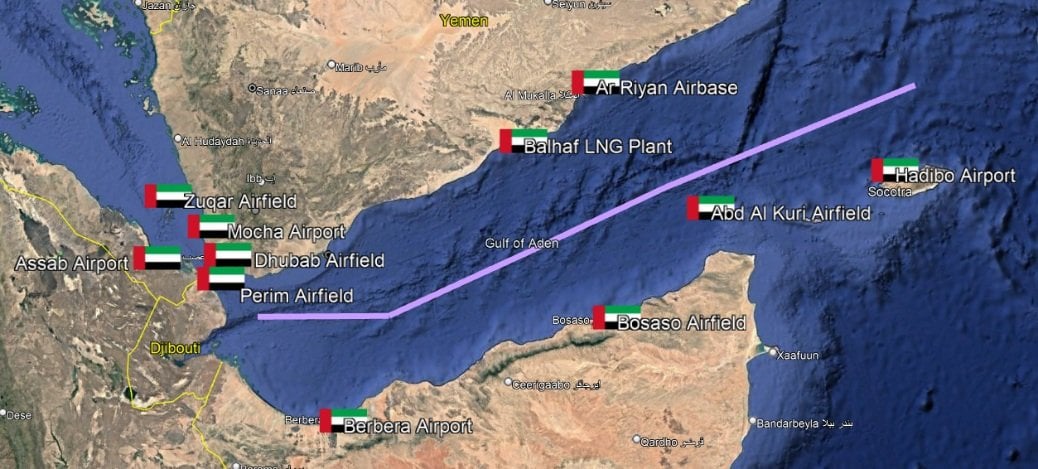
The United Arab Emirates (UAE) has announced that it has completed the withdrawal of its troops from Yemen, in an operation conducted with remarkable speed and efficiency. What remains unclear, however, is whether the UAE is withdrawing its financial support for the local forces of the Southern Transition Council (STC), which still hold considerable areas of southwestern Yemen, and whether the UAE is also withdrawing its commercial engagement in STC-controlled areas.
In theory, the UAE’s commitment to the coalition supporting the Internationally Recognized Government (IRG) of Yemen has been framed as a counter-terrorist operation aimed at ISIS extremists operating in Yemen, supporting a restitution of the IRG’s rule over areas controlled by the Houthis.
For long, however, the true nature of Emirati objectives and ambitions in Yemen have been unclear. The presence of Emirati troops and militias such as the National Resistance Forces in the coastal area around Mocha, or the Southern Giants Brigade in Lahej, Abyan and Dhale, which the Emiratis have sponsored, armed and trained, has been accompanies by a strong Emirati commercial presence. This commercial presence has prompted suggestions that the primary reason for the Emirati engagement in Yemen has been commercial rather than support for the military objectives of the Coalition. There have even been comparisons with the modus operandi of the British East India Company, which engaged militarily in India for commercial reasons long before the British government had entertained the notion of colonizing India.
These uncertainties are now very evident on the island of Socotra, where before recent events the UAE had established effective control through the aegis of the STC, notwithstanding objections from the IRG and the presence of the Saudi battalion-sized Task Force 808 on the island. The UAE has strengthened its control in Socotra largely through commercial means. Direct flights brought in tourists from the UAE, some of whom are now stranded as flights to the UAE have been closed down. Emirati telecoms companies took over mobile telephony towers, displacing Yemeni providers and integrating Socotra into the UAE network. The UAE-based Prime company became the dominant fish wholesaler. Rare and protected Dragon’s Blood trees, unique to Socotra, have been dug up and sent back to the UAE. Socotrans have been allowed to enter the UAE for work, creating a dependency in Socotra on remittances from the UAE, and establishing cultural and ethnic linkages between Socotra and the UAE which did not previously exist. Welfare payments made locally by the Emirates Red Crescent and Khalifa Foundation have strengthened this dependency.
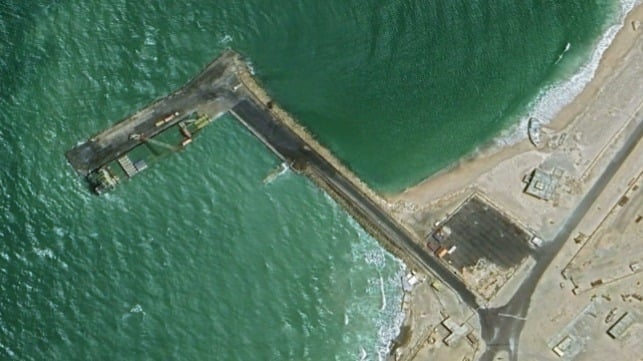
A test on whether the UAE was prepared to abandon this investment came this week when the UAE-registered 2230GT landing craft Takreem (IMO 9794915) docked at Hulaf, as it has frequently done in the past. Saudi forces maintained that the vessel did not have permission to dock, and sought to inspect the cargo. Emirati officers, still in position, instructed STC forces to allow the unimpeded unloading of the vessel.

The evacuation of 600 Italian tourists who had slipped into Socotra directly from the UAE has commenced. The first 160 were flown out to Jeddah on January 8 under the auspices of the IRG, in a further indication that the government has wrested back control from UAE-backed STC forces. The remaining tourists were to follow on later flights the same day.
MV Takreem seen unloading at Hulaf, Socotra (Google Earth/Airbus/CJRC)

that matters most
Get the latest maritime news delivered to your inbox daily.
Stand-offs between the IRG, backed by Saudi forces, and STC-backed militias are likely to continue, in similarly complicated clashes of interest. These are likely to occur not just in Socotra, but elsewhere in southern Yemen where for years semi-independent militias have ignored government institutions.
The STC may well try to fight back, though this seems less likely now that the STC’s leader Aidarous Al Zubaidi has been charged with high treason and has gone into hiding, having rejected an invitation to negotiate and been expelled from the IRG leadership council. But well-informed observers such as Mohammed Basha believe reestablishment of the authority of the government in southern areas, inevitably a tricky process, is an essential precursor to some form of end to the civil war in Yemen this year. That in turn will be necessary if security threats to shipping channels off Yemen are to be brought to an end.