
U.S. and Iran Continue to Exchange Strikes in Dispute Over Hormuz
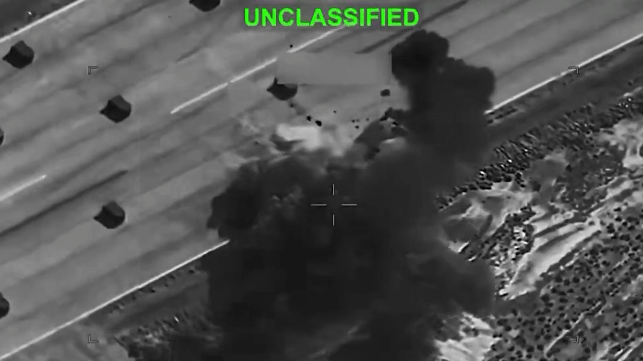
Overnight Wednesday, the U.S. and Iran continued exchanging fire in a pattern that has grown familiar since the start of the ceasefire agreement last month.
U.S. Central Command claims that it hit 90 targets in Iran overnight Wednesday, in addition to the 80 targets hit on Tuesday. The newly-added targets included air defense sites, missile and drone storage sites, naval forces, and logistics infrastructure. For the first time, two in-service bridges were on the list, U.S. officials confirmed.
According to a release from U.S. Central Command, in the most recent wave of U.S. strikes against Iran in response to the Iranian targeting of commercial shipping, 90 military targets, including military logistics infrastructure, missile and drone storage sites, air defense… pic.twitter.com/c1sRyvbN5H
— OSINTdefender (@sentdefender) July 9, 2026
Iranian state media identified one target as a section of the Tehran-Mashhad railway. The strike came just hours before the planned burial of former supreme leader Ali Khamenei in the nearby city of Mashhad, and IRIB called the attack "criminal." Rail passengers will be routed around the destroyed area by road transport.
According to Mehr News, the Aq Tekeh Khan rail bridge in the northern town of Aqqala was also damaged by an American strike. State media claims that seven projectiles were used to take the bridge out of service. The line is on a route to the border with Turkmenistan, and is used for international trade.
Aq Tekeh Khan Bridge Attacked on Iran-Turkmenistan Railway Line.
— Open Source Intel (@Osint613) July 9, 2026
The Aq Tekeh Khan Bridge, located on the Incheh Borun-Turkmenistan railway route in the western outskirts of Aq Qala city, Golestan Province, has been attacked.
The railway line has played a significant role for… pic.twitter.com/Z5WdsnHPbF
Iranian forces appear to have targeted sites in Bahrain and Kuwait, and the Iranian Army has claimed an additional drone attack on an early warning radar site on Qatar. Unconfirmed reports claim additional strikes on the Al-Azraq airbase in eastern Jordan, but these claims have not been verified.
Direct impact at the U.S. 5th Fleet HQ in Bahrain pic.twitter.com/U7KrWyzGhO
— IRIB (Islamic Republic of Iran Broadcasting) (@iribnews_irib) July 9, 2026

that matters most
Get the latest maritime news delivered to your inbox daily.
Notably, Iran's target list has not included high-value petroleum infrastructure in the GCC states. The region is full of multi-billion-dollar energy industry facilities, enticing targets which have proven quite vulnerable to Iranian mass strikes in the recent past - and which could potentially sway the global price of oil if attacked. Iran has not yet taken a step onto that rung of the escalatory ladder, and has concentrated its fire on U.S. military sites, including ones it has hit many times before.
"America still hasn’t learned that bullying and breaking promises are no longer cost-free," lead Iranian negotiator Mohammad Bagher Ghalibaf said in a social media post. "Don’t flail around pointlessly, or you’ll sink even deeper: the Strait of Hormuz will only open with ‘Iranian arrangements,’ not American threats."
