


Tanker Anchor Dragging Case Reopened by Helsinki Appeals Court
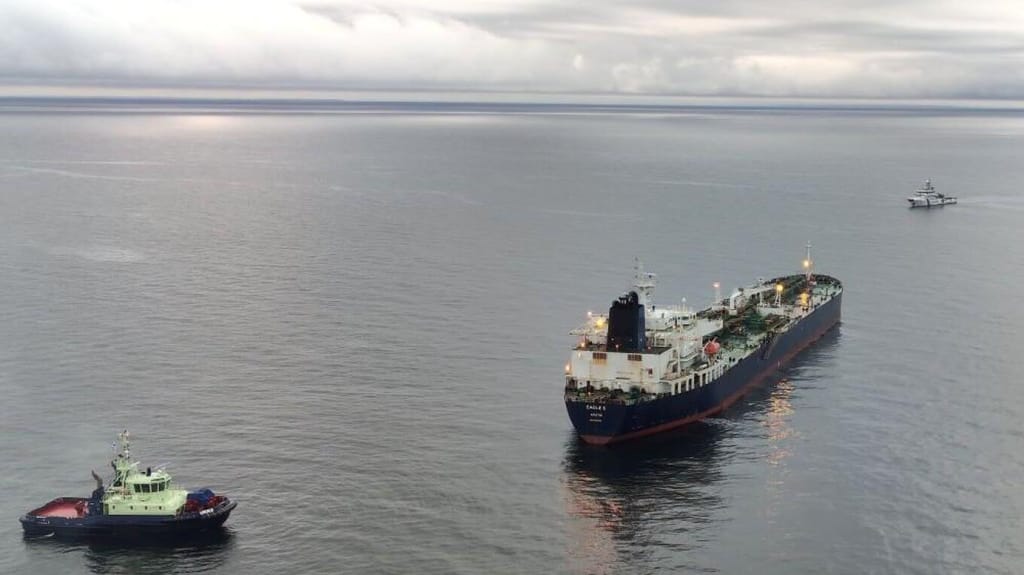
Nearly a year after the Helsinki District Court in Finland dismissed the case against three of the officers aboard the shadow fleet tanker Eagle S over an anchor-dragging incident, the Helsinki Court of Appeals recently overturned the decision, ruling to reopen the case. The decision, if not overturned by the Finnish Supreme Court on a further appeal, would have broader ramifications for when a state could prosecute more of the cases related to damaging subsea cables and other infrastructure in international waters. The ruling was consequential, as Finland was scheduled to start the trial of the captain and boatswain of another cargo ship, Fitburg, on September 8 on similar charges of causing damage by dragging the vessel's anchor in the Gulf of Finland.
The District Court case from 2025 was brought against the captain and two deck officers from the tanker Eagle S, which was sailing under the Cook Islands’ flag. On December 25, 2024, Finnish authorities were notified of an interruption on a subsea cable, and they identified the tanker Eagle S and contacted the vessel, demanding that it raise its anchor.
The crew told the Finnish Coast Guard that its anchors were secure, but then four additional cables reported faults, and the Finnish Coast Guard intervened, stopping the tanker. Its port anchor was down and, according to the authorities, had been dragged for at least 90 km (56 miles), ultimately damaging a subsea power cable and four telecommunications cables between Finland and Estonia. It led to broad speculation of Russian-related sabotage.
During the trial, which began in August 2025, prosecutors argued the crew should have been aware that their anchor was down and that they provided false information to the Coast Guard. The officers blamed a decline in speed for the tanker on an engine problem while also highlighting that the tanker was traveling in bad weather conditions.
The defense also questioned the authority of the Finnish Coast Guard, asserting to the court that the incident was in international waters and outside Finnish jurisdiction. They claimed the Eagle S only entered Finnish waters when it was directed to by the Coast Guard. The District Court stopped the trial in October 2025 on the issue of jurisdiction and released the three officers to return to their homes in Georgia and India.
Prosecutors, the cable companies, and the shipping company all filed with the Court of Appeals. The cable companies were seeking about €105 million from the tankers’ three officers for repair costs and lost income. The ship’s managers were seeking a reimbursement of litigation costs that they said had amounted to more than €680,000.
The Court of Appeals ruled the District Court did in fact have jurisdiction and that it should reopen the case. It rejected the argument that it was a maritime incident and under UNCLOS (United Nations Convention on the Law of the Sea) jurisdiction, when an incident is in international waters, lies with either vessel’s flag state or the state of nationality of the crewmembers. The Court of Appeals found it stopped being a maritime incident once the vessel had been contacted by the Coast Guard and instructed to raise its anchor. The court also said the consequences of the ship’s actions were committed in Finland, and under Finnish national law and international law, the authority to investigate and prosecute did lie with Finland.

that matters most
Get the latest maritime news delivered to your inbox daily.
The court’s interpretation of the limits of the definition of a maritime accident, the applicability of UNCLOS, and jurisdiction could have implications for further prosecutions as well as the Eagle S case. Analysts highlight that a similar case is pending in Finland, where prosecutors have brought charges against the captain and boatswain on the Fitburg are also accused of dragging its anchor for 80 miles in the Baltic. Reports indicate the defense lawyers were planning to cite the Eagle S decision in their argument over jurisdiction.
The decision of the Helsinki Court of Appeals can be challenged in Finland’s Supreme Court. The Supreme Court, however, would have to agree to hear the appeal. Prosecution of the captain and the two officers is unlikely, as they are no longer in Finland and likely would not agree to return. The decision could also renew the civil compensation claims.
