
Study Suggests Deep Sea Mining Could Be a Loss-Making Proposition
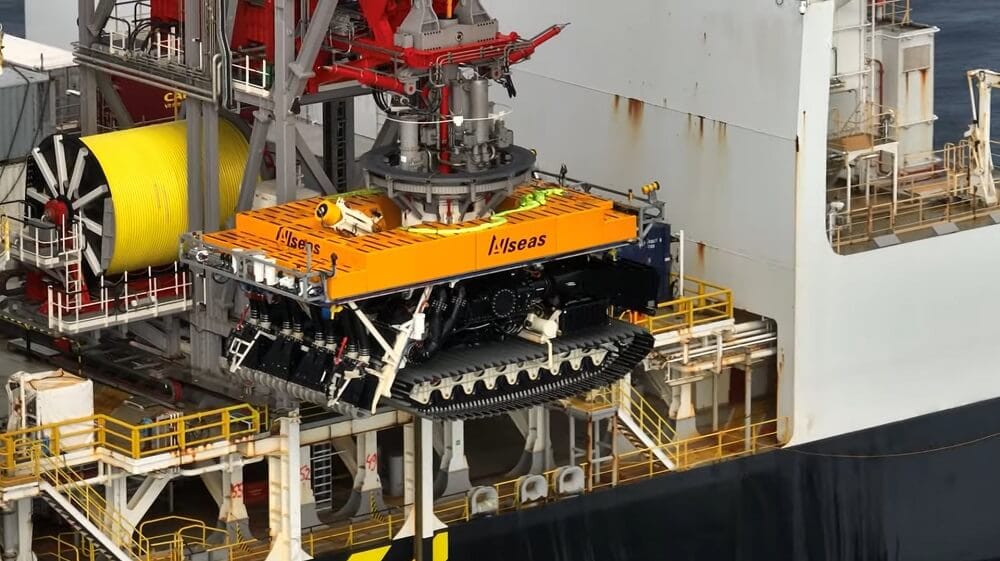
Any deep-ocean seabed operation is an expensive proposition, as research vessel operators and offshore drilling companies are well aware. Deep-sea mining for manganese nodules would be no exception, demanding specialized tonnage, robotics, processing equipment and R&D. In a new report, some of the budding industry's opponents suggest that the overhead of industrial-scale subsea operations could make deep sea mining a loss-making proposition - even before accounting for environmental factors.
Drawing on an investment prospectus for two projects belonging to The Metals Company, one of the biggest deep sea mining firms, the environmental consultancy Koinon conducted "stress-tests" to see if TMC's business model would hold up under various scenarios. The study was sponsored by five NGOs and foundations that are opposed to rapid commercialization of the practice. Koinon's analysts looked at typical cost overruns for megaprojects and ran 10,000 simulations on various outcomes, finding that the median outcome would result in no meaningful return.
"In 60% of iterations, the collector’s net cash flow is negative in every year, with the consequence that no internal rate of return exists," Koinon's analysts wrote. "Among the minority of runs that do generate a positive return profile, the median IRR stands at 4%."
The report concludes that the project has an 83 percent probability of returning a loss, with a median net present value of -$5 billion, assuming a discount rate of 8 percent. By comparison, under TMC's own projected scenario, the two projects would make $23 billion.
The consultancy's analysis found that the up-front capex cost of the collection system was the primary driver of profitability, and the only variable capable of moving the project's margins into the zone of positive returns. Koinon estimated that - based on typical cost overruns for a frontier industry - the average simulated cost of the collection system would likely be about 1.9 times TMC's expected cost, based on typical overruns in past reference cases in offshore oil and gas, frontier technology and mega-scale mining projects. In its sensitivity analysis, changes in capex alone could vary the size of the return by more than $8 billion, making capex alone determinative of project profit or loss.
The discount rate is a key element in this analysis. Koinon noted that the regulatory and environmental risk associated with deep sea mining has prompted dozens of bankers, insurers and industrial-metals buyers to publicly vow not to do business with deep-sea minerals producers - potentially making project financing more expensive (and thereby driving up the discount rate).
"The project’s own economics, when simulated rather than asserted, show no return in the majority of cases and a loss in the large majority, while the financing environment strips the cheapest layers from the capital stack, with the consequence that any viable project is forced onto equity priced for speculative risk," Koinon concluded. "The required return that follows, in the order of 25 to 30%, sits above the entire institutional private-markets universe against which it might be benchmarked."
Separately, the consultancy analyzed potential tax revenues from the project and determined that the net benefits for national governments - including project sponsor states - would be slim. The International Seabed Authority would reap substantial revenues from project royalties, but these would be offset by declining tax revenue from onshore mining projects. (The tax revenue drop would be a consequence of higher supplies and lower prices for nickel, cobalt, copper and manganese.)
"This study confirms that deep-sea mining remains economically unattractive from a commercial investment perspective," asserted Torsten Thiele, founder of study co-sponsor Global Ocean Trust. "The findings also highlight that the risks extend beyond mining companies to sponsoring states and countries dependent on terrestrial mining."

that matters most
Get the latest maritime news delivered to your inbox daily.
TMC asserts that the environmental risks of deep-sea mining can be managed, and that it can earn an after-tax internal rate of return (IRR) of 27 percent on its first projects. The firm argues that the world's economies need a new source of industrial metals, and that manganese nodule extraction can provide that supply with a lower environmental impact than that of shoreside mining projects.
Opponents argue that the long term environmental effects of deep-sea mining are unknown, and that little-studied seabed ecosystems will be disturbed by the removal of manganese nodules from the bottom. Risks include sediment releases into the water column, long-term habitat alteration, and increased odds of extinction for certain vulnerable species, according to some researchers and activists.
