
Senior IRGC Official Casts Doubt on Latest U.S. Peace Plan
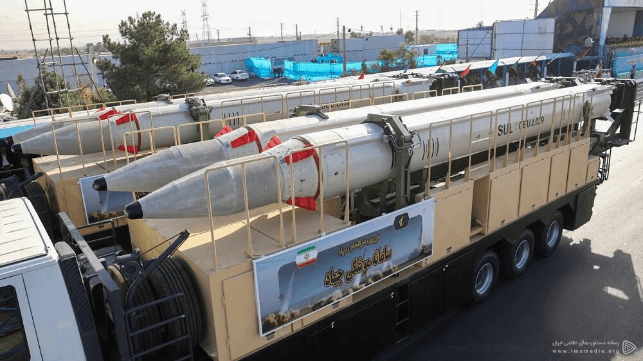
This week, President Donald Trump announced "great progress" towards a quick ceasefire deal with Iran, to be accompanied by the restoration of navigation through the Strait of Hormuz and resumption of Gulf oil exports. The U.S. has provided mediators with a 14-point framework for a comprehensive deal, and Iranian foreign ministry representative Esmail Baghaei said Thursday that Tehran would review the plan - but the public messaging from Iran's hardline inner circle is less positive.
On Thursday, senior advisor Mohzen Rezaei - formerly the top commander of the Islamic Revolutionary Guard Corps, the designated terrorist organization that has become the most powerful political force in Iran - told state outlet PressTV that the new U.S. proposal was "unrealistic."
"Given the unfolding developments and attempts to reopen the Strait of Hormuz [the now-suspended 'Project Freedom' shipping defense operation], the United States is seeking to stage a flamboyant gesture and then exit the scene. We will not allow such schemes to materialize," said Rezaei.
Among other demands, Rezaei insisted that the U.S. must pay reparations for damage caused by bombing and missile strikes - a politically-challenging concession for the White House to accept - and said that Iran will continue to pursue compensation even if the U.S. unilaterally departs.
"We will doubtlessly demand our rights and reparations, even if US military forces return home and withdraw from the region. We have endured them for 47 years," he said.
The unfavorable messaging from the IRGC - whether calculated for effect, or literal in its representation of regime views - comes despite the Trump administration's willingness to grant concessions. On Tuesday, in furtherance of the negotiating process, Trump suspended the new "Project Freedom" defense umbrella for Hormuz transits, which had become the public centerpiece of U.S. military operations in the region. A senior administration official had described it as a "gift to the world" just hours before it was paused; it had been in operation for less than 48 hours.
Iran claims that the initiative was put on hold due to heavy Iranian attacks. While Iran frequently overstates the impact of its military operations, multiple merchant ships suffered strikes during the two days of the "umbrella" operation, including a suspected cruise missile strike that injured eight crewmembers of the feeder CMA CGM San Antonio.
A U.S. defense official told The Maritime Executive that "the transit in question was not coordinated with U.S. forces." Operator CMA CGM, the world's third-largest container line, said that the CMA CGM San Antonio transit had been fully coordinated with Project Freedom, "in strict accordance with the required guidelines and procedures."
Blockade impact assessment
The Trump administration has projected confidence in its ability to compel Iran to make concessions through the imposition of a naval cordon - a blockade on all traffic to and from Iranian seaports. As is common for blockades, it has had some amount of leakage, as documented by TankerTrackers.com; it is now being tightened through distant-blockade methods (long-distance interdictions) and through the use of airborne interdiction (disabling aerial attacks).
While the blockade operation is increasingly effective, especially against outbound Iranian tanker traffic, it may take months - rather than weeks - to inflict the crippling impact on Iran's economy that U.S. policymakers seek. According to the Washington Post, a new CIA analysis circulated to White House officials suggests that Iran can withstand the naval blockade for "three to four months" before the full effects begin to set in. Additionally, the CIA believes that Iran still has about three-quarters of its prewar stockpile of missiles, despite repeated U.S. airstrikes and the Pentagon's claims of thorough destruction.
There is no question that the blockade is already having an effect: inflation within Iran is running at an extreme rate, reportedly upwards of 60 percent, and business closures and layoffs are widespread. An estimated one million jobs have been lost since the beginning of the conflict, according to the New York Times. But many analysts believe that this will not be enough to influence regime behavior.

that matters most
Get the latest maritime news delivered to your inbox daily.
"The problem is that the Iranians don’t think they need to capitulate," said Danny Citrinowicz, former chief Iran analyst at Israeli Defense Intelligence. "What started as a war supposedly aimed at toppling the regime and dismantling its nuclear and ballistic missile capabilities, may instead leave Iran’s regime stronger than before — empowered by sanctions relief, still retaining significant missile capabilities, continuing support for its proxies, and almost certainly preserving uranium enrichment on its own soil."