
Royal Navy Retires Aging Ships Due to High Maintenance Costs
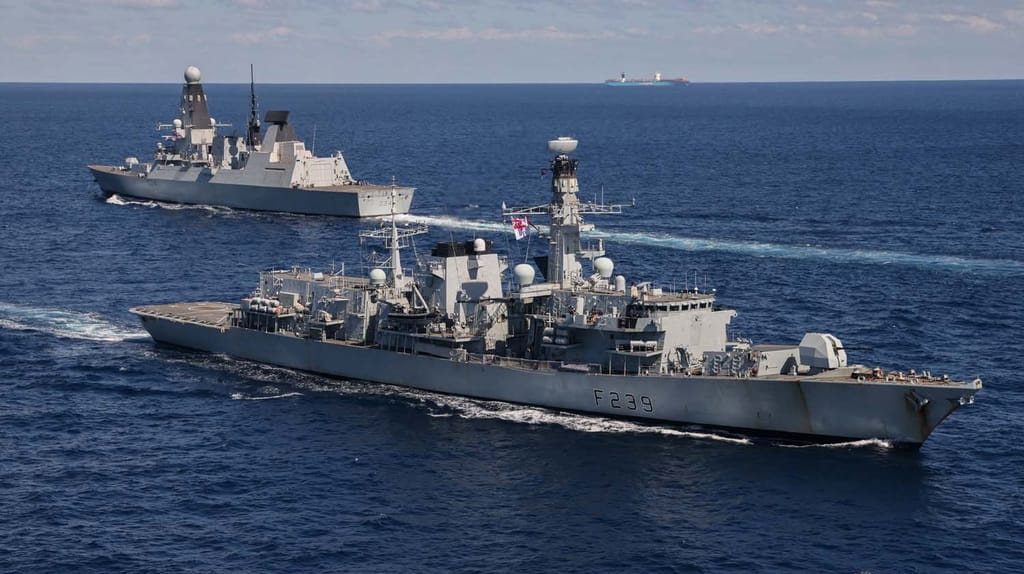
The United Kingdom government has, in recent years, repeatedly admitted that keeping the aging Type 23 frigates in service has become an extremely expensive affair. To save taxpayers from further financial hemorrhage, the Royal Navy has decided to retire two Type 23 frigates alongside a Hunt-class minehunter.
The Navy said that HMS Iron Duke and HMS Richmond, as well as HMS Chiddingfold, have been decommissioned after clocking more than a century of combined service. The Royal Navy said the aging Type 23 frigates are being retired due to their costs, and the risk of maintaining them has become exorbitantly high. The government contends that taking the ships out of service has become the most prudent move to allow resources to be redirected to building Type 26 and Type 31 frigates, which will be their replacement.
There is no doubt that the Type 23 frigates, which were built in the 1980s, have been bleeding the British taxpayers in desperate efforts to keep them in service. In the case of Iron Duke and Richmond, the government spent £103 million ($139.5 million) and £56 million ($75 million), respectively, to undertake life extension programs (LIFEX) that would have seen the ships serve until the early 2030s. Despite the investments, the ships have remained unreliable, with long periods out of service.
Despite their unreliability in recent years, both Iron Duke and Richmond, alongside Chiddingfold, have, over their many decades of service, played significant roles in maritime security and supporting UK interests around the globe. The ships were deployed in countering submarine threats, safeguarding vital shipping routes, humanitarian relief efforts, and global maritime security missions.
Among the Iron Duke’s last missions was deployment to monitor and track Russian warships approaching areas of national interest, while Richmond played an important role in the UK Carrier Strike Group's deployment to the Indo-Pacific last year. In 2003, she supported landings in Iraq.
For her part, the minehunter Chiddingfold has spent much of the past two decades supporting maritime security in the Middle East, operating from Bahrain alongside allies and partners to ensure freedom of navigation through some of the world's busiest and most strategically important waterways.
The third vessel to carry the name, the current HMS Iron Duke, was launched on March 2, 1991, as the fifth Type 23 Frigate. She was commissioned to the fleet in May 1993. HMS Richmond (F239) followed as the 10th of 16 Type 23 Duke-Class Frigates to join the Royal Navy, commissioned in 1995, and as the seventh vessel to carry the name. HMS Chiddingfold was commissioned in 1983.
“Richmond, Iron Duke, and Chiddingfold have each played a key role in safeguarding the UK’s security and interests worldwide. As they are retired from service, their legacy continues through the next generation of warships and advanced autonomous systems,” said Vice Admiral Steve Moorhouse, Fleet Commander.
Following their retirement, the Royal Navy has outlined that their roles will be replaced by some of the eight Type 26 ships, which are currently under construction and which are expected to enter service between 2028 and 2035, and the five Type 31 ships that are planned to be in service by the early 2030s.
The City-Class Type 26 frigates, which are being built at BAE Systems, are primarily designed for anti-submarine warfare but are also capable of supporting air defense and general-purpose operations. They have a displacement of approximately 6,900 tonnes, a length of 149.9 meters (492 feet). HMS Glasgow, the lead vessel in the class that is due for commissioning in 2028, will take over Richmond's anti-submarine warfare role.

that matters most
Get the latest maritime news delivered to your inbox daily.
The Inspiration Class Type 31 ships are being built at Babcock, with the first three at different stages of construction. The general purpose frigates are engineered to meet the challenges of the future maritime environment. The ships will take over Iron Duke's responsibilities when they enter service. For mine warfare, Chiddingfold's legacy is expected to continue through the Royal Navy's pioneering autonomous and remotely operated mine hunting systems.
Recently, the UK government unveiled an elaborate plan to transition the Royal Navy to a hybrid navy, committing to invest £1.3 billion ($1.7 billion) in a hybrid fleet and £1.1 billion ($1.4 billion) for the mine hunting capability program. The goal is to combine autonomous systems with next-generation warships, aircraft, submarines, and uncrewed platforms.
