
Report: White House Solicits U.S. Oil Firms' Interest in Venezuelan Assets
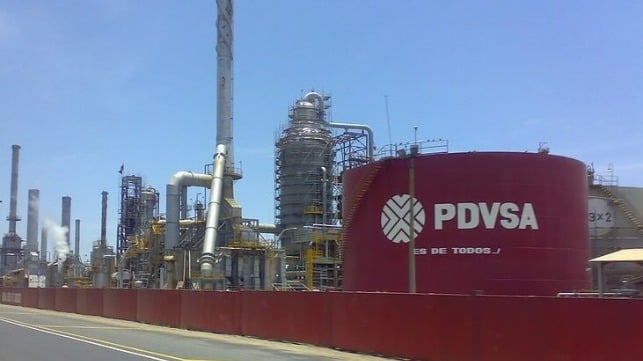
After the U.S. Coast Guard seized a sanctioned tanker carrying Venezuelan crude off Trinidad last week, the regime of Venezuelan dictator Nicolas Maduro called it "piracy" and accused the Trump administration of plotting to take Venezuela's oil resources. In a statement Tuesday, Trump confirmed that one political objective of the military buildup around Venezuela was to retrieve "the oil, land, and other assets that they previously stole from us," a reference to Venezuelan resources that were developed by American oil companies and then later seized by the Venezuelan government. The administration has also quietly convened talks with American oil executives to find out if any firms would be willing to take a role in developing Venezuela's resources after a regime change in Caracas, according to Politico.
American oil majors played a leading role in developing Venezuela's oil industry in the 20th century, particularly Chevron, which still has a large stake in the nation's exports under a special sanctions exemption. Venezuela's government nationalized the foreign-owned assets in its oil sector in two stages, first in 1976 and again in the 2000s, without providing compensation satisfactory to foreign investors. White House strategist Stephen Miller suggested this week that this act of expropriation was "the largest recorded theft of American wealth and property."
According to Politico, U.S. energy firms are hesitant to take on risk in Venezuela again - even when asked directly by the White House. It's not just that the political risks are high. Venezuelan heavy crude has lower value than lighter grades like Brent, and the infrastructure for extracting it has deteriorated for years under government ownership. It would take billions of dollars and years of work to bring up production.
"There has been the genesis of an outreach with the industry on the potential of reentering Venezuela," one source told Politico. "But frankly, there’s not a lot of interest from the industry, in light of lower oil prices and more attractive fields globally."
To apply pressure on the Maduro regime, Trump has ordered a "blockade" to prevent sanctioned tankers from calling at Venezuelan ports. Administration officials have quietly clarified that it is a "quarantine" rather than a "blockade;" the latter is an act of war, and Congress has not declared war on Venezuela. This operation is a selective naval cordon, limited to sanctioned tanker traffic only.

that matters most
Get the latest maritime news delivered to your inbox daily.
Chevron-owned cargoes bound for the United States continue to depart Venezuela's loading piers, and TankerTrackers.com identified at least one foreign tanker getting under way in laden condition on Thursday. The tanker in question is not sanctioned, according to the consultancy - an apparent confirmation that the terms of the blockade do not apply to "clean" vessels, even if they are known for sanctionable behavior.
It is possible that the vessel is under escort by the Venezuelan Navy, TankerTrackers.com said. Earlier reports suggested that Maduro had dispatched patrol ships to accompany departing tankers in order to complicate U.S. efforts to capture tonnage. The presence of Venezuelan warships raises the risk of a clash with U.S. servicemembers, which could be an initiating event for a broader U.S. campaign against Venezuelan targets - a contingency plan that the Pentagon has been preparing for months. About one dozen Navy warships and a growing array of Air Force strike assets are prepositioned within reach of Venezuela, the biggest accumulation of American firepower in the region in six decades.