
Report: Arctic Routes to Remain Peripheral, Especially for Boxships
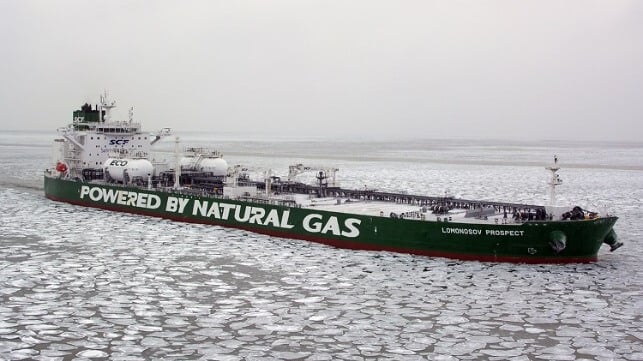
In the past few years, there has been a lot of hype about the growing ship traffic along the Arctic routes. But recent analysis shows that whle Arctic shipping has indeed surged, growth remains uneven. In a new report, credit insurance firm Coface said that the commercial impact of Arctic shipping routes is likely to remain marginal within the next five years. Nevertheless, Arctic routing offer significant benefits for certain commodity flows.
With climate change opening up navigation in the Arctic, the region is being seen as a viable alternative to the traditional routes. Add to the fact that critical chokepoints are also increasingly facing disruptions due to geopolitical tensions and drought. These factors combined have raised the transport viability of the Arctic. Arctic routes also offer reduced sailing distances - up to 40% less between East Asia and Northern Europe.
While the Arctic shipping outlook appears favorable, Coface’s analysis indicates that the region’s routes will primarily attract the transport of raw materials. Arctic routes will particularly offer significant cost savings to liquid bulk shipping (crude oil, diesel or LNG). Dry bulk is another segment that is likely to find Arctic shipping competitive, but only when ships can operate without icebreaker support.
On the other hand, the Arctic is expected to remain uncompetitive for container shipping, despite the shorter distances. Operational constraints, the limited size of vessels and the specific costs of Arctic navigation prevent it, at this stage, from competing with the economies of scale of traditional routes.
Overall, only about 3.5 percent of trade between East Asia, Northern Europe and North America is likely to use Arctic routes in the short term. Thus, the overall impact of Arctic shipping in the global trade is expected to be minimal. However, industries linked to cereals, energy, metals and timber will benefit from the Arctic routes.
In the short term, Coface sees the value of Arctic routes as more political than commercial. “Until container transport becomes economically viable on a large scale, the Arctic routes are unlikely to radically disrupt the major balances of global trade,” Coface added.
These findings are corroborated by a new publication by Norway’s research organization Fram Center (High North Research Center for Climate and Environment). The study analyzed shipping traffic in the High Arctic between 2013 and 2022. Largely, the focus was comparing traffic in High-Arctic Large Marine Ecosystems (LMEs), consisting of major seas in the Arctic.
Vessels in the Barents Sea accounted for 74 percent of the total distance sailed in the High-Arctic LMEs in 2022. Vessels sailed 4.5 million nautical miles (nm) in the year than 10 years before, making the growth in the Barents Sea the largest. In contrast, traffic in the Northern Canadian Archipelago increased by only 2,000 nm, making the region to have the lowest share.

that matters most
Get the latest maritime news delivered to your inbox daily.
Remarkably, sailed distance tripled in the Kara Sea, with the LME becoming number two in 2022 traffic with a 7.8 percent share, followed by Baffin Bay with 7.3 percent. The Kara Sea exceptional performance could be explained by the steady increase in traffic of cargo ships. The launch of the Yamal Peninsula LNG project has seen a rise of crude oil and gas tankers of a size and type that had never been present in the Arctic before.
In the Barents Sea, fishing vessels constitute the biggest share of the traffic. This also applies to Baffin Bay, but in this region, there is a significant increase in small containerships, which serve settlements in Greenland and northern Canada. Bulk carrier traffic is also on the rise, owing to expansion of iron-ore mining on Baffin Island.