
Houthis May be Using Real-Time Satellite Intelligence for Targeting
After the Houthis’ first two attacks on Wednesday against Saudi-associated shipping, in which the Saudi-flagged tankers VLCC Layla (IMO 9336098) and Encelia (IMO 9240172) were hit, there has now been a third attack. The Saudi-flagged products tanker NCC Masa (IMO 9688336) was struck early on July 25, but suffered only superficial damage and was able to proceed on its way.
Interestingly, the NCC Masa is normally employed shifting oil and chemical products between ports on the Saudi Red Sea coastline, suggesting that when it was hit it was not attempting to exit the Red Sea. This targeting supports the initial Houthi declared intent of attacking Saudi ships and visitors to Saudi ports wherever they might be, rather than a plan simply to blockade the Bab el Mandeb.
In previous Houthi anti-shipping campaigns, targeting tended to be indiscriminate and often inaccurate. The more specific targeting parameters now suggest that the Houthis have confidence in and access to improved maritime intelligence collection capabilities, to be able to identify ships which fulfil their attack parameters – and not necessarily close to the waters off Hajjah and Hodeidah Governorates, where fishing boats and coastal observation would be a primary source of information. This points to the Houthis having acquired reliable access to near real-time high resolution satellite imagery, as might be supplied with the help of Iran.
Iran is known to have supplied terminal equipment to the Houthis, enabling them to access the Russian/Iranian Kanopus-V/Khayyam satellite constellation. The Houthis have also gained access with Iranian help to the Chinese Jilin-1 mini-satellite constellation, and the TEE-01B imagery satellite built by Beijing-based The Earth Eye Co, access for which the Iranians stumped up $37 million in March 2024. It is the latter system which is believed to be providing the Iranians with timely and high-definition targeting information responsible for the accuracy of attacks recently on US bases in the Gulf.
Complementing an improved intelligence collection and targeting system, the Houthis also appear to be coordinating the use of multiple strike systems simultaneously to attack single targets, ominously but without success so far. All these new features of the Houthi offensive capability suggest preparations have been in the making for some time, also evidenced by the coordinated disappearance of senior Houthi figures from media through which they could be targeted – a lesson learned since last year’s attacks.
In response to the Houthis’ first three attacks on shipping, the Saudi response had been relatively restrained; it struck back at a telecommunications site in Hodeidah (probably the same Al Marawi’ah satellite down-link station that was attacked by the Israelis on May 30, 2025) and coastal surveillance radars on Kamaran Island, which lies on the seaward side of the ports of Salif and Ras Isa. It made a point of not attacking those ports nor the port of Hodeidah, through which the Houthis receive international food aid, and which the Houthis claim the Saudis are blockading.
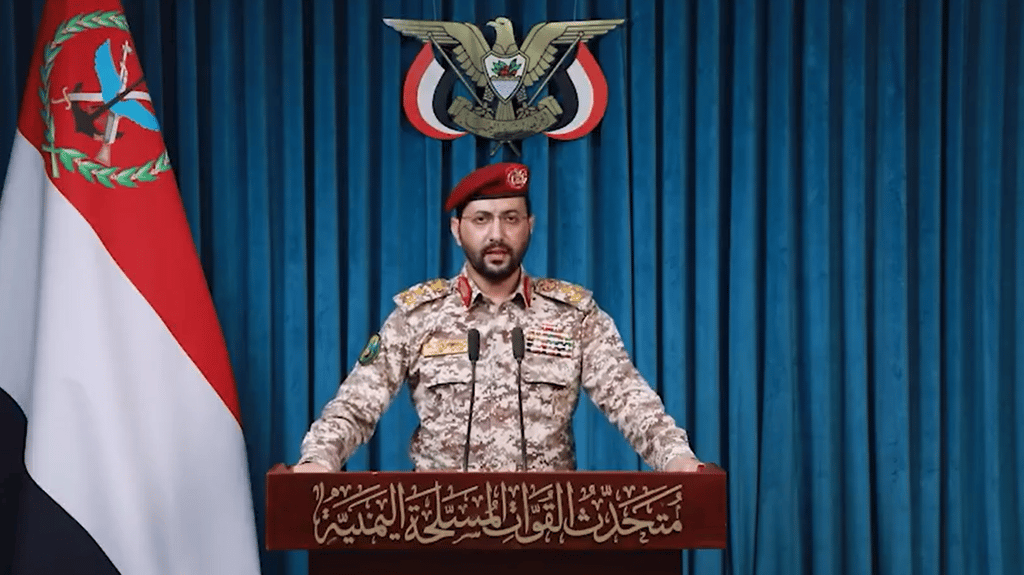
This response was clearly designed not to ratchet up the conflict further, but the Houthis did so in any case, attacking storage tanks at the Jizan oil refinery early on July 25 and setting off extensive fires. In addition to a reported attack on Yanbu, there are also suspicious heat anomalies suggestive of a strike at about the same time on a communications facility to the west of the military airfield at Abha. This widening of Houthi attack parameters will give the Saudis little choice but to respond in kind, and there are early reports of Saudi air attacks in Marib and Al Jawf, well away from the coast, and likely to be missile launch sites. Late on July 25, the Houthi military spokesman Brigadier Yahya Saree posted a broadcast statement in which he changed but significantly widened the scope of the Houthi campaign, effectively creating an active military alliance with Iran and promising to retaliate against any country which attacked either Iran or Houthi-controlled Yemen.
President Trump and Secretary Rubio have threatened to join the fray, holding the IRGC as equally accountable as the Houthis themselves. There is at least one US Navy warship in the lower Red Sea, namely the Arleigh Burke-class destroyer USS Gonzalez (DDG-66), and she is unlikely to be alone.

that matters most
Get the latest maritime news delivered to your inbox daily.
The Omanis as usual are trying to mediate, and in particular attempting to calm the Houthis down. The outbreak of fighting between the Houthis and Saudis not only threatens the ceasefire which has generally held since March 2022. It also threatens the peace talks which have dragged on since then which the Omanis have sponsored and invested heavily in; the lack of progress in these talks is the principal reason that the Houthis have resorted to fighting again, but by doing so they have jeopardized what has been achieved so far.
In the meantime, notwithstanding the attacks and the increase in tension, traffic through the Bab el Mandeb is still flowing, but perhaps is down a little in volume today in comparison with earlier in the week. One might expect that Saudi-bound ships may have held off and that most ships are passing through to and from the Suez Canal.
