
Oman Makes Most Unequivocal Statement Yet on Hormuz Transits
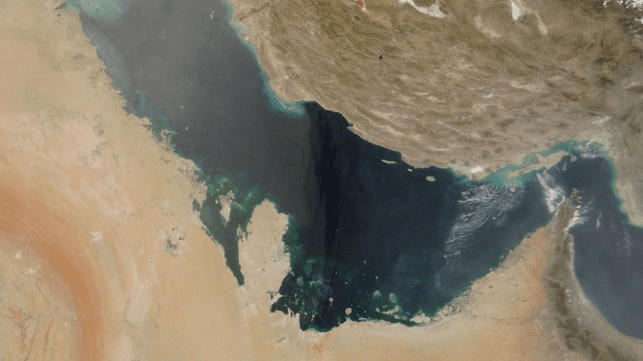
Oman has made its most unequivocal statement yet on its attitude to free passage navigation in the Strait of Hormuz.
Emerging from Council Meeting 137 on July 9 at the International Maritime Organization headquarters in London, the statement said that 'The Sultanate of Oman reiterates that the right of transit passage through straits used for international navigation is guaranteed under international law. Oman remains fully committed to these legal principles and does not support the imposition of transit fees on vessels passing through the Strait of Hormuz'. Earlier the IMO Secretary General had issued his own statement condemning the 'reckless attacks' on 'commercial ships and innocent seafarers' in the Strait in recent days.
There has been some misunderstanding caused by Oman's attempts to achieve a consensus with Iran over navigation in the Strait, developed in routine conversations between the respective foreign ministries, but also by direct talks in Muscat on May 24 and June 29. In these discussions, Oman tabled proposals to review charges raised for provision of lighthouses, channel markings, traffic control and emergency response, known as Navigation Dues, as are customarily charged elsewhere, for example by Trinity House in UK and Irish waters, but rejected the concept of passage fees. In these discussions, Iran held out for controlling navigation on both northern and southern sides of the Strait, for vetting permissions to transit, and for charging passage fees. Misunderstandings were reinforced by the well-established Iranian custom of releasing their own views on how discussions have gone, and not an agreed version of events.
Oman's Foreign Minister Sayyid Badr Al Busaidi set the record straight with an interview on July 1 with Monte Carlo Doualiya, France's Arabic language radio station. He outlined Oman's position:
· Any bilateral understanding between Iran and Oman must fall within international law and UNCLOS.
· Oman is "not in favor of imposing transit fees. That is prohibited under international law and we are committed to those rules."
· Oman is considering with Iran how environmental protection, navigational services and emergency response can be improved in the Strait, drawing on the models in operation covering the Strait of Malacca and Singapore. Proposed future arrangements would be discussed and agreed with the international maritime community.
· Responsibility for mine clearance in the Strait rests with Iran, who should approach others for support if it was unable to fulfill its commitment to clearance of the Strait under the 14 Point MoU signed with the United States.
Sayyid Badr's statement made it clear that while the scope and fee scale for services provided and charged for as Navigation Dues had been discussed between Iran and Oman, charging tolls for passage, in effect creating a reconstruction fund, would be unacceptable to the Sultanate.

that matters most
Get the latest maritime news delivered to your inbox daily.
Following the series of attacks on ships in Omani territorial waters, Oman's patience appears to have snapped, and the statement made at the IMO today is noticeably tauter and more direct, driven by Iran's duplicitous behavior and by the attacks on ships and sailors in recent days in Omani territorial waters. The attacks on Saudi and Qatari ships in Omani territorial waters caused considerable outrage.
It remains to be seen if Iran reacts to Oman's tougher position by coming back to the negotiating table. If Oman were to abandon the neutral stance it has taken so far, in the hope of drawing Iran into fruitful discussions, then the confrontation in the Strait could take on a different character. Qatar had tried the same approach, trying to tempt Iran into consensus-building discussions, but now appears also to have given up on the Iranians, in the wake of the attack on the Nakilat-owned and Marshall Islands-flagged LNG tanker Al Rekayyat (IMO 9397339) which had loaded at Ras Laffan.
