
JMIC Warns of Confirmed Mine in Hormuz as Uncertainties Continue
While reports indicate that traffic in the Strait of Hormuz is increasing, many shipowners have still voiced concern largely because of the unknown threat of mines placed by Iran during the conflict. The Joint Maritime Information Center added to those concerns, issuing an advisory confirming the location of one mine and telling ships to continue to avoid the main shipping lane.
The confirmed mine was reported to be close to the recommended southern transit route. It is near the apex of the peninsular close to the coast of Oman, based on the position provided by the Joint Maritime Information operated by the Combined Maritime Forces in the Middle East Region. Further, it warns mariners that while the Strait of Hormuz is open, active mine clearance operations are ongoing.
JMIC says the southern transit route along the Omani coast has been confirmed to be clear of mines, but also warns that the recognized International Traffic Separation Scheme lanes should be avoided due to the existence of mines.
The tanker trade group Intertanko repeated the same warning to members, telling the Guardian newspaper that around 80 mines still need to be cleared from the main shipping channel. It said the main lanes must remain closed as they are dangerous, but it is calling on the military forces to restore the main lanes as quickly as possible.
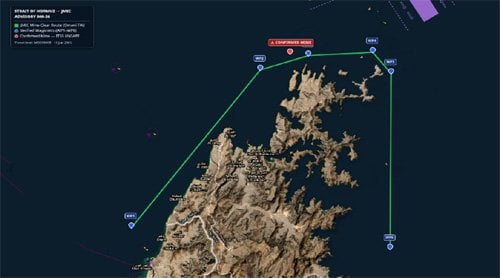
Confirmed mine spotting near the key southern shipping lane in the Strait of Hormuz (Neptune P2P Group)
ASXMarine reports that traffic in the Strait of Hormuz reached a two-month high on June 18 after the United States and Iran signed their Memorandum of Understanding. It observed 25 verified commercial vessel crossings through the Strait, which it said was more than five times the average daily level recorded during the first ten days of June.
Centcom also reported yesterday that U.S. forces lifted the blockade on all maritime traffic entering and exiting Iranian ports and coastal areas, in accordance with the president's direction. American forces are not impeding the transit of vessels to or from Iranian ports, and there have already been reports of multiple Iranian ships taking advantage of the agreement, further adding to the traffic seeking to transit the Strait of Hormuz.
The increase in traffic, however, raises concerns about congestion and raises the risk of collisions, warns Intertanko. It said the existing routes are inadequate to handle the anticipated 60 vessels per day. It is calling for the southern routes to be expanded and moved offshore with wider lanes and lateral separation.
Intertanko, as well as the trade group BIMCO, has also warned about the uncertainty around governance and the potential for shifts after the 60-day period in the Memorandum. Intertanko says it could cause further disruptions in shipping due to the uncertainties around reporting structures, transit coordination, and route management.

that matters most
Get the latest maritime news delivered to your inbox daily.
While Donald Trump has repeatedly asserted the mines have been destroyed, Centcom has been attempting to clear the waterways since April. Reports said the Pentagon assessments estimated full clearance could take up to six months. The Europeans have prepared to lead an effort as well, but have yet to gain permissions from the various authorities in the region.
Adding further uncertainty are reports that Iran plans to introduce navigation fees for the Strait after the initial 60-day period in the Memorandum. Reports are that Iran’s so-called Persian Gulf Strait Authority is also saying it will begin requiring “insurance,” possibly with fees for transits. It still requires registration 48 hours in advance and calling the northern channel the only permitted route. It warns of penalties for not following its instructions, while the Western authorities are telling ships to use the southern transit route.