
Iran War Prompts GCC Countries to Reduce Regional Trade Barriers
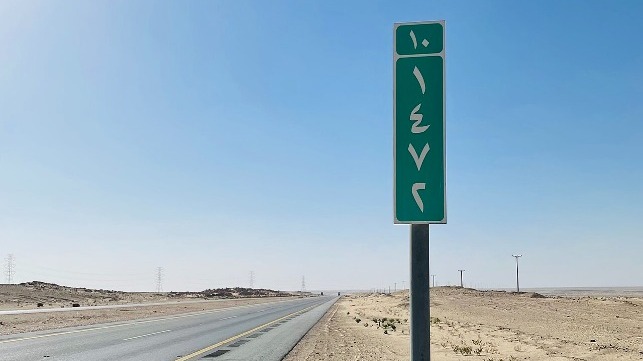
Faced with the urgent demands of their customers, logistics operators are not waiting for a political settlement to the war in the Gulf to solve their problems and the interruption of supply through the Strait of Hormuz.
Customs procedures within the GCC have always been an impediment to truck movements, but the lack of external, direct shipments into the Gulf has forced traffic onto the roads linking markets with the ports where there is still free access. These customs delays remain a significant problem on most of the important routes loaded with additional traffic:
- The Northern International Highway 85 which stretches from Bahrain and Dammam, through Riyadh, and then follows the course of the old Trans-Arabian Pipeline to Al Hadithah on the Jordanian border and thence to Syria and the Mediterranean.
- Highway 40, 850 miles long, stretches from what is now Saudi Arabia’s busiest port in Jeddah on the Red Sea, continuing through Riyadh to Bahrain and Dammam, the petro-chemical heart of Saudi Arabia.
- Highway 10, branching off from Riyadh direct to the UAE.
- Routes from Abu Dhabi and Dubai both to Fujairah and Khor Fakkan on the Gulf of Oman, taking the bulk of the container traffic which used to be moved through Kizad and Jebel Ali, but also being used for traffic to ports in Oman, principally Sohar.
- Finally, Highway 95, from the Saudi-Qatari border crossing at Salwa, passing through the Shaybah oilfield and the Empty Quarter and into Oman at the Ramlet Khelah border crossing point which was opened in January 2023, then linking up through Ibri with the Gulf of Oman ports of Sohar and Muscat, or the Arabian Sea ports of Duqm and Salalah. The value of goods crossing through Ramlet Khelah nearly trebled to $830m in March, from $300m in February. The opening of Highway 95 has been popular: not only is it shorter, but it also cuts out often 24-hour delays at UAE-Saudi border crossings which no longer need to be traversed.
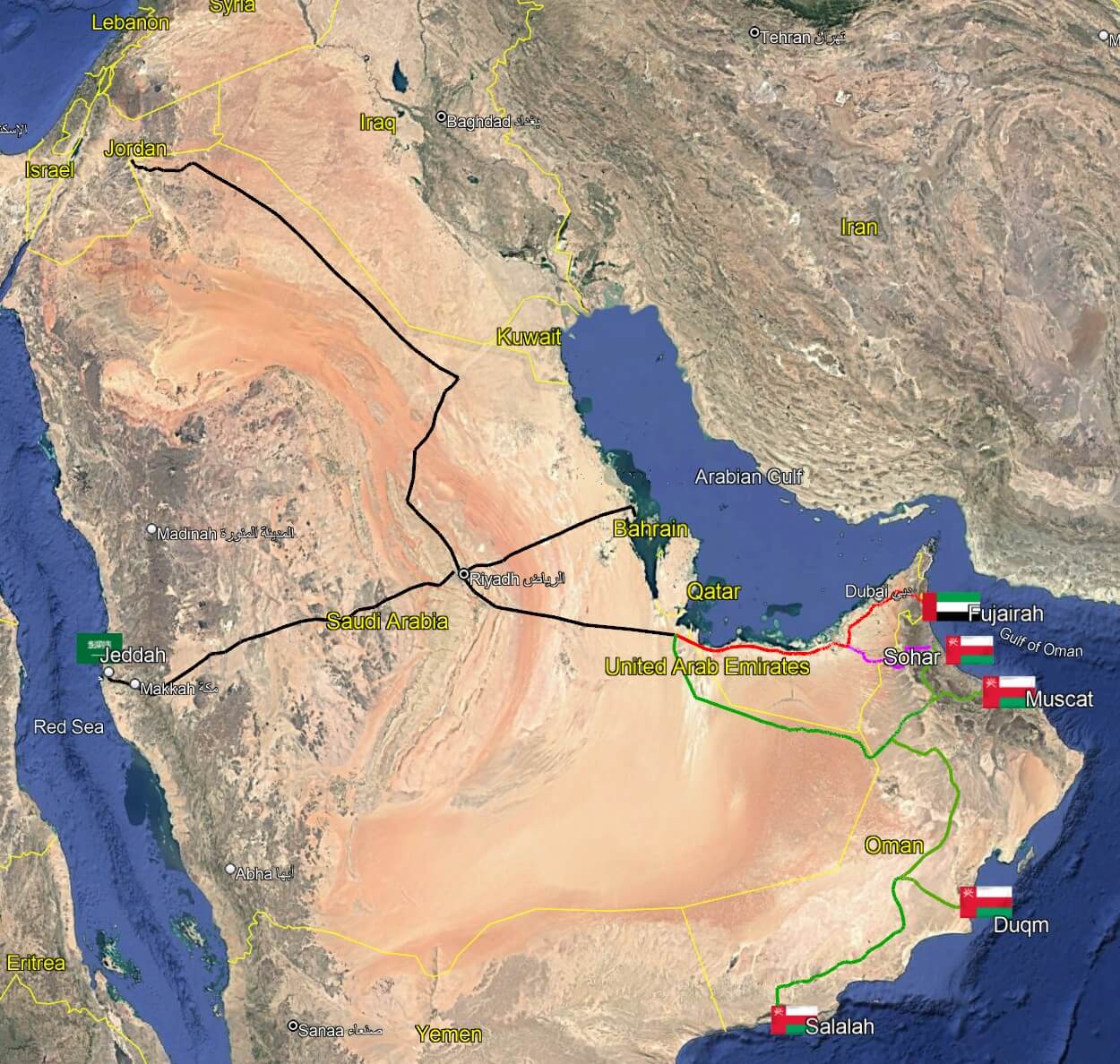
Road routes within KSA (black), from KSA to Omani ports (green), Etihad Rail to Fujairah (red) and Hafeet Rail nearing completion (purple) (Google Earth/CJRC)
With the need to keep traffic moving and reduce delays, the war has been a catalyst for the removal of customs barriers. The Emirates of Dubai and Sharjah have agreed new customs procedures with Oman to speed movement through the Hatta, Khatmat Malaha and Al Madam checkpoints by loads originating in Omani ports. Through Dubai’s Hatta checkpoint alone, the value of customs declarations rose from $270 million in March to $2.16 billion in April.
The Hafeet Rail route from Sohar into the Emirati network, now 40% complete and due to come into service in 2028, will feature a one-stop customs system for containers with no delays at the border.

that matters most
Get the latest maritime news delivered to your inbox daily.
But perhaps of most significance, after some last minute cliff-hanger delays, the GCC signed a comprehensive Free Trade Agreement with the United Kingdom on May 20, removing a further raft of customs duties and tariffs. The UK resisted the temptation to do bilateral deals with individual GCC countries, as the UAE had urged, in the hope that an all-GCC deal would boost the GCC as an integrated trading entity, as much as to benefit trade between the GCC and the UK. The deal will help British luxury car exports and financial services in particular, but it should also lead to an easing of tariff barriers within the GCC.
The UK-GCC agreement is the first that the GCC has signed collectively with a G7 country. The UK was part of the EU team when negotiations began with the GCC in 1990, and whilst the EU negotiations have stalled, the UK has used its independent sovereign status to quickly complete its own deal, Kemi Badenoch having opened negotiations in 2022. But undoubtedly, the desire on the part of the GCC to strengthen alliances with those who have supported it in times of trouble has contributed to a renewed impetus to complete the deal.