
Iran Threatens “Additional Punitive Measures” as US Goes Tanker-for-Tanker
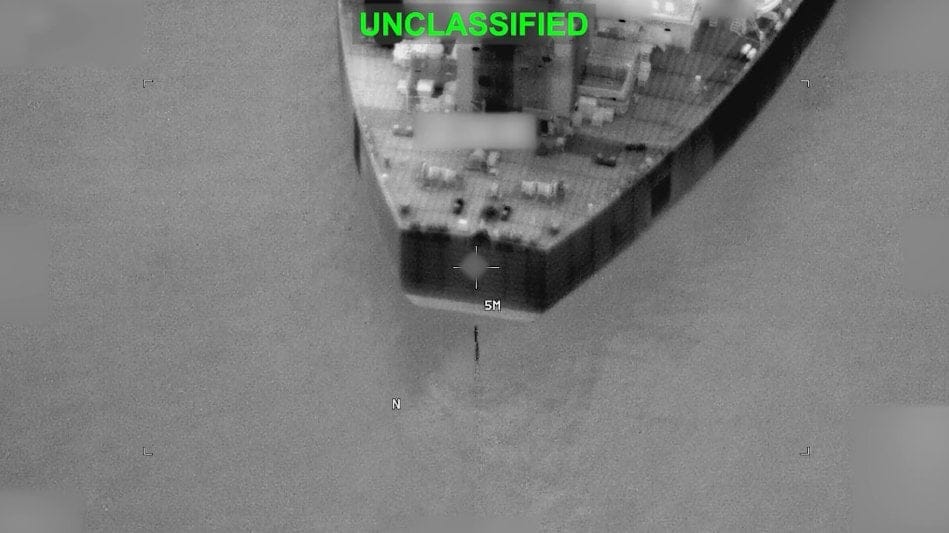
Iran and the United States are further escalating the contest for the Strait of Hormuz and the attacks on tankers. U.S. Central Command included images of two tankers being struck as part of its "highlights" reel from the September 1 retaliation for Iran’s "attempted attacks" on commercial shipping, while the Islamic Revolutionary Guard Corps (IRGC) made further claims of tankers hitting mines in the Strait of Hormuz while threatening increased actions.
CENTCOM reported that it had struck IRGC targets, including air defense sites, radar systems, maritime assets and facilities, mine laying capabilities, and communications sites during strikes that began late on Tuesday, September 1. It came as Donald Trump wrote online, “I’m not trying to force Iran to the bargaining table... I couldn’t care less if they sign a worthless, to them, agreement. I like our position now much better, with almost total control of the Hormuz Strait, and their economy totally collapsing.”
Axios is quoting unnamed U.S. military sources that said the two tankers shown in the video were “anchored off Iran’s north coast of the U.S. naval blockade.” It says U.S. drones launched missiles into the tankers’ engine rooms. No details were supplied on which vessels were struck.
It is reported to be part of a larger “tanker-for-tanker” policy approved by Donald Trump. The sources said it is designed to “further deter Iranian attacks on tankers that move through the Strait.” The sources said the U.S. is trying to reduce the risk for tankers by a strategy to “mow the lawn.”
Officials in the Gulf states and CENTCOM confirmed that Iran had launched retaliatory attacks on U.S. positions in Bahrain, Kuwait, and Jordan. The U.S. asserts that less than half the 25 ballistic missiles fired toward Jordan reached the country’s airspace, with 10 intercepted and three landing without casualties. Iran is claiming mass casualties. Most of the two dozen drones aimed at Bahrain, the U.S. says, were intercepted. Drones and missiles were fired at Kuwait, and drones at the U.S. position in Erbil in the Kurdistan region of Iraq.
Trump posted online Wednesday morning saying, “Now that we have it (Strait of Hormuz) under U.S.A. control, should we change the name Hormuz Strait to TRUMP STRAIT?”
The IRGC, however, issued a new statement today claiming that two “non-compliant oil tankers” had caught fire and were “rendered immobile” after striking naval mines in the Strait of Hormuz. It made a similar claim on Monday, which CENTCOM denied.
There, however, were reports on Monday that Iran struck the South Korean-owned tanker Senegal Prosperity, which the Joint Maritime Information Center said was listing and dead in the water. It said the crew had been evacuated. In addition, Saudi Arabia’s Bahri issued a statement today confirming that its tanker, Sidr, was also struck on August 31, resulting in the death of two Filipino crewmembers. The tanker is reported to be anchored in the Strait, with Bahri saying it remains in continuous contact with the vessel.
The IRGC asserted that the U.S. actions would “not weaken its control over the Strait of Hormuz.” Further, the so-called Persian Gulf Strait Authority increased its list of “non-compliant vessels” to 57 total, up from 46 last week. It continues to say vessels violating Iranian protocols for the Strait of Hormuz shall face restrictions on future passages, including fines, detention, or confiscation. It also continued the warning to charterers to review the list and not become involved with these vessels to “avoid potential issues.”
The IRGC asserted that “additional punitive measures would soon be enforced against maritime companies that violate established legal routes and place their vessels at the disposal of foreign powers.”

that matters most
Get the latest maritime news delivered to your inbox daily.
The Secretary General of the Gulf Cooperation Council, Jasem Mohamed Albudaiwi, issued statements saying they “condemned in the strongest terms” Iran's attack on the positions in Bahrain, Kuwait, and Jordan and the tanker Sidr. He called the attack on the tanker a “dangerous escalation.” He said it was a grave violation of the principles of international law and a direct threat to the security and safety of international navigation.
