
Iran Claims to Turn Back Chinese Tanker and Continues to Detain UAE Vessel
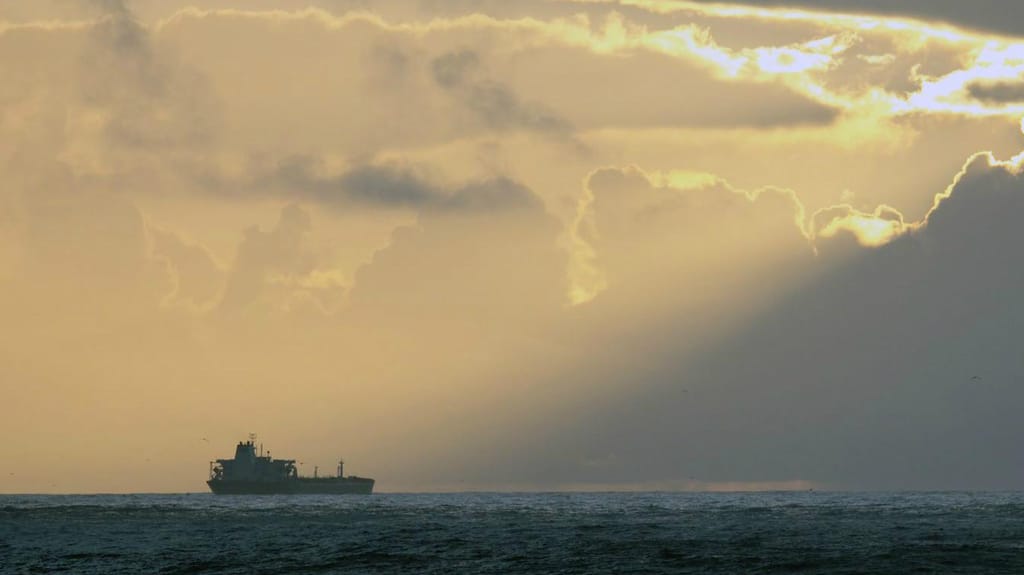
News sources closely linked to Iran’s Islamic Revolutionary Guard Corps (IRGC) continue to make claims about controlling vessel transits of the Strait of Hormuz as they enforce “Iran’s maritime laws.” Reports are highlighting that Iran said it would begin its enforcement efforts after the end of the agreement with the United States, and it appears it is attempting to move forward with its rules for the Strait.
WANA News and the Fars News Agency are both reporting that the IRGC Navy turned back a Chinese oil tanker. They highlight that unlike the attacks on the UAE tankers in recent days, the IRGC “opted to issue a warning in the case of this vessel.” It is unclear why the vessel was warned versus attacked and if it had anything to do with its reported Chinese ownership.
The unnamed ship was said to have been moving toward the southern corridor. WANA says the vessel “chose to turn back.”
The information is consistent with several events observed by Windward, the AI maritime intelligence firm, and reports by Bloomberg. Windward spotted two China-linked tankers aborting outbound transits of the Strait of Hormuz. One, it says, was a Hong Kong-flagged VLCC that looped back rather than cross the Strait and that followed another Chinese tanker that turned back within a 24-hour period. It also reports that on August 19, an inbound Hong Kong-flagged crude oil tanker turned around mid-transit. It says the vessel, which was entering in ballast, was on the southern route, reporting its destination as the UAE.
The report from Bloomberg identified one of the tankers as the Sea V, Chinese-owned and flagged in Hong Kong, the 317,788 dwt tanker, which was coming from Iraq, now shows anchored near the entrance to the Strait from the Persian Gulf. The Hong Kong-flagged Hestia (299,990 dwt) is reported to have aborted the entrance into the Persian Gulf and is now in the Khor Fakkan anchorage. The Hong Kong-flagged Erecter (301,021 dwt) is also anchored in the Persian Gulf near the Strait, seeming not to attempt an exit.
Two tankers associated with South Korea’s Sinokor, however, appeared to make the transit via the southern route, reports Bloomberg. The Swedish Prosperity (314,000 dwt) registered in Liberia entered dark and is now showing as anchored off Dubai. The Singapore Prosperity (301,861 dwt), also registered in Liberia and managed by Sinokor, appeared to have made a dark exit and is now anchored off Fujairah.
The variances in transits are consistent with the reports from Kpler, which said on August 18 that confirmed Strait of Hormuz transits were down 17 percent from the prior day. It reports six vessels exited and four entered, but five were on the Iranian route and none through the Hormuz TSS. This is a change from its previous report, which said 80 percent of the liquid transits over the prior two weeks were on the route near Oman or dark transits.
Iranian reports are emphasizing the “violation of Iran’s maritime law.” It says the product tanker linked to the UAE, which was stopped on Monday, Amara (47,931 dwt), flagged in Liberia, is now being directed to Bandar Abbas. The ship had been inbound with ballast bound for Jebel Ali. Currently, it appears to be anchored near Larak Island in Iran.
WANA says this is the first time that the Islamic Republic has explicitly declared the refusal to pay service fees as the reason for stopping a ship. Windward notes it is the first confirmed Iranian seizure since June 22, and because the vessel was empty, it says the interdiction seems consistent with a transit compliance or fee dispute.

that matters most
Get the latest maritime news delivered to your inbox daily.
The Fars News Agency, however, is boasting that an LPG tanker sanctioned by the U.S., Mighty Navigator (50,000 dwt), flagged in Hong Kong, passed the blockade and crossed the Strait of Hormuz. The U.S. sanctioned the tanker in May, but its AIS does show it underway, passing Qeshm Island inbound. The AIS is declaring Sarjah in the UAE as the destination, but that could be false information.
U.S. Central Command continues to assert that it has control of the Strait. It added one more ship to the total of vessels redirected, bringing it to 65 as of August 18.
