
India Asserts Maintenance and Training Issues Caused MSC Elsa 3 Loss
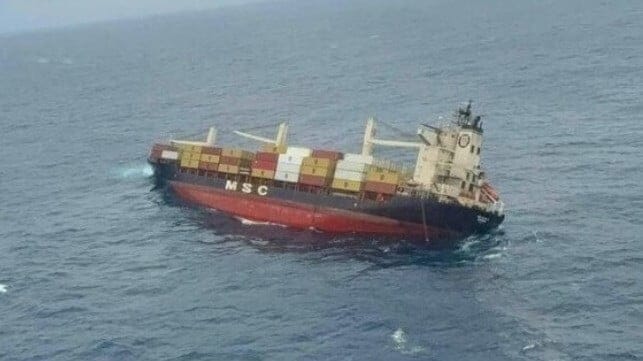
A year after the MSC Elsa 3 containership sank off the coast of India, the Directorate General of Shipping filed its preliminary report on the casualty with the Kerala High Court, citing mechanical failures, maintenance and structural issues, and a lack of training, which it asserts caused the loss of the ship. The filing came as one of the magistrates in the case reported the investigation could be completed in the next two months, and as India continues to pursue large damage claims against MSC Mediterranean Shipping Company and its insurers.
The Directorate General of Shipping is saying, based on its findings, there were technical failures and serious safety lapses on the ship leading up to its sinking on May 24, 2025. It reports that the Vizhinjam International Seaport authorities had warned the ship’s management that the vessel was listing while containers were being loaded in the port. They reported a five-degree list, which they assert was ignored by management. They also contend the ship had an “inherent tilt” to starboard on previous voyages.
During the fatal trip, they assert the vessel’s ballast water system failed, resulting in flooding into the ballast tanks, which the crew could not control. The ship reached a 26-degree list to starboard, causing the container stacks to shift, and the instability increased due to the weight of the containers. Around midnight, they report that containers began to fall overboard. The ship went down on May 25, after the crew was evacuated.
They are also asserting that the vessel’s safety management system was deficient, especially regarding maintenance procedures and spare parts management. As the list increased and the situation became more desperate, it also exposed failures in the vessel’s safety management systems and the crew’s training.
The chief officer had joined the vessel one week before the incident, and the report says he was not given sufficient time for training and familiarization with the vessel. Other crewmembers, they contend, lacked practical training for emergency ballast operations. Many of the crew, DGS asserts, only had theoretical knowledge and no real-time experience in managing emergency situations.
The Directorate General of Shipping also asserts that the ship had suffered structural damage in a 2016 collision that was not fully repaired. It says there were structural failures aboard the ship and that it had relied on temporary fixes. Defects in previous inspection reports, it says, were not sufficiently repaired or replaced.
The ship, which was built in 1997, had gone through several owners before it was acquired by MSC in July 2015. It was 22,994 dwt with a container capacity of 1,728 TEU. It was registered in Liberia. It sank about 15 nautical miles off the Indian coast. The crew was all evacuated, but containers washed ashore, and there was oil pollution from the wreck.
The report came out as the Kerala High Court was also hearing a petition from seven crewmembers who have been detained in India for more than a year. They are calling their detention illegal and asking the court to return their passports and permit them to return to their home countries.
The court provided a conditional release for three of the crewmembers, including an “electro-technical officer,” a deck crewmember, and an engine room crewmember, so that they could return to their homes in Ukraine and the Philippines. However, each person is required to post a personal bond, a bank guarantee, and to agree to continue to fully cooperate in the investigation. They had to provide the court with their home address, cellphone numbers, email address, and agree to be available through online modes for the court or the investigating officers.
Four other crewmembers, including the master of the vessel and its chief engineer, however, have been ordered to remain in India. The court said they were specifically named in the investigation papers, and the court ordered them to appear on June 12 for their examinations. The court said it would consider their requests to leave India once their role in the investigation and their testimony were completed.

that matters most
Get the latest maritime news delivered to your inbox daily.
The government and the state are seeking large financial damages from the loss of the vessel and the clean-up efforts. In addition, the fishing community and others have also filed claims for financial losses due to the sinking of the ship. The courts have required MSC to provide large financial bonds and previously arrested other MSC vessels as collateral against the various claims.
MSC has asserted that the claims are excessive. It says it has been working with the authorities in the clean-up and recovery from the loss of the containership.
