
Hormuz Traffic Plummets as Shipowners Obey New Iranian Closure Order
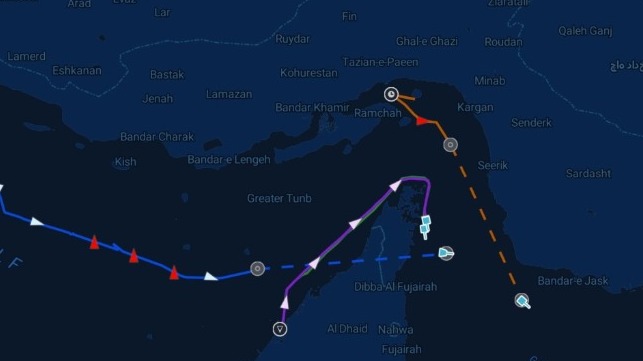
Iran has once again closed the Strait of Hormuz, this time in response to Israeli attacks in Lebanon, and tracking services say that marine traffic is obeying the closure order - despite American claims to the contrary.
Windward's analysts detected 12 transits on June 21, mostly Iranian-flagged, sanctioned, and inbound ships (both AIS-dark and AIS-transmitting). Operations on the southern, U.S.-managed transit lane have largely paused. The change is an abrupt ramp-down from the 21-ship total on Saturday, before the Iranian government announced the re-closure of the strait. AIS data received by MarineTraffic on Saturday showed a limited number of turnarounds mid-transit as vessel masters reacted to news of the Iranian closure.
"The MOU-driven recovery that began June 18 has stalled within 24 hours of the announcement," assessed Windward. "The current traffic profile: dark, sanctioned, Iranian-linked, resembling the late-blockade baseline more than a functioning open strait."
Iran's re-closure of Hormuz is already measurable in the data.
— Windward (@WindwardAI) June 21, 2026
12 transits today, down from 21+ on June 20.
Neutral and European commercial tonnage: absent.
5 of 8 inbound vessels: dark.
The MOU-driven recovery that began June 18 has stalled within 24 hours of the… pic.twitter.com/YFEZ2VuNt4
The observable vessel movements no longer align with the picture painted by U.S. Central Command in a Saturday update. The current Iran-dominated traffic patterns reflect the decision by U.S. decisionmakers to continues to allow Iranian traffic to pass unhindered (per the terms of the MOU).
"Commercial ship traffic in the Strait of Hormuz increased June 20 as U.S. forces continued operating in the general area to support freedom of navigation," CENTCOM said in an update yesterday. "Safe passage through the international waterway remained intact today as 55 merchant ships transited, moving large amounts of cargo and more than 17 million barrels of oil to global markets."
CENTCOM's size cutoff for "merchant ship" is unspecified; the waterway is also used by coastal dhows, which do not affect global trade flows. The command has not yet updated yesterday's status report to reflect current traffic levels in the strait.
Iranian and American negotiators have flown to Geneva to begin talks, several days behind schedule, and Iran remains focused on the status of hostilities in Lebanon. Israel - not itself a party to the MOU - has continued attacking Iran-allied Hezbollah and other targets in Lebanon, violating the first paragraph of the U.S.-Iran deal. Iran succeeded in linking the Lebanon issue with the reopening of Hormuz (by securing a clause for the "permanent termination of the war on all fronts" in the first article), transforming Israel's military offensive into an American responsibility.
"[If] Article 1 of the Islamabad Memorandum of Understanding (MoU) signed by the US and Iranian presidents is not met, any negotiations between Iran and the US on all other subjects will be stopped," reported semiofficial Iranian outlet Tasnim News on Sunday.
The linkage is forcing the White House to apply pressure to the Israeli government to curtail its military activities. The administration of Israeli Prime Minister Benjamin Netanyahu does not believe that withdrawal from Lebanon is in the Israeli national interest, and has resisted, prompting open criticism from Washington.
"Israel is fighting Hezbollah too long, and too many people are being killed," President Donald Trump said last week, making a rare public critique. "And you don’t have to knock down an apartment house every time you’re looking for somebody because there are a lot of people in those apartment houses and they’re not all Hezbollah."

that matters most
Get the latest maritime news delivered to your inbox daily.
Early indications suggest that U.S.-Iran talks in Geneva are off to a challenging start, without a photo opportunity or a planned press conference. Iran's delegation was reportedly displeased when President Trump threatened to "hit Iran very hard again, just like we did last week, only harder" on Sunday. In conversation with Fox News, the president added that if Iran re-closes the strait, "you won’t have a country, you won’t even make it back to your ______ country," a clear threat to the security of the Iranian negotiating team.
Iranian outlet IRNA reports that direct bilateral talks have ended for the day. Despite rumors of an Iranian walkout, the talks will restart shortly with Pakistani and Qatari mediators present at a different venue, IRNA said.