
DOJ Files Appeal on Court Blocking Trump’s Moratorium on Wind Energy
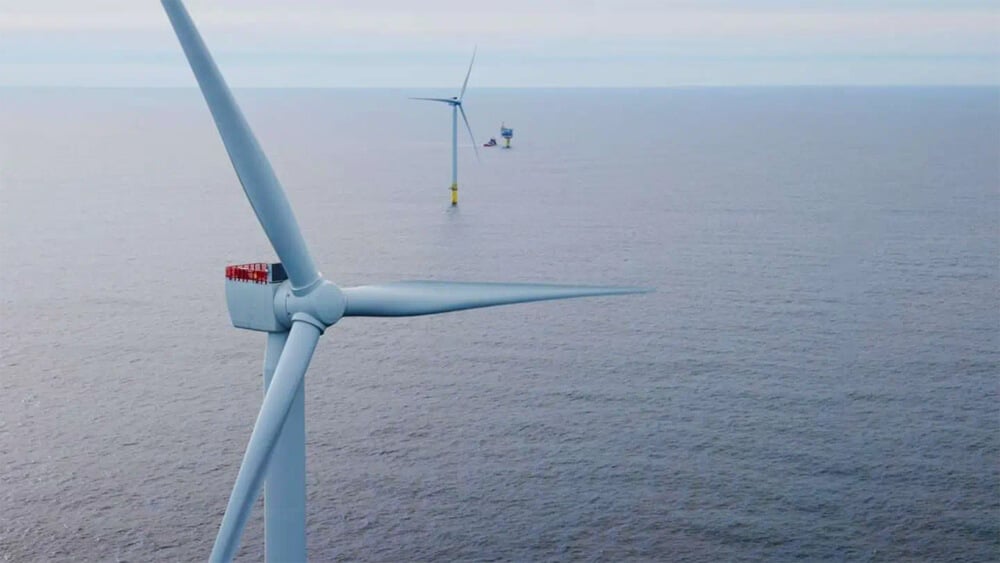
The U.S. Department of Justice’s Environment & Natural Resources Division filed notice with the district court in Massachusetts for an appeal on the court ruling blocking Donald Trump’s Executive Order from January 2025 establishing a moratorium on permitting, leasing, and other authorizations for wind energy projects. It is the latest step in the Trump administration's continuing battle against renewable wind energy.
The filing came 45 days after District Judge Patti B. Saris had ruled in December 2025, calling the Executive order unlawful. Signed immediately after Trump’s return to the White House, the order instructed all agencies to freeze any activity pending a review of the leasing process. It applied to all the permits filed by companies seeking to develop both offshore and onshore wind energy. It did not impact previously approved projects but stopped future advancement.
Trump has long been a vocal critic of wind energy and especially offshore wind farms. He made it a platform in his 2024 run for the presidency, promising to stop the industry. He wrote on social media, calling wind energy “the scam of the century.” Recently, he said wind energy is for “stupid people.”
A coalition led by New York State and made up of 17 states and the District of Columbia, and calling itself the Alliance for Clean Energy, filed a challenge in May 2025 to the Executive Order. The states argued that it jeopardized large investments made in the sector and their ability to meet future energy needs. They said the order violated U.S. law because it was a blanket restriction and because it was not supported by a reasoned explanation. They argued the federal government has an obligation under the law to review and process applications within a reasonable amount of time.
Judge Saris found for the alliance in December, blocking the Executive Order. The ruling called the order “arbitrary and capricious,” saying it was a violation of multiple elements of the Administrative Procedure Act, which spells out how the government handles processes such as the review and approval of applications. The ruling agreed that the government could not indefinitely suspend the reviews and was required by statute to review the applications and make a determination in a “reasonable time.”
Lawyers at the firm of Harris Beach Murtha, which had represented the Sunrise Wind project during its application with New York’s regulator NYSERDA, pointed out the order only meant the reviews would continue. They noted that the administration could still “either deny them outright or subject them to lengthy reviews.” Further, the order did nothing to resume future lease auctions.
The administration had 60 days to file its appeal on the ruling. A spokesperson for the White House said the administration would continue its efforts and that “the administration looks forward to its ultimate victory on the issue.”
The court has started the process for the lawyers to register for the appeal. It will then set a deadline for both sides to submit their initial arguments.

that matters most
Get the latest maritime news delivered to your inbox daily.
Separately, Interior Secretary Doug Burgum had said earlier in the month on Bloomberg Television that the administration also plans to appeal the five preliminary injunctions issued by individual courts against its stop-work orders issued to the five under-construction offshore wind farms. Each of the projects received an injunction so that work could resume offshore while the courts continued to consider the argument that new confidential data from the Pentagon raised national security concerns. Burgum has done multiple TV interviews raising the issue of radar interference from the wind turbine blades and towers, while the companies argue they spent years in review and gained approvals from the Department of Defense.
The projects are proceeding, and in the case of Vineyard Wind 1, it is weeks away from completion. Dominion Energy’s Coastal Virginia Offshore and Revolution Wind are both expected in the near future to start their first power generation. Construction on the five projects should be completed by 2027.