
CBO: First Trump-Class "Battleship" Could Cost $23 Billion
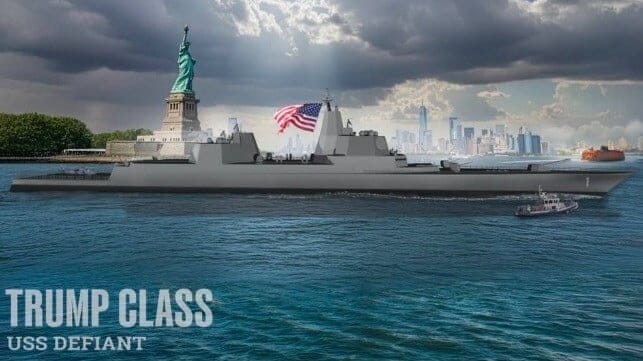
The U.S. Navy's first future "battleship" combatant class may cost about $23 billion dollars by the time it delivers in 2034, according to a new analysis by the Congressional Budget Office. If built, and if CBO is correct, it would set new records for the most expensive ship and most expensive weapon of any kind, displacing the $13 billion carrier USS Gerald R. Ford.
The future USS Defiant was always going to be expensive, and previous estimates put the cost at about $15 billion - more than Ford, but only by the price of an extra destroyer. The new CBO estimates that cost will be higher by another $8 billion, making the first-in-class USS Defiant as costly as one Ford-class carrier plus one Columbia-class ballistic missile submarine - the two most expensive vessel classes that the Navy has ever made. Follow-on vessels would be cheaper at about $18 billion each. The 2027 shipbuilding plan calls for procuring 15 in total.
CBO's price estimate is based on USS Defiant's vast size - nearly four times an Arleigh Burke-class destroyer - and its nuclear-powered propulsion system, which adds to up-front costs. A large and sophisticated array of armaments, including lasers, a railgun, hypersonic missiles and 128 VLS cells, would also cost significant sums to procure and install.

that matters most
Get the latest maritime news delivered to your inbox daily.
Defiant's price raises questions about tradeoffs and value. The current capex layout for one Arleigh Burke-class runs about $3 billion; when writing a shipbuilding budget, the Navy trades off the opportunity to buy six Arleigh Burkes (480 VLS cells) for each Defiant-class (128 VLS cells). The existing destroyer platform is at its absolute limits for power and weight, unable to accommodate future technology, but it is a capable solo deployer, carrier escort and missile-defense platform; trading off six of them means foregoing an extra destroyer squadron of patrol, presence and deterrence capability.
Either way, CBO notes, the Navy's projection for shipbuilding activity is so large that it is likely to put strain on the industrial base. Only two companies build large surface combatants for the U.S. Navy, and both are fully contracted. The long-range plan for FY2027 calls for increasing large combatant production by 60 percent by 2035 - a substantial increase that would require expansion of shipyard capacity, whether in the form of distributed blockbuilding or in the possibility of additional yard space.
