
California to Sue Trump Administration for Canceled Offshore Wind Lease
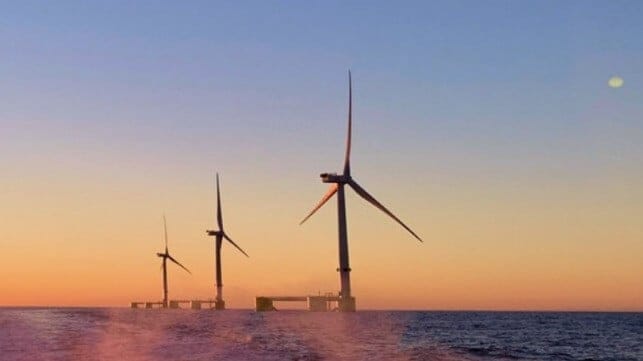
California Attorney General Rob Bonta and the California Energy Commission filed a notice of intent on Tuesday, June 23, to challenge the Trump administration’s deal to cancel a California offshore wind lease in exchange for investments in fossil fuel energy projects. The state contends the effort puts at risk its energy policy and more than $100 million in investments in an unlawful agreement that violates the Outer Continental Shelf Lands Act.
The Trump administration’s latest step to end offshore wind energy has focused on a series of deals that it says reimburse the bidders for the money spent on leases in exchange for reinvestment in other energy projects. The first deal was struck for nearly $1 billion with TotalEnergies, followed by a second that canceled California’s Golden State Wind (GWS) and another project in the New York Bight, and a third deal which cancels projects in the New York Bight, the central coast of California, and the Gulf of Maine. All told, the administration has promised nearly $2.6 billion of reimbursements.
“At a time when the country needs more reliable and sustainable power supply, the Trump administration is busy using taxpayer money to strike backroom buyouts that make clean-energy projects disappear. California won’t stand idly by as the Trump administration illegally strikes deals to kill offshore wind projects and replace them with more windfalls for his fossil fuel friends; we’re putting the administration on notice that we intend to sue,” said Attorney General Rob Bonta.
The California Energy Commission in May served an administrative investigative subpoena to GSW seeking documents and information related to the company’s buyout deal with the Department of the Interior. Under the law, the state filed its notice of intent today, and the federal government and GSW have 60 days to correct the alleged violations, or the state can then proceed to file the lawsuit.
The lease for Golden State Wind was acquired in 2022 as a 50/50 joint venture between Ocean Winds (a 50/50 joint venture of EDP Renewables and ENGIE) and Reventus Power, a portfolio company of the Canada Pension Plan (CPP). They paid $120 million for the lease in the Morro Bay Wind Area. The proposal called for a 2 GW floating wind farm located 53 miles northwest of Morro Bay and 22 miles from the closest point to shore. The project was in the early stages, having started in 2024 with its geophysical survey after receiving its permits. It had not filed environmental or construction and operations plans with the Bureau of Ocean Energy Management.
The Department of the Interior announced on April 27 that Golden State Wind had committed to voluntarily end its offshore wind lease. It is the project would be eligible to recover approximately $120 million in lease fees after an investment has been made of an equal amount in the development of U.S. oil and gas assets, energy infrastructure, and/or LNG projects along the Gulf Coast.
California, in its notice, alleges this violates the Outer Continental Shelf Lands Act, which requires that California have a say in the offshore wind leasing program. Bonita said in a statement that the Department of the Interior alleges the agreement settles purported litigation. However, Bonita asserts that Golden State Wind never brought litigation, and it was not challenging actions that the Department of the Interior had never taken. He said DOI claimed unspecified national security concerns justified the cancellation, although the federal government had already reviewed and approved the lease area after years of analysis and consultation with the U.S. Department of Defense.
The Trump administration made similar claims to challenge the first under-construction offshore wind farms on the East Coast. Five separate courts found for the wind farm developers and issued injunctions to prevent stop-work orders on the construction.
The California Energy Commission, last week, after the DOI announced another deal, this time with Invenergy, to cancel offshore wind leases in California, New York, and Maine, also moved to challenge the strategy. It served an administrative investigative subpoena to Invenergy regarding the planned cancellation of another lease in Morro Bay for a further 2 GW of capacity. The subpoena demands a copy of the settlement agreement and information concerning its basis, negotiations, and impact.

that matters most
Get the latest maritime news delivered to your inbox daily.
California says it has invested more than $100 million to ready its ports, transmission systems, and industries to support offshore wind energy. Further, it says the actions threaten to set back California’s wind strategy, which calls for 25 GW of offshore wind power by 2045, which is critical to the state’s energy transition and increased energy demands. It highlights that the agreements also redirect the investments to other states.
A coalition of eastern states filed a similar challenge against the administration’s agreement to cancel the wind farms planned by TotalEnergies. They also contended it jeopardizes their economies, efforts to meet growing energy demands, and significant investments made to support the projects.
