
Bulgaria Denies Oil Slick Coming from Hulk of Sanctioned Tanker
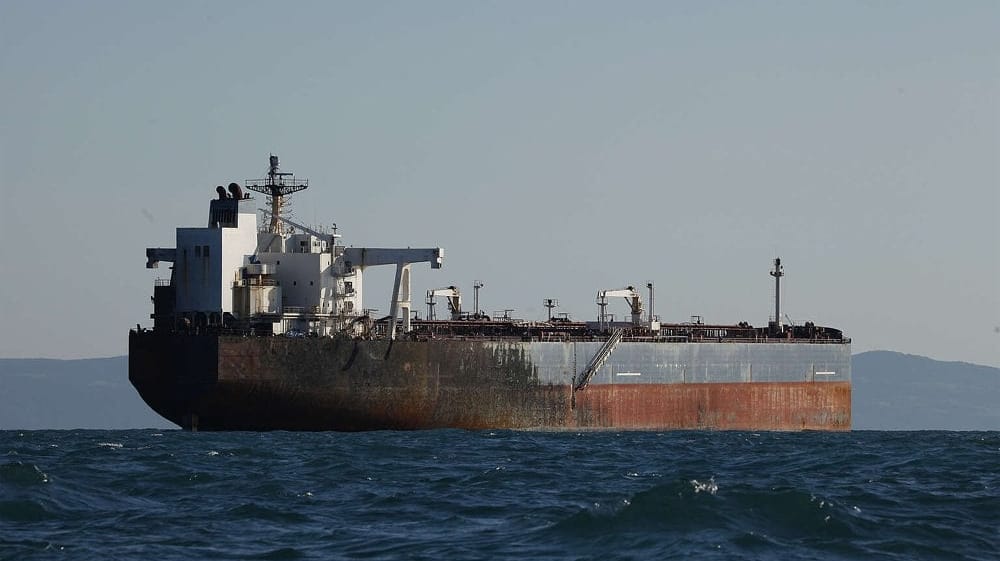
Officials in Bulgaria are denying reports of a persistent oil slick emanating from the hulk of a sanctioned oil tanker that was badly damaged by a Ukrainian attack in November 2025. Greenpeace Bulgaria, however, released a satellite series of images calling for a full investigation into the source of the oil slick that appears to be coming from the wrecked tanker Kairos (150,000 dwt).
Reports of the oil slick emerged last week, when the Nessebar Public Council reported the situation and demanded government action. Nessebar is located approximately 20 nautical miles to the north of Bargas Bay, where the wrecked crude oil tanker has been anchored since December 2025. Nessebar is part of a popular tourist area on the Black Sea coast.
Bulgaria’s Transport Ministry coordinated with the Maritime Administration to conduct a survey of the tanker. They reported on July 22 that two inspections had taken place in a radius of 1.5 nautical miles from the tanker and no slick was spotted, but they did locate “individual colored spots,” which were treated with dispersant. A survey of the hull, they asserted, also showed no active leaks.
The tanker had entered the Black Sea when it was attacked by drones north of Turkey on November 28, 2025, and a large fire resulted damaging the bridge and accommodations block. The engine room was also at least partially flooded. Turkish authorities responded and assisted with the evacuation of the vessel, which was later taken under tow. On December 5, the hulk of the tanker grounded on the Bulgarian coast with assertions that the Turkish tug towing the vessel had dumped it in Bulgarian waters.
Built in 2002, the tanker was reported to be registered in Gambia and owned by a Chinese company. Bulgaria worked to ensure the safety of the remaining crew aboard the tanker, and after 10 days, it was towed to a more secure location in Burgas Bay. The European Union listed the vessel in its sanctions program in May 2025, and the UK added the vessel to its sanctions in July 2025, with both citing the vessel’s repeated involvement with the Russian oil trade.
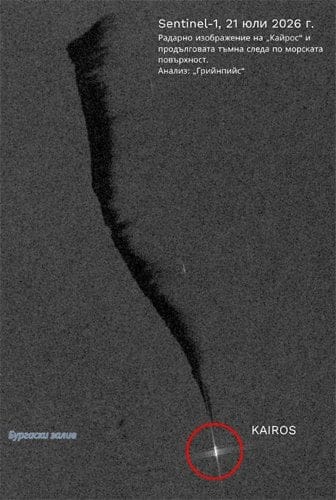
Apparent oil slick seen on July 20 image from Sentinel-1 (Greenpeace Bulgaria)
Greenpeace Bulgaria, however, studied satellite images from Sentinel-1, Sentinel-2, and PlanetScope’s platforms. Greenpeace asserts it was able to trace the slick to an image dated April 26, 2026, and subsequent satellite data showed new spots on May 14, as well as on 15, 17, 19, and July 21. They assert the slick is stretching approximately 6.5 nautical miles.
“The coincidence between the radar and optical images shows the repeated appearance of spots with a shape and behavior characteristic of petroleum products on the sea surface in the immediate vicinity of the ship,” said Greenpeace Bulgaria in its statement. It is saying that further checks are needed to definitively establish their origin, including through chemical analysis of samples and on-site inspection.

that matters most
Get the latest maritime news delivered to your inbox daily.
"With a high degree of confidence, we can say that the stains are from petroleum products," said Martin Tomov, Coordinator at Greenpeace Bulgaria. He used the incident to reiterate Greenpeace’s campaign to stop the dependence on oil and gas and the dangers of the shadow fleet.
Bulgaria’s Transportation Ministry said it was continuing to monitor the vessel and would continue to look for signs of the oil slick. It said it was also in contact with the Chinese owners, who reported the vessel had been sold. Apparently, it was sold to a cash buyer who is reselling the hulk for scrap in Turkey.
