
British Defence Minister Resigns as Defense Budget Increase Evaporate
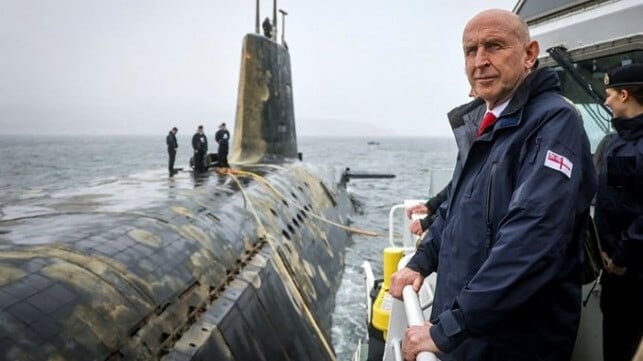
John Healey, the British Defence Minister, has resigned in protest at the UK government’s failure to fund the long-awaited Defence Investment Plan.
Publication of the Defence Investment Plan has been delayed by at least a year, and was supposed to set out funding allocations for defence, in line with similar plans for health and welfare, which already detail plans for expenditure for the next ten years. Critical equipment plans have already been jeopardized by the delay in publishing the plan, and in his resignation letter, John Healey revealed that the still-to-be-published plan was only set to increase defense expenditure by 0.08 percent by 2030. This would take the defense budget to 2.68 percent of GDP, which is well short of the government’s previous commitment to achieve 3 percent of GDP by 2030. This is a target that is also NATO-endorsed.
In his resignation letter, Healey pointed out that a lack of sufficient money in the defense budget directly endangers soldiers and sailors in the front line – who will lack the necessary equipment to fight and defend themselves.
Healey’s resignation follows what has been a long, drawn-out argument within government on how the defense budget increase should be funded. Health and welfare spending has risen dramatically under Sir Kier Starmer’s government, and is set to rise further. Health, welfare, and spending on Net Zero appear to have won the argument within government, to Defence’s detriment. The Opposition had called for the savings necessary to be taken from Net Zero funding and from the welfare budget, focusing in particular on the huge rise in payments for those deemed unfit for work and in support for asylum-seeking immigrants.
The proposed defense funding profile delays the modest increase in allocations until the later years of the investment plan. This, in effect, will mean cuts in the defense budget up to 2030, as the current budget is insufficient to support capabilities already or about to come into service. Moreover, the increased spending of $18 billion includes nearly $5 billion in efficiency savings to be found from within the defense budget – such savings tend to be made by cutting readiness and existing units, rather than by transforming them into new-era capabilities.
A whole series of future equipment programs is now in danger. In the naval area, this includes the number of new AUKUS submarines, Type 26 and 31 frigates, the planned Type 83 destroyer program to replace the Daring Class, and additional F-35Bs to equip the two Elizabeth Class aircraft carriers to design capability.

that matters most
Get the latest maritime news delivered to your inbox daily.
The Defence Investment Plan was supposed to fund not just existing defense capability, but to transform the services to better handle emerging threats, with new capabilities that are emerging from wars in Ukraine and the Middle East. The only way this can be achieved under the proposed funding plan is to cut equipment and units currently fielded. But with capability in so many areas well below that which is needed to meet existing requirements, even difficult choices are unavailable.
John Healey was a well-respected and long-standing Labour minister, previously considered one of Sir Kier Starmer’s most loyal ministers. It is unlikely that his resignation will end debate over defense investment, and further deep political turmoil – and probably resignations – can be expected, even before NATO defense ministers meet in Ankara in July.