


Vance Acknowledges "Details" to be Resolved on Alaska LNG Investment
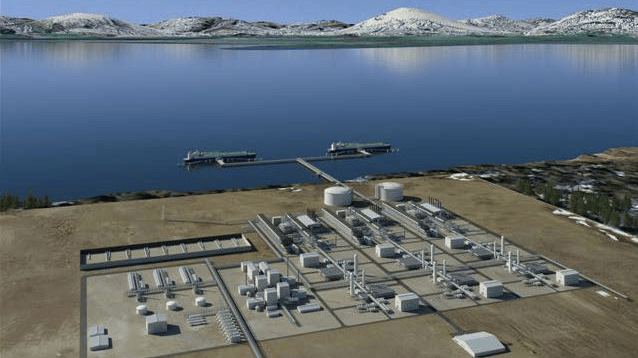
Just days after President Donald Trump unveiled a multi-billion-dollar South Korean investment in the Alaska LNG pipeline megaproject, officials in Seoul and the United States are walking back the timing and review status of the commitment. On Monday, Vice President JD Vance acknowledged to Reuters that there are still "details" to work out on the agreement.
Alaska LNG is among the most ambitious infrastructure proposals in the United States, an 800-mile line connecting gas fields on the Artic tundra of the North Slope with a liquefaction plant on the Gulf of Alaska. It would be a big boost for Alaska's economy and state budget, but it would also be a major commitment of capital. At inception, the proposal had big-name backing, at one time boasting involvement from BP, ExxonMobil and ConocoPhillips. All three oil majors backed out by 2016. At present, the investment company Glenfarne Group and the state-owned Alaska Gasline Development Corporation are in charge of pursuing permits, investors and customers, with considerable assistance from the state and the White House.
If built, the project would deliver 20 million tonnes per annum of LNG to buyers in Asian markets, but at considerable financial cost and risk. The pipeline route has to traverse remote, rugged areas of central Alaska, where logistics are difficult and seasonal weather is harsh. With the need to construct a treatment plant at the North Slope side of the project, then build an overland supply pipeline, the megaproject is expected to cost $45-55 billion. This works out to as much as $2.7 billion per mtpa - approaching three times the capex required for Gulf Coast LNG projects, according to Reuters. So far, the sponsors have preliminary commitments for offtake totaling about 13 mtpa - but no binding sales contracts.
Accordingly, energy analysts and South Korean regulators are looking closely at the financial details. Korea's energy ministry says that it will need a complete commecial feasibility study before it can commit to an investment decision. Multiple analysts predict that the LNG will have be more expensive at the pier because of the capex of the treatment and pipeline system, so other factors will have to determine the decision - like the short shipping distance, the available alternatives in British Columbia, and the strategic benefits of having a new U.S. supplier.
"Currently, there is no evidence that any entity is willing to fund this project, nor is there any evidence that customers have stepped forward to purchase the gas," one former senior State of Alaska official with experience on Alaska LNG told Chosun Ilbo.
South Korea's government has stated that the deal described by the White House last week is not yet finalized. "We are initiating a review premised on commercial rationality and domestic legal procedures, and neither the decision on whether to invest nor the scale has been determined," South Korea's Ministry of Trade said in a statement.
Lawmaker Choi Su-jin of the conservative People Power Party (the country's main opposition party) objected strongly to the terms as currently proposed. Choi told Korean outlet MK that the U.S. government has not historically been willing to underwrite Alaska LNG's performance with its own public funds, and it is unclear why Korea should take on that risk itself.
"It is a typical unfair and toxic contract in which the South Korean government fully assumes the astronomical funds and risks of $50 billion . . . without any U.S. federal guarantee," Choi said.

that matters most
Get the latest maritime news delivered to your inbox daily.
On Friday, President Trump threatened to penalize South Korea's government if it did not follow through on his announcement of a final deal on Alaska LNG. "If they don’t want to do it, that’s OK with me. I’ll just charge them more. Tell them if they don’t sign shortly, I’m going to double it up," Trump told reporters.
On the same day, he announced an $8.4 billion Korean investment in an enhanced oil recovery project; this was reportedly disputed by South Korea's Industry Ministry, according to Chosun.
