


MAIB Reports on Ferry-Jetty Incident That Holed Hull and Caused Flooding
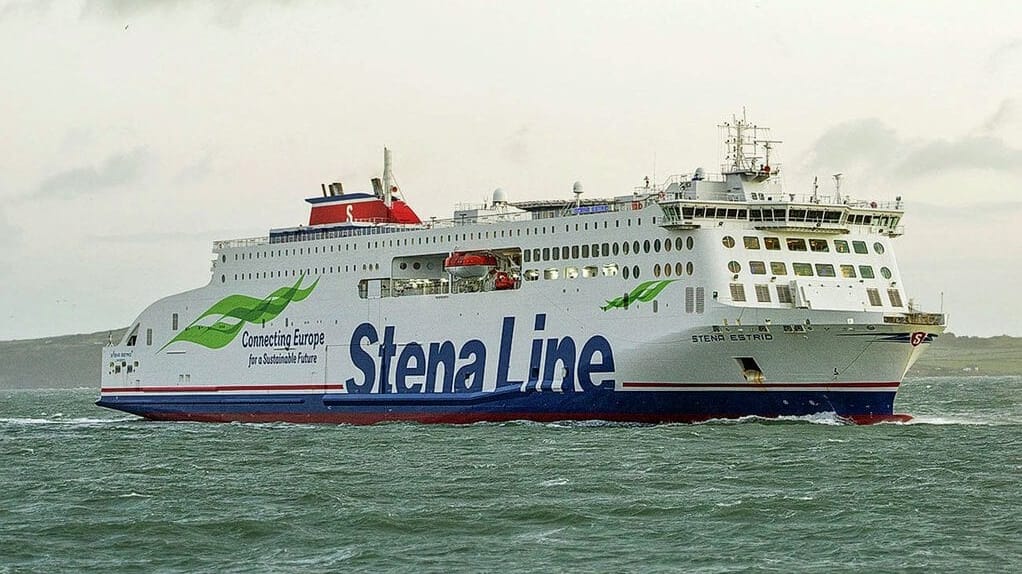
Marine investigators in the UK have outlined the events that caused a ferry collision with a jetty during a normal berthing maneuver, causing massive flooding and endangering 157 passengers and crew aboard the RoPax Stena Estrid. In January this year, the passenger and vehicle ferry Stena Estrid (41,600 gross tonnage) suffered significant flooding after she made contact with a jetty at Holyhead Port, the UK's second busiest passenger ferry port.
The serious marine incident occurred on January 7 while Stena Estrid was berthing at Terminal 3 as part of its regular crossing on the Holyhead, Wales – Dublin, Ireland route. The 215-meter (705-foot) ferry, which was built in 2019 and sails under the flag of Cyprus, was on a scheduled crossing with 95 vehicles, 91 passengers and 66 crewmembers when she made contact with the jetty. The first ferry in the E-Flexer class, Stena Estrid, is operated by Stena Line, offering daily service on the route.
The UK’s Marine Accident Investigation Branch investigators pieced together the events surrounding the incident in which the ferry suffered a hull puncture with approximately 500 tonnes of water flooding into her engine room and an adjacent void space. Luckily, the crew was able to respond with decisive actions, including quickly shoring up the hull below the waterline, pumping out the spaces, and transferring ballast to create a port list and raise the damage to above the waterline.
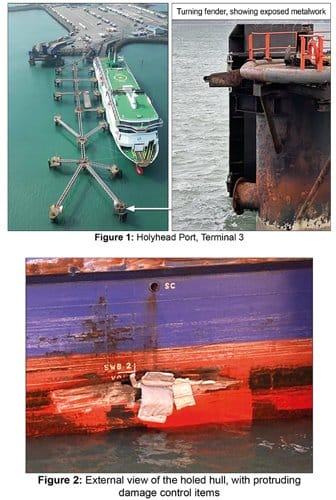
(MAIB report)
The actions prevented a major disaster because Stena Estrid was able to continue berthing and disembark all the passengers and unload vehicles. Though the jetty did not suffer significant damage, the incident caused Holyhead Port to be closed for hours.
According to the report, a combination of factors was at play in causing the allision at the Holyhead Port, which apparently had experienced several ferry?related incidents. The port’s Terminal 5 had remained closed since December last year when another “berthing incident” caused by severe weather conditions resulted in significant damages.
In the Stena Estrid incident, a tugboat was at hand to help the ferry’s berthing maneuvers. Before backing in, the ferry had turned to port north of the jetty, during which a tug was made fast on the ferry’s port aft quarter.
The investigation established that due to instances of conflicting communications between the ferry and the tug, the tug’s effectiveness was limited due to its position on the ferry’s port aft quarter. Because of this, any further attempt to use the tug to pull the vessel to port would likely have increased the force of the contact with the jetty.
Another factor at play was the fact that although Stena Estrid’s master was aware of a requirement to avoid the turning fender during berthing, the vessel closed on the jetty faster than expected. This was likely due to its position after turning off the jetty and strong westerly winds.

that matters most
Get the latest maritime news delivered to your inbox daily.
When they inspected the turning fender, investigators also discovered several sharp protrusions on the face plate and the absence of a rubber fender structure. They highlighted that the ferry’s crew had no prior awareness of the sharp protrusions or the extent of potential damage they could cause on contact.
Following the incident, Stena Line and Stena Line Ports have taken measures to avoid future collisions. Apart from removing the protruding brackets from the turning fender, a major investment is being undertaken to improve the resilience of both terminals 3 and 5. The works include installation of new anodes, replacing deficient and missing fenders, and renewing two of the mooring dolphins.
