


Filipino Fishermen Hurt as Chinese Push Them Away from Disputed Shoal
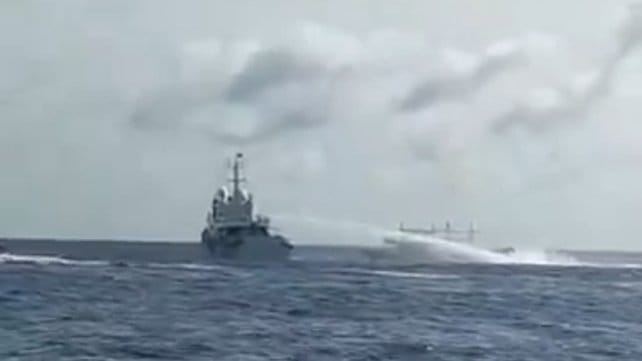
Several Filipino fishermen and their vessels were damaged on Friday, December 12, as the China Coast Guard and Chinese Maritime Militia worked to drive the vessels away from one of the disputed shoals in the Spratly Islands in the South China Sea. The Philippines Coast Guard responded to protect the fishing vessels and provide medical assistance to the injured fishermen.
China said it implemented “necessary control measures” to protect its territories. The shoal called Sabina (Escoda) is approximately 35 miles to the east of Second Thomas Shoal, which has been the focus of many of the disputes between China and the Philippines.
The Philippine Coast Guard is calling the Chinese actions “unprofessional and unlawful.”
The action began according to the fishermen around midday on Friday and continued for at least three hours, led by vessels of the China Coast Guard. The incident ended when the fishing boats had moved away from the shoal, but the China Coast Guard boats remained in the area, menacing the fishermen.
Kung ikaw ay Pilipino at hanggang ngayon di mo pa rin nauunawaan kung ano ang kahalagahan ng pinaglalaban natin sa West Philippine Sea, panoorin mo ang video na ito kasama ng iyong pamilya at sabihin mo sa akin kung hindi ninyo naramdaman ang galit para ating tindigan ang mga… pic.twitter.com/9W17jkxttJ
— Jay Tarriela (@jaytaryela) December 13, 2025
Jay Tarriela, spokesperson for the Philippine Coast Guard, said there were approximately 20 fishing boats in the area when the incident began. The Filipinos use large, wooden boats/rafts, typically each with 10 to 15 fishermen. It was estimated that 300 fishermen were working the area.
Two China Coast Guard vessels reportedly used water cannons and sirens in the effort to drive the fishing boats away from the shoal. Tarriela said it was the first time the cannons had hit the fragile fishing boats, but that the Chinese had used them in the past to menace the fishermen. He also accused the Chinese vessels of taking dangerous blocking maneuvers against the fishing boats.
The China Coast Guard also used small rigid-hull inflatable boats during the encounter. Tarriela claimed they were used to deliberately cut the anchor lines of the fishing boats. The Filipinos called it a dangerous action because of the strong currents and high waves in the area.
WATCH: The Philippine Coast Guard said at least three fishermen were injured and two boats “suffered significant damage” when Chinese vessels fired “high-pressure water cannons” in a disputed area of the South China Sea. pic.twitter.com/WpYsSyyLtE
— Fox News (@FoxNews) December 13, 2025
The fishermen assisted their fellow countrymen, towing some of the damaged vessels and evacuating some of their colleagues. They also took videos of the interaction, which were released by the Philippine Coast Guard.
The fishermen called the Philippine Coast Guard for assistance during the encounter. According to the report, vessels from the China Coast Guard undertook blocking and dangerous maneuvers in an attempt to prevent the Philippine Coast Guard from reaching the fishing boats. The Coast Guard said that one of the Chinese vessels came within 35 yards of a Philippine Coast Guard vessel during nighttime navigation.
The relief vessels from the Philippine Coast Guard and the Bureau of Fisheries reached the fishermen on Saturday morning. They are reporting that three of the fishermen had suffered injuries, including bruises and wounds. They provided medical assistance. In addition, two of the Filipino fishing boats were reported to have suffered significant damage from the water cannons. Tarriela said one of the boats had taken on water, but was drained after possibly suffering engine damage.
PCG Successfully Renders Assistance to Harassed Filipino Fishermen at Escoda Shoal Amid Aggressive Actions by Chinese Vessels
— Jay Tarriela (@jaytaryela) December 13, 2025
The Philippine Coast Guard (PCG) today announced the successful deployment of its multi-role response vessels, MRRV-4403 and MRRV-4411, to the vicinity… https://t.co/DW4eXgtjG3 pic.twitter.com/P2QOwRDjbB

that matters most
Get the latest maritime news delivered to your inbox daily.
The Filipino forces also brought fuel, ice, food, and other supplies to the fishing boats. They distributed the aid to sustain the fishing operations.
The incident followed ongoing interactions between the Chinese and the Philippines’ coast guards. China has tried to prevent the resupply missions using similar tactics with the water cannons. They have also conducted dangerous maneuvers, which have resulted in the vessels bumping or colliding. In August, a China Coast Guard vessel, while chasing a Philippine Coast Guard boat, collided with a Chinese naval vessel, causing significant damage to the bow of the China Coast Guard vessel. There were reports that four Chinese sailors were likely killed in the collision, and it appeared the Chinese vessels were conducting a man overboard search.
