


Smart Lubrication
Once looked upon as a maintenance line item, lubricating oils and additives have become a source of operational intelligence
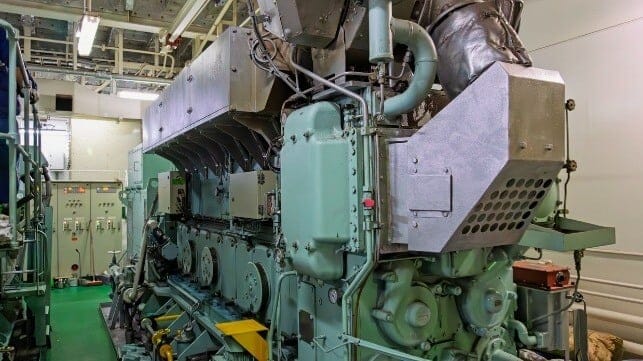
(Article originally published in Mar/Apr 2026 edition.)
Alternative fuels are introducing new traits and challenges that impact marine engine combustion and lubrication. But providers are prepared, leveraging innovation to ensure that oil and additives are adaptable to new operating characteristics.
Across vessel systems and equipment, lubricants are no longer passive consumables.
They're evolving into active elements of vessel performance, environmental compliance and digital integration. Major suppliers are responding by redefining lubrication as part of a broader ecosystem that blends chemistry with digital capability.
Predictive maintenance
Condition-based monitoring (CBM) has emerged as one of the most important developments in this space.
Historically, operators relied on periodic oil sampling, often conducted on a calendar-driven basis. While useful, these periodic glimpses provided only a snapshot of lubricant condition and, by extension, machinery health.
Today, that model is rapidly being replaced. Continuous monitoring systems regularly generate thousands of data points for a single asset, helping to enrich the data needed for predictive maintenance. As Eda Gökay, Global Marine & Energy Marketing Director at Castrol, explains, "Traditional recommendations on oil and machine health are based on samples that may be up to six weeks old. That makes connecting diagnosis to solution challenging."
Instead of reacting to failures or adhering to rigid maintenance schedules, CBM allows operators to intervene at precisely the right moment, addressing issues before they escalate into costly downtime or equipment damage. This predictive capability is particularly valuable in modern marine engines where even minor deviations in lubrication performance can have outsized effects on reliability.
Artificial intelligence is accelerating this shift.
Machine learning algorithms are increasingly used to interpret complex data sets, identifying patterns that would be difficult, if not impossible, for human analysts to detect. By correlating lubricant condition with operating parameters, these systems can provide early warnings of wear, contamination or system inefficiencies by translating the internal state of machinery into actionable insight.
Digital tools such as Castrol SmartMonitor exemplify this evolution. By reducing reliance on manual sampling and enabling near real-time alerting, such systems help operators transition from insufficient reactive maintenance strategies, Gökay says, noting that digital monitoring "can help reduce downtime and support improved reliability."
Better chemistry
While digital technologies are transforming how lubricants are monitored, innovation at the chemical level continues to improve performance.
This is particularly important given the unique impacts of alternative fuels compared to traditional heavy fuel oil. Biofuels can introduce oxidation, degradation and corrosion risks while fuels such as methanol and ammonia may interact with additive chemistries in ways that challenge traditional lubricant performance.
"Meeting the demands posed by alternative fuels requires lubricants to be designed for the distinct characteristics of these fuels," Gökay explains.
At the same time, engines are often operating at lower speeds and higher pressures to meet efficiency and emissions targets, placing greater demands on anti-wear additives that must perform under more severe boundary lubrication conditions.
Blended into base oils, advanced additives and chemical components are responsible for many of the properties that define lubricant performance in modern engines. Additive mixtures are increasingly formulated for specific engine designs, fuel types and operating conditions, often developed in close collaboration with manufacturers to ensure alignment with specific machinery requirements.
Performance vs compliance
Environmental regulations have long influenced lubricant development, but recent years have seen a notable shift in how these requirements are addressed, particularly as decarbonization accelerates across the maritime sector.
The U.S. EPA's Vessel General Permit (VGP), for example, mandates the use of environmentally acceptable lubricants (EALs) in certain applications, particularly where there is a risk of discharge into the water. At the same time, new Emission Control Areas are further tightening compliance expectations.
These developments are not occurring in isolation but alongside the rapid introduction of alternative fuels that fundamentally alter the chemical environment within engines.
For lubricant suppliers, this creates a dual challenge. Solutions must not only meet increasingly stringent environmental standards but also maintain performance across a widening range of fuel types and operating conditions. Castrol has responded by developing "fuel-agnostic" formulations designed to support operators transitioning between fuels without compromising engine protection or reliability.
At the same time, advances in synthetic base stocks and additive chemistry are revolutionizing environmentally acceptable lubricants. Where earlier generations of EALs were often viewed as a compromise, modern formulations now offer improved stability, extended service intervals and compatibility with a wider range of materials.
This allows operators to move beyond compliance as a constraint and toward lubrication strategies that deliver both environmental and operational value.
Connected systems
Simultaneously, digitalization is driving the transformation of lubrication into a connected system where data flows continuously between onboard equipment, cloud-based platforms and onshore technical teams.
Castrol has continued to invest in this area, refining its Castrol SmartMonitor platform to provide real-time insight into lubricant condition and machinery health. As Gökay notes, "Predictive maintenance and IoT-driven analytics are creating new opportunities to move beyond manual, legacy processes in engine health monitoring."
The evolution of SmartMonitor reflects broader industry trends. The system has become more compact, more capable and better aligned with operating cost expectations while its range of applications continues to expand across vessel types and operating environments.
What distinguishes these systems is not simply their ability to collect data but their capacity to translate that data into actionable insight.
In one case, early detection of water ingress aboard a dredger allowed operators to shut down an engine before significant damage occurred, avoiding substantial repair costs and operational disruption. Such examples underscore the practical value of continuous monitoring in reducing risk and improving reliability.
Lubricant suppliers are evolving alongside the technology, increasingly offering integrated services that combine fluid supply, monitoring systems, data analytics and technical expertise. Castrol's approach reflects this shift with engineers and specialists playing a growing role in interpreting data, identifying trends and guiding operators toward optimal decisions.
This human-technology interface is critical, according to Gökay, "This is not just about technology. When digital tools are combined with human expertise, lubricant suppliers can proactively advise crews and onshore teams as issues are identified."
The integration of lubrication data into broader digital ecosystems further extends this capability. By incorporating real-time lubricant condition into predictive models, operators can simulate how machinery will behave under different conditions, refining maintenance strategies and optimizing performance across the vessel lifecycle.
Fluid intelligence
Lubrication is no longer an isolated function.
It's becoming a continuous feedback loop, informing decisions, reducing uncertainty and aligning closely with the industry's broader move toward data-driven operations.
Lubes and additives continue to reduce friction, but the objective is as much metaphorical with stakeholders demanding a smooth transition into the industry of the future. As vessels become more advanced and operating margins tighten, the ability to monitor, predict and optimize through lubrication is becoming a defining capability.
Castrol's perspective reflects the shift toward a more integrated approach. As Gökay notes, "Shipowners and operators are challenging us to move beyond product supply and treat lubrication as an end-to-end service that helps reduce risk and simplifies management."
The evolution of marine lubricants is, at its core, a story of convergence. Chemistry, data and service are coming together to create a new paradigm, one in which every drop of oil carries not just functional value but critical information.

that matters most
Get the latest maritime news delivered to your inbox daily.
In an industry defined by massive machinery and global scale, it's a reminder that sometimes the smallest elements can have the greatest impact.
Marine engineer Chad Fuhrmann is Vice President at Core Group Consulting in Houston.
The opinions expressed herein are the author's and not necessarily those of The Maritime Executive.
