
Executive Interview: Jason Montague, Chief Luxury Officer, NCLH
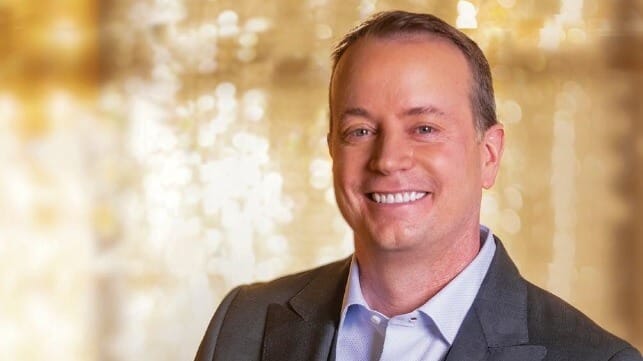
(Article originally published in Jan/Feb 2026 edition.)
Welcome back, Jason! It's been five years since you last graced our cover. They were tough times. Covid had just begun. The cruise industry was shutting down, and you were head of Regent Seven Seas. Now you have a new job. Tell us about that. What's a Chief Luxury Officer?
It's a unique title, all right. I haven't seen it in any other company. But it seemed exactly right for my new role overseeing both Oceania Cruises and Regent Seven Seas, our luxury and ultra-luxury brands, and when you consider the multibillion-dollar investment we're making in luxury and our belief in this segment as we move forward.
What about Norwegian Cruise Lines, your contemporary brand? Do you get involved with it, too?
Well, we have a great executive leadership team across all three brands. Marc Kazlauskas recently joined us as President of the NCL brand, and I work very closely with him and all the other team members and it's really an outstanding group, so I couldn't be more excited about working with all of them.
NCL actually has a phenomenal product called The Haven, which is their "ship within a ship" concept that delivers an outstanding experience for luxury-minded passengers, and it's exclusive to them. The other brands don't have it.
But we partner together in areas like the off-ship experience. I'm very passionate about the experience we deliver to our guests off the ship. And that's a tri-brand function that we all collaborate on to ensure we're delivering great experiences for our guests, not only onboard the ship but off as well too.
What's the difference between Oceania Cruises and Regent Seven Seas?
Oceania Cruises was originally our upper-premium brand when we started it back in 2003 under the leadership of my long-time mentor and friend, Frank Del Rio. It's always prided itself as having the finest cuisine at sea, but the ships just weren't luxury ships. They were the old Renaissance Cruise Line ships.
But then we built Marina and Riviera to luxury standards, followed by Vista and then Allura just last year, and now we have a purpose-built luxury fleet, and part of my coming back was to make Oceania Cruises the true luxury brand it really is. And we have plans for four new vessels going forward.
Regent Seven Seas, on the other hand, has always been an ultra-luxury brand. Its state rooms, for example are all-suite, all-balcony while on Oceania Cruises' newest ship, Allura, 73 percent of the state rooms are standard verandas. Now, they happen to be the largest standard verandas at sea at approximately 291 square feet, but they're still standard verandas.
So that's one of the main differences between the two brands – the state room category mix.
A second difference is inclusiveness. Oceania Cruises is semi-inclusive. It includes all the core elements that guests want but doesn't include unlimited beverages or shore excursions. Regent Seven Seas includes everything and is the most inclusive brand in the industry.
So the best of both worlds. If you don't want to be fully taken care of and want to curate your own cruise, then you have the Oceania Cruises brand. If you want everything provided, then Regent is the perfect fit.
Another nuance is the new adults-only policy for Oceania Cruises, so no one under 18 going forward. The Oceana platform was never meant for children and teens, so we wanted to formalize that and make clear that it's really for like-minded adults seeking meaningful travel experiences. Regent Seven Seas, on the other hand – with its all-suite layout – does attract multi-generational groups and thus offers a complimentary Club Mariner Youth Program on select summer and holiday sailings.
What about the clientele for the two brands? Are they similar?
Both brands target the affluent 50-55+ market – people with money who want to indulge themselves both onboard and ashore and who want to learn something in the process. That's really the sweet spot for both brands – affluent people looking for meaningful experiences.
It's a big market – bigger than you think. There's so much opportunity in luxury when you think of the massive wealth transfer that's happening from the Baby Boomer generation to their children as well as the fact that people are looking more for meaningful experiences than for acquiring additional material things.
Awesome. How do you plan to capitalize on all that opportunity?
Well, that's a big reason why I came back a year ago. I wanted to lead that effort, and fortunately for me the company agreed.
We have big plans to build nine new vessels for the luxury market in the period ahead – five for Oceania Cruises and four for Regent – all part of our multibillion-dollar "Charting the Course" strategy.
On the Oceania side, we just opened bookings for our newest vessel, Oceania Sonata, set for delivery next August, and the response was amazing – 45 percent higher than Oceania Cruises' previous new ship, Oceania Allura. It's the next evolution in luxury for Oceania Cruises, and we have four more Sonata Class vessels on order right now.
They're slightly larger than the Allura Class – 1,390 passengers versus 1,200 – but there's lots more space and we're adding a new Horizon Suite, which gives us a category between the Penthouse and our Oceania Suite, in response to booming demand. We'll have a couple of new culinary initiatives as well including the most exclusive fine-dining restaurant at sea, La Table par Maîtres Cuisiniers de France (Master Chefs of France), and Nikkei Kitchen, a vibrant fusion of Peruvian flavors and refined Japanese culinary techniques and tastes.
Okay, what about Regent Seven Seas? What's going on there?
Regent Seven Seas has four new ships on order with the first one coming in December, the Seven Seas Prestige. She launched her bookings last year to record numbers as well.
We have a lot of new suite categories on this new ship, but the biggest one is the Skyview Regent Suite that is two bedrooms and almost 9,000 square feet. It goes for $25,000 a night. Seven Seas Prestige went on sale with 13 sailings and within the first few minutes 10 of those 13 sailings were booked in the Skyview Regent Suite at $25,000 per night.
So it's a testament to the demand out there for these truly ultra-luxurious, unique experiences.
The original Skyview Regent Suite is on our Explorer Class ships. It has about 4,500 square feet and goes for $15,000 per night. So we've taken it to an entirely new level on Seven Seas Prestige and that really sets the tone for everything we're doing with this new class.
Seven Seas Prestige is going to be an 822-passenger ship where the Explorer Class is 750, but she's going to have about 40 percent more space for that 10 percent increase in passengers. It's going to be a really unique ship in the ultra-luxury space with a brand new Mediterranean restaurant concept called Azure.
So lots of exciting stuff on both Oceania Cruises and Regent Seven Seas!
I'll say. Tell us more about the "Charting the Course" strategy. What's the vision here?
It's a multiyear, multibillion-dollar NCLH initiative detailing how we're looking at growing and focusing the business. I came back to ensure we're focusing on truly driving the business and driving the return on investment.
We're a public company. My goal is, and my belief on how you deliver luxury experiences is you have to start on that very first phone call and you have to execute and deliver those experiences throughout the entire journey. My background was originally finance, so we're always ensuring that we're delivering our customers outstanding experiences while still driving and improving the bottom line because these ships, as you know, are not inexpensive.
So to get the investments that we're making, we have to make sure that we're delivering a strong business. And fortunately, I work with the most amazing group on both the shore side team and the shipboard team, and I couldn't be more fortunate.
How important are destinations?
We visit over 600 ports across the globe, so we're a destination immersion brand on both the Oceania Cruises and Regent Seven Seas side and really immerse our guests in those destinations. In the luxury and ultra-luxury markets, the itinerary is always one of the most important aspects of decision-making when picking a specific cruise. And so we pride ourselves on creating these outstanding itineraries across the globe.
Again, it's the overall experience. When you think of what we're delivering, we're delivering unique experiences in lots of different ways in all the destinations we visit.
Okay, let's talk about the big picture here. Where do you see the cruise industry going in general? Where do you see the future in destinations, the type of ship, the appeal? How popular can it get?
I think the trends are incredibly in our favor as we move forward.
We talked about this a little earlier, but when you think of the wealth shift and our core target demographic of the 50+ group and the desire to have more experiences rather than acquire goods, that's our focus across the board for not just our two luxury brands but also for the Norwegian brand – truly delivering experiences throughout the entire journey. It's not only ensuring that we're delivering great onboard experiences, which we do a phenomenal job at, but also delivering these great unique experiences off the ship so our guests can truly immerse themselves in destinations.
That's where I think the big focus is. And that's why we're building out a new ship development group to truly deliver these unique experiences off the ships.
Wow, impressive! How often do you actually get on the ships?
So in my previous role, when I was CEO of just the Regent Seven Seas brand, I was able to get on each ship a few times each year. I'm going to try to do the same thing, but obviously our fleet's a lot bigger over both brands.
So my goal is to try to hit multiple ships at each brand in a given year. It's the best part of my job. I love being on board. I love spending time with the guests. I love spending time with the crew. And some of the best insights I get is when I dine with the senior crew every time I'm on board.
I dine with guests on the other nights, and that's some of the best feedback too because I'm experiencing it all in real time.
I also get the opportunity when on board to thank all of the crew, which is incredibly important to me. My first job, back in Rhode Island, was a dishwasher at the age of 13, and I worked in the restaurant business until I left for college at 18. I did most every job except being a bartender in the restaurant business, and so I had great appreciation for how every single person impacts that experience. If a dishwasher doesn't wash the dishes, you're not getting your dinner at night.
And so every role is critically important, and it's great to be able to walk around and thank all of the crew for the amazing job they do on board the ships.
You're obviously glad to be back.
It's really fun being back. And like I said, I did my retirement attempt, and that's not going to happen again.

that matters most
Get the latest maritime news delivered to your inbox daily.
It's almost a year now and I couldn't be more excited, more rejuvenated. I love what I do. I love the group. I love the industry. I love our travel partners. I love our business partners and, most importantly, the guests are amazing people. What more could you ask for?
Tony Munoz is the magazine's founder, publisher and editor-in-chief.
The opinions expressed herein are the author's and not necessarily those of The Maritime Executive.
