
Will Passage Fees be Charged in the Strait of Hormuz?
The question of whether vessels will be charged a new toll for transiting the Strait of Hormuz remains very much an unresolved issue in U.S.-Iran peace talks.
The Memorandum of Understanding (MoU) signed both by President Trump in Evian on June 17 and by President Masoud Pezeshkian the next day commits Iran to clearing the strait of mines and obstacles within the next 30 days, and to allowing free transit without tolls until 60 days after the agreed start date. Clause 5 of the MoU states that during the 60 day negotiation period, “the Islamic Republic of Iran will conduct dialogue with the Sultanate of Oman to define the future administration and maritime services in the Strait of Hormuz, in discussion with other Persian Gulf littoral states, in line with the applicable international law and the sovereign rights of coastal states of the Strait of Hormuz.”
The question therefore remains to be settled, with the English text suggesting that this is primarily a matter for the two states through whose territorial waters shipping channels in the Strait pass through. The importance of input from the GCC to the question is somewhat underplayed, but marginally more pronounced in the English text of the MoU than the Farsi version.
Iran and Oman are known to have already discussed the issue in some detail at Foreign Minister level, most notably at a meeting chaired by the Omani Foreign Minister Sayyid Badr Al Busaidi on May 24.
Iran has enacted laws establishing the Persian Gulf Strait Authority (PGSA) and has not resiled from its intention to levy fees for passage through the Strait, potentially charging up to $2 million per transit, as a means of raising revenue to help with post-war reconstruction costs. The formulation of Clause 5 of the MoU gives the impression that the United States does not regard this matter as a core interest, or one over which it will put up major resistance. Oman’s formal position is that it wishes to return to the pre-war state, where ships made the transit without passage fees, in line with the internationally recognized 1968 Traffic Separation Scheme (TSS), endorsed by both Iran and Oman and the International Maritime Organisation. An agreed position, to be achieved during the next 60 days, is likely to land somewhere between the positions of these two littoral states, but will be hotly contested by the Oman’s fellow members of the GCC whose economies depend on free movement of goods.
Passage fees are not charged anywhere in the world for transit through natural channels, and while the Strait of Hormuz has claim to be one of the most important routes through a narrows, the Strait of Malacca and the English Channel also carry large volumes of trade and currently charge no passage fees. If charges for passage are to be levied in the Strait of Hormuz, would this represent a precedent to be adopted elsewhere? (It would certainly go some way to alleviate the shortage of funds in the UK’s defense budget.)
It is, however, not quite true that no money changes hands when ships transit through restricted sea channels.
Turkey raised its charge for navigation and safety services in the Bosporus and Dardanelles last year by 15% to $5.83 per net ton, justified by the need to maintain lighthouses, navigation buoys, safety and traffic management services. 51,058 ships passed through the Bosporus and Dardanelles in 2025, and paid a total of $227.4 million in fees. In UK and Irish territorial waters, Trinity House also charges for ships passing though home waters, albeit it operates as a break-even charity rather than as a revenue-raising enterprise.

that matters most
Get the latest maritime news delivered to your inbox daily.
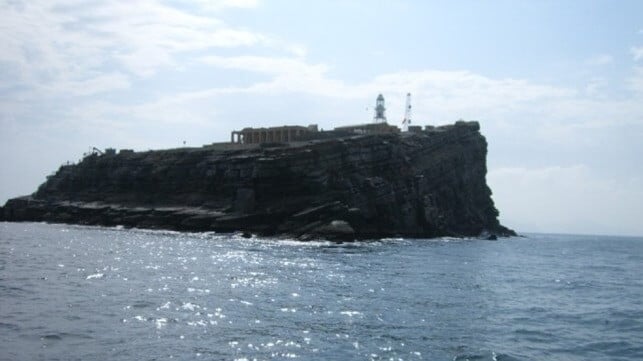
Even in the Strait of Hormuz, Oman is already charging navigation dues, or Navdues. The Royal Navy of Oman maintains a Strait of Hormuz control center on the island of Didamar, which lies mid-channel in the Strait of Hormuz, and from which entry, passage and exit of ships from the TSS is controlled. Oman also maintains a total of 167 buoys and Aids to Navigation, covering difficult waters on what is a tricky piece of coastline.
The right to collect Navdues for transit through Omani waters is allocated by the Omani government to Arabian Maritime and Navigation Aids Services (AMNAS), which is run, in much the same way as Trinity House, by former naval officers, in close coordination with the Royal Navy of Oman and the Omani Maritime Security Centre. If there is to be compromise and agreement over the collection of fees, the existing system of navigation service payments could potentially provide the basis for a new arrangement. If the fees charged were moderate and commensurate with the navigation services provided, this would not challenge the International Maritime Organization’s mandate for maintaining freedom of navigation, nor establish a precedent for charging passage fees elsewhere in the world.