
Vietnam Tools Up with Anti-Ship Cruise Missiles
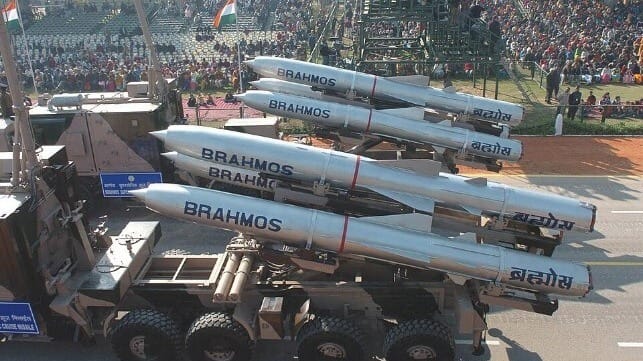
Vietnam has become the latest Southeast Asian country to sign a procurement contract for BrahMos anti-ship cruise missiles. News of the deal was confirmed by the Indian Defence Minister Rajesh Kumar Singh at the recent Shangri-La Dialogue forum meeting in Singapore. But Reuters reported that the deal had been signed in March and was worth $629 million. From the value of the deal, Vietnam is likely to have ordered six coastal batteries of the missiles, which can also be used against land targets.
Indian and Vietnamese Defence Ministers initiated a closer relationship in June 2022, drawn together by common concerns about China, with whom both countries have a difficult relationship. Vietnam fought a war against China in 1979, and has bitter memories of the Chinese takeover of some of the Spratly Islands in 1988, during which 64 mostly unarmed Vietnamese soldiers were killed by the PLA Navy (PLAN).
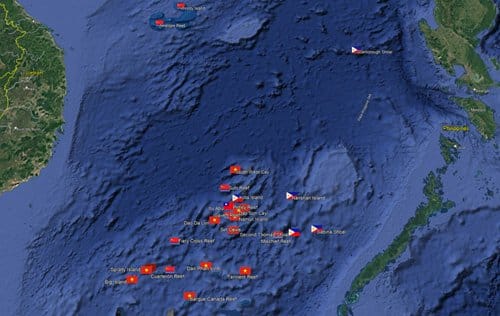
Islands occupied by China, Taiwan, Vietnam, and the Philippines in the South China Sea
(Google Earth/Copernicus/CJRC)
The BrahMos supersonic anti-ship cruise missile is a two-stage solid-fueled missile that can reach speeds of Mach 3, and, with a 200kg warhead, is able to engage targets on land or at sea out to a range of 180 miles. It can be launched from ships, aircraft, and coastal batteries. BrahMos is a fire-and-forget missile, with multiple target acquisition sensors to avoid jamming as it closes on its target. The missile was developed with Russian assistance out of the P-800 Oniks series, but India has by now domesticated almost all production and appears to have the right to share the technology with third parties. The Indian manufacturers are working on doubling the range of the missile. When a barrage of Indian BrahMos missiles was fired at 11 out of Pakistan’s 13 airbases in the opening phase of the May 2025 war, Pakistan was unable to counter the attack, and its air force was temporarily disabled.
The sale is of particular significance in the context of disputed and inter-mingled territorial claims in the South China Sea. Almost all the islands occupied, or bases created by China, would be well within BrahMos range if fired from other South China Sea islands occupied by Vietnam. Moreover, the Vietnamese acquisition has been preceded by similar BrahMos sales to the Philippines, which received the first of three coastal batteries ordered in 2024. Similarly, most of the islands claimed by the Philippines but occupied by the Chinese are within BrahMos range if fired from Filipino-controlled islands. Also in this mix is Taiwan, which does not have BrahMos, but presumably has an equivalent system to defend the isolated islands that it occupies in the area.
In general, though, there is a disparity. The nations facing off against the Chinese have not deployed heavy weapons on the islands that they occupy in the South China Sea, whereas from satellite imagery, Chinese-occupied islands are heavily militarized by the PLAN with both anti-shipping and air defense missile systems. ASEAN nations are having difficulties agreeing on a collective approach to countering Chinese expansionism, evident at the Shangri-La Dialogue, so individual nations are arming themselves to at least defend what they have not yet been pushed back from.
If this potentially explosive mix was not enough, in May, the Philippines and Japan jointly conducted a live ground-launched anti-ship missile test off the north-west coast of Luzon island, the northernmost island of the Philippines. A Japanese coastal defense unit fired two 110-mile-range Type 88 anti-ship missiles at the decommissioned corvette BRP Quezon (PS-70).

that matters most
Get the latest maritime news delivered to your inbox daily.
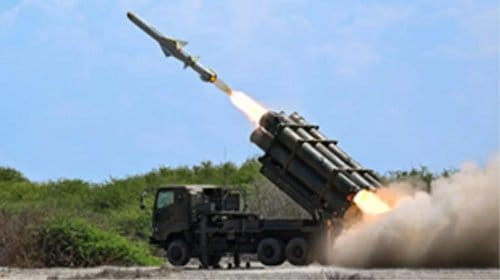
The Japanese Type-88 coastal defense missile system test on Luzon Island (JMSDF)
Indonesia is also about to sign a deal for a single battery of BrahMos missiles, and Indian representatives at the Shangri-La Dialogue also suggested that Thailand and Malaysia are potential customers.
