
U.S. Awards Contracts for Six Arctic Cutters to Rauma Marine and Bollinger
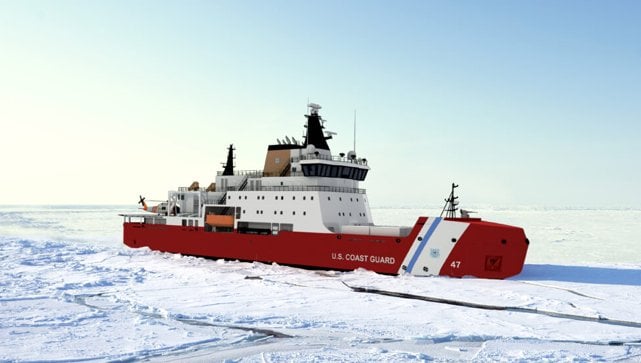
The U.S. Coast Guard has entered into the first six construction contracts for the new class of medium polar icebreakers envisioned as part of Donald Trump’s ambitious plan to rapidly accelerate the U.S. presence in the Arctic. The contracts follow the strategic agreements with Finland and Canada and the partnership between the U.S. and Finland announced in October, and calls for the first vessel in less than three years.
The contracts signed on Friday, December 26, award Finland’s Rauma Marine Constructions two vessels to be built in Finland, with the delivery of the first vessel expected in 2028. The Finnish company will also work with Bollinger Shipyard, which will leverage the Finnish design and expertise in building four Arctic Security Cutters at its shipyard in Houma, Louisiana. The first domestic cutter, they report, is expected in 2029, meaning it would likely come before the heavy Polar Security Cutter that is also being built by Bollinger and, after many delays, is now expected in May 2030.
“America has been an Arctic nation for over 150 years, and we’re finally acting like it under President Trump,” said Homeland Security Secretary Kristi Noem. “Our adversaries continue to look to grow their presence in the Arctic, equipping the Coast Guard with Arctic Security Cutters will help reassert American maritime dominance there.”
Noem asserts the cutters will defend U.S. sovereignty, secure critical shipping lanes, protect energy and mineral resources, and counter the growing presence of China and other nations in the Arctic. The Trump administration has said the vessels are vital to control, secure, and defend Alaskan borders, facilitate maritime commerce vital to economic prosperity and strategic mobility, and respond to crises and contingencies in the region.
To accelerate the program, the U.S. turned to Finland, which has long expertise in building icebreakers. The design for the class is being based on the Multi-Purpose Icebreaker developed by Canada’s Seaspan Shipyards and Aker Arctic Technology of Finland.
Finnish leaders are hailing the contract a major achievement in the U.S.-Finland cooperation. They are highlighting that Rauma’s role will be central to the program and its schedule certainty, low technical risk, and use of mature, production-ready designs.
“In the case of icebreakers, RMC’s preparatory work started in the autumn, but now we are moving towards full implementation,” announced Finland’s Minister of Economic Affairs, Sakari Puisto, on news of the contract signing. “The entity formed by the shipyard and an extensive network of subcontractors and partners is unique internationally. This will enable us to deliver even the most modern icebreakers quickly and with high quality.”
To support the objectives of the White House, Bollinger highlights that it is working in close partnership with Rauma Marine Construction to ensure that the U.S. receives the icebreaking capabilities as rapidly as possible.
“The Arctic Security Cutter is one of the most consequential and time-sensitive shipbuilding programs in U.S. Coast Guard history,” said Ben Bordelon, President and CEO of Bollinger Shipyards.

that matters most
Get the latest maritime news delivered to your inbox daily.
Bollinger highlights that it will be the company’s fifth class of cutters built for the U.S. Coast Guard. It is currently implementing the Sentinel and Polar Security Cutter programs.
When the Arctic Security Cutter program was announced in October, they said it would ultimately field up to eleven vessels. Canada’s Davie group was believed to be negotiating for a second tranche that would combine its Helsinki Shipyard and its recently acquired shipyard in Galveston, Texas, which the company has said it plans to turn into an “icebreaker factory.”